Essential Tools for Scale Model Assembly: Top 10 Picks for 2026
Advertisements
Building scale models requires precision tools, and our top 10 picks for 2026, including cutters, glues, and airbrushes, are crucial for achieving professional-grade results and enhancing your modeling journey.
Advertisements
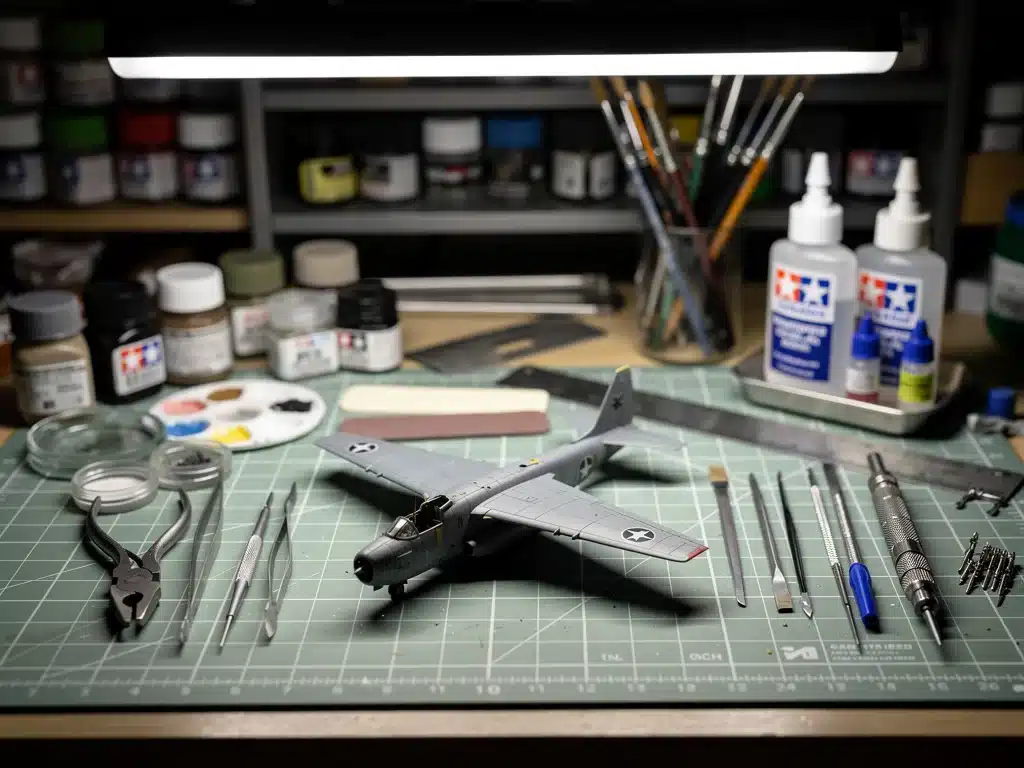
Embarking on the rewarding journey of scale model assembly demands more than just patience and skill; it requires the right equipment. In 2026, the landscape of modeling tools continues to evolve, offering enthusiasts unprecedented precision and ease. This guide delves into the essential tools for scale model assembly: our top 10 picks for 2026, ensuring your workbench is equipped for success.
The foundation: precision cutting and shaping tools
The initial steps in any scale model project invariably involve separating parts from sprues and refining their shapes. Without the right cutting and shaping tools, even the most detailed kit can become a frustrating experience. Precision is paramount here, as cleanly cut and accurately shaped parts are the bedrock of a flawless assembly.
Investing in high-quality tools for these foundational tasks will not only save you time but also prevent damage to delicate components. The difference between a clean cut and a ragged edge can significantly impact the final appearance of your model. Moreover, properly shaped parts fit together seamlessly, reducing the need for extensive filling and sanding later on.
Precision nippers and sprue cutters
These are arguably the most frequently used tools in a modeler’s arsenal. High-quality nippers are designed to cut plastic cleanly and precisely, minimizing stress marks and preventing parts from snapping or deforming. Look for nippers with thin, sharp blades that can reach into tight spaces and cut close to the part without damaging it.
- Single-blade nippers: Offer the cleanest cut by shearing the plastic rather than crushing it, ideal for delicate parts.
- Double-blade nippers: More robust and suitable for thicker sprues, providing a good balance of durability and precision.
- Ergonomic handles: Reduce hand fatigue during long modeling sessions, a crucial factor for comfort and control.
Hobby knives and blades
A versatile hobby knife with a comfortable grip and a variety of interchangeable blades is indispensable. From trimming excess plastic to scribing new panel lines, a sharp blade is your best friend. Always use a cutting mat to protect your work surface and prolong blade life.
Sanding sticks and files
After cutting, parts often require sanding to remove nub marks and smooth edges. A range of sanding sticks with different grits, from coarse to super-fine, allows for progressive refinement. Files, particularly needle files, are excellent for shaping small details and cleaning up tight corners that sandpaper can’t reach.
The careful selection of these initial tools sets the stage for a successful build. Prioritizing quality and understanding the specific purpose of each tool will significantly enhance your modeling output. A well-equipped workbench begins with these fundamental items, ensuring every component is ready for assembly with the utmost accuracy.
Adhesive solutions: securing your masterpiece
Once parts are cut and shaped, the next critical step is assembly, which relies heavily on the right adhesives. The world of model glues can seem daunting with its variety, but understanding their specific applications is key to a strong, clean, and lasting bond. The choice of adhesive can dramatically affect the appearance and durability of your finished model.
Different materials and different stages of assembly call for different types of glue. Using the wrong adhesive can lead to unsightly marks, weak joints, or even damage to the plastic. Therefore, selecting the appropriate glue for each task is as important as the precision of your cuts.
Plastic cement (liquid and tube)
Plastic cement works by chemically melting and fusing the plastic surfaces together, creating a strong bond. Liquid cement is favored for its precise application and minimal residue, often applied with a fine brush or needle applicator. Tube cement is thicker and dries slower, allowing for more repositioning time.
- Liquid cement: Fast-drying, excellent for invisible seams, and ideal for general assembly.
- Extra-thin liquid cement: Wicks into joints by capillary action, perfect for pre-fitting parts and delicate work.
- Tube cement: Good for larger surfaces and parts that require a bit of filling in gaps.
Cyanoacrylate (CA) glue (super glue)
CA glue is essential for bonding dissimilar materials like photo-etch, resin, or metal to plastic. It dries very quickly, making it suitable for quick fixes and attaching small details. However, it can leave white residue (fogging) if not used carefully, and its bond can be brittle.
PVA glue (white glue)
PVA glue is water-soluble and dries clear, making it perfect for transparent parts like canopies and windows, where plastic cement would cause fogging or damage. It also works well for attaching small paper or decal details and can be used for light filling.
Mastering the application of these various adhesives is a fundamental skill for any scale modeler. Experiment with different types to understand their properties and find what works best for your specific projects. Proper gluing techniques ensure your model holds together beautifully and withstands the test of time.
Precision measuring and holding instruments
Accuracy is a hallmark of exceptional scale modeling, and achieving it depends heavily on precise measurements and stable part handling. Even the slightest misalignment can throw off the entire aesthetic of a model. Therefore, a selection of reliable measuring and holding instruments is indispensable for meticulous builders.
These tools ensure that parts are not only cut and glued correctly but also positioned with exactitude. They eliminate guesswork and provide the stability needed for intricate work, significantly improving the quality and consistency of your builds. Without them, even the most skilled hands can struggle with perfect alignment.
Digital calipers
For precise measurements of parts, openings, and thicknesses, digital calipers are invaluable. They offer highly accurate readings, often down to a hundredth of a millimeter, essential for scratch-building, modifying parts, or checking the dimensions against references.
- Accuracy: Provides exact measurements for critical dimensions, ensuring perfect fit.
- Versatility: Can measure internal, external, depth, and step dimensions.
- Ease of use: Digital display makes reading measurements straightforward and error-free.
Tweezers (various types)
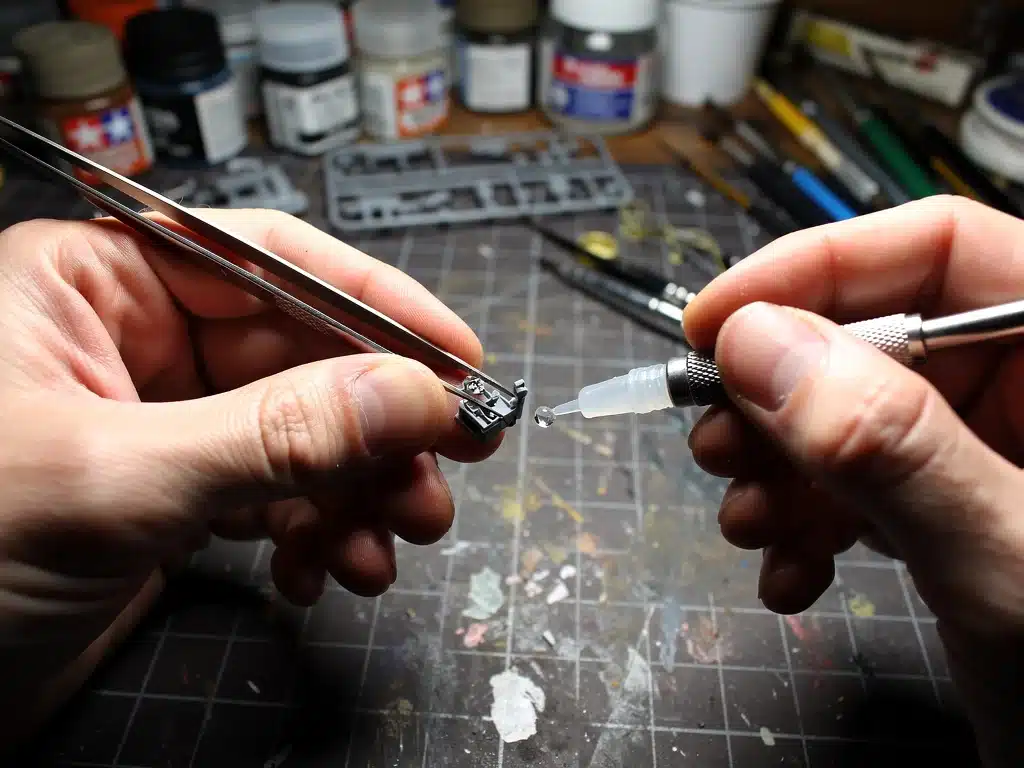
A good set of tweezers is crucial for handling small, delicate parts without damage or fingerprints. Different types serve different purposes:
Clamps and vises
Holding parts steady while glue dries or while you’re working on them is critical. Small hobby clamps, spring clamps, and a mini-vise can provide that extra set of hands, ensuring parts don’t shift during crucial moments. They are particularly useful for complex sub-assemblies or when working with multiple components simultaneously.
These measuring and holding tools contribute significantly to the precision and overall quality of your work. They allow for accurate replication of details and ensure that every component is exactly where it needs to be, elevating your scale models from good to exceptional.
Surface preparation and finishing tools
The true artistry of scale modeling often lies in the finishing touches. A perfectly assembled model can be marred by a poor paint job or an uneven surface. Therefore, a dedicated set of tools for surface preparation and finishing is essential to bring your model to life with a professional and realistic appearance. This stage is where a model truly transforms.
Proper surface preparation ensures that paint adheres correctly and smoothly, hiding any imperfections from the assembly stage. Finishing tools then allow for the application of paint and weathering effects that add depth, realism, and character to your build. Neglecting this phase can undermine all the meticulous work done previously.
Primers and fillers
Before painting, applying a primer creates a uniform surface for paint adhesion and reveals any imperfections that need addressing. Fillers, such as putty or liquid plastic, are used to fill gaps, seams, and sink marks, creating a seamless surface. These are critical for achieving a flawless finish.
- Surface primer: Essential for paint adhesion and revealing surface flaws. Available in spray cans or bottles for airbrushing.
- Putty/filler: Used to fill gaps and seams, ensuring a smooth, continuous surface. Choose a type that is easy to sand and compatible with your plastic.
- Sanding sponges: Flexible and conform to curved surfaces, ideal for smoothing fillers and preparing large areas for paint.
Airbrushes and compressors
For smooth, even coats of paint, especially on larger models or for complex camouflage patterns, an airbrush is indispensable. Paired with a reliable compressor, it allows for fine control over paint application, achieving results impossible with brush painting alone. This is often considered a significant upgrade for serious modelers.
Detail brushes and weathering tools
While airbrushes handle primary coats, detail brushes are necessary for smaller areas, intricate details, and touch-ups. A variety of sizes and shapes will be beneficial. Weathering tools, such as pigment powders, washes, and weathering pens, add realism by simulating wear, tear, and environmental effects, giving the model character and depth.
The attention to detail in surface preparation and finishing is what elevates a good model to an outstanding one. These tools, when used skillfully, allow you to create models that are not only accurately assembled but also visually stunning and highly realistic. They are the final touch that makes all the difference.
Safety and maintenance essentials
While the excitement of building can often overshadow practical considerations, ensuring your safety and maintaining your tools are paramount. A safe working environment protects you from potential hazards, and well-maintained tools perform better and last longer. Neglecting these aspects can lead to accidents or costly replacements.
Safety is not just about avoiding injury; it’s about creating a comfortable and sustainable hobby space. Similarly, proper tool maintenance ensures precision and reliability, allowing you to focus on the creative aspects of modeling without frustration. These often-overlooked essentials are foundational to a positive modeling experience.
Cutting mat and safety ruler
A self-healing cutting mat protects your workbench from knife blades and provides a stable surface for cutting. A metal safety ruler, preferably with a non-slip backing, prevents accidental cuts to your fingers when scoring or cutting plastic sheets and other materials. These are basic but critical safety items.
Personal protective equipment (PPE)
Depending on the materials you work with, appropriate PPE is crucial. This includes:
- Respirator mask: Essential when sanding resin, using spray paints, or airbrushing, to protect your lungs from fine particles and harmful fumes.
- Safety glasses: Protect your eyes from flying plastic shards, paint splatters, or chemical splashes.
- Gloves: Prevent fingerprints on delicate parts, protect hands from chemicals, and maintain cleanliness.
Tool cleaning and storage solutions
Keeping your tools clean and properly stored extends their lifespan and ensures they are ready for use. Cleaning brushes and airbrushes immediately after use prevents paint from drying and clogging. Storing tools in organizers or cases protects them from damage and keeps your workspace tidy.
Proper safety practices and diligent tool maintenance are investments in your hobby. They not only protect you and your equipment but also contribute to a more enjoyable and efficient modeling process. Never underestimate the importance of these often-understated but critical aspects of scale model assembly.
Advanced tools for enhanced realism
As modelers gain experience, they often seek ways to push the boundaries of realism and detail in their creations. This pursuit leads to the exploration of more specialized and advanced tools that enable intricate modifications, precise detailing, and sophisticated finishing techniques. These tools are not typically for beginners but become invaluable for those aiming for competition-level results.
These advanced instruments allow for a degree of control and finesse that standard tools cannot provide, opening up new avenues for customization and artistic expression. They represent an evolution in a modeler’s toolkit, reflecting a deeper commitment to the craft and a desire to achieve unparalleled accuracy and visual impact.
Photo-etch bending tools
Photo-etch parts are incredibly detailed, thin metal components that add a layer of realism to models. Bending them precisely without damage requires specialized tools like photo-etch bending pliers or dedicated bending brakes. These tools ensure crisp, clean folds, crucial for intricate assemblies.
- Bending brakes: Provide perfectly straight and sharp bends for larger photo-etch pieces.
- Hold-and-fold tools: Offer different lengths of blades for various bending tasks, ensuring accuracy.
- Micro-pliers: Ideal for manipulating tiny photo-etch parts and wires with delicate precision.
Rotary tools with various attachments
A miniature rotary tool (like a Dremel) with a selection of bits can be incredibly versatile for drilling, grinding, sanding, and polishing. It’s excellent for modifying parts, creating custom details, or carving out sections of plastic or resin that require more power than hand tools can provide.
Masking tools and fluids
Achieving sharp paint lines and intricate camouflage patterns requires precise masking. Specialized masking tapes, liquid mask, and cutting templates allow modelers to protect specific areas while painting, resulting in clean, professional finishes. These tools are crucial for multi-color schemes and canopy painting.
Embracing these advanced tools marks a significant step in a modeler’s journey, enabling them to tackle more complex projects and achieve an astonishing level of detail and realism. They are the keys to unlocking the full potential of your modeling skills and transforming your visions into tangible masterpieces.
The evolving landscape of modeling technology in 2026
The year 2026 sees continued advancements in modeling technology, significantly impacting the tools available to enthusiasts. From smart tools integrated with digital features to eco-friendlier materials, the hobby is becoming more accessible and sophisticated. Staying abreast of these innovations can greatly enhance your modeling experience and results.
These technological shifts are not just about novelty; they offer practical benefits such as improved precision, reduced learning curves, and safer working conditions. As manufacturers respond to the demands of a growing and discerning community, the tools of the trade become more refined, efficient, and user-friendly, pushing the boundaries of what’s possible in scale model assembly.
3D printing and custom part creation
Affordable 3D printers have revolutionized customization, allowing modelers to create bespoke parts, details, or even entire models that aren’t available commercially. This technology empowers builders to correct inaccuracies in kits, produce unique dioramas, or scale down existing objects with incredible precision.
- Resin 3D printers: Offer high detail and smooth finishes, ideal for small, intricate parts.
- FDM 3D printers: Better for larger, structural components, offering durability and versatility.
- CAD software: Essential for designing custom parts, with user-friendly options becoming more accessible.
Smart tools and digital integration
The emergence of smart tools, such as digital-readout cutting guides or temperature-controlled soldering irons with programmable settings, offers unprecedented control and consistency. Some tools even connect to apps, providing tutorials, project tracking, or precise calibration data, streamlining the modeling process.
Eco-friendly and safer materials
An increasing focus on sustainability and health has led to the development of eco-friendly glues, non-toxic paints, and safer cleaning agents. These innovations not only reduce environmental impact but also create a healthier environment for modelers, particularly those who spend long hours at their workbench.
The technological advancements of 2026 are transforming scale modeling into an even more dynamic and rewarding hobby. By embracing these new tools and materials, modelers can achieve higher levels of detail, customization, and safety, ensuring the craft continues to evolve and inspire new generations of builders.
| Key Tool Category | Primary Benefit |
|---|---|
| Precision Cutters | Cleanly separates parts from sprues, minimizing damage. |
| Liquid Plastic Cement | Fuses plastic for strong, invisible seams. |
| Digital Calipers | Ensures highly accurate measurements for perfect fits. |
| Airbrush & Compressor | Achieves smooth, even, and professional paint finishes. |
Frequently asked questions about scale model tools
For a beginner, a good pair of precision nippers is arguably the most important tool. It allows for clean cuts from the sprue, minimizing stress on parts and making the initial assembly much smoother. This foundational tool sets the stage for accurate and enjoyable model building.
Liquid cement is often preferred because it melts and fuses plastic, creating a stronger, more seamless bond with less visible residue. Its thin consistency allows it to wick into tight joints by capillary action, making for cleaner application compared to the thicker, messier tube glue.
While not strictly necessary for every modeler, airbrushes offer unparalleled control for smooth, even paint coats and complex effects like weathering or camouflage. For achieving a professional finish, especially on larger models, an airbrush is highly recommended and provides results difficult to replicate with brushes.
Protecting your eyes and lungs is crucial. Always wear safety glasses when cutting, sanding, or working with chemicals. Use a respirator mask, especially when airbrushing, sanding resin, or using aerosol primers and paints, to prevent inhaling fine particles and harmful fumes.
3D printing has become a game-changer, enabling modelers to create custom parts, correct kit inaccuracies, and produce unique details that are not commercially available. It allows for unprecedented customization and precision, opening up new creative possibilities for modelers to personalize their builds.
Conclusion
The world of scale model assembly is a blend of artistry, precision, and patience, significantly enhanced by the right tools. As we’ve explored, from the fundamental precision cutters and adhesives to advanced airbrushes and 3D printers, each tool plays a pivotal role in transforming raw plastic into a meticulously detailed miniature. Our top 10 picks for 2026 reflect a balance of essential items for beginners and sophisticated instruments for seasoned modelers, all designed to elevate your craft. Investing in quality tools not only improves the final outcome of your models but also makes the entire building process more enjoyable and less prone to frustration. Remember, a well-equipped workbench, coupled with a commitment to safety and continuous learning, is the foundation for creating stunning, realistic scale models that you can be truly proud of. Embrace these tools, refine your techniques, and continue to push the boundaries of your modeling potential.