Scale Model Grading: US Collector’s Essential Guide for 2026
Advertisements
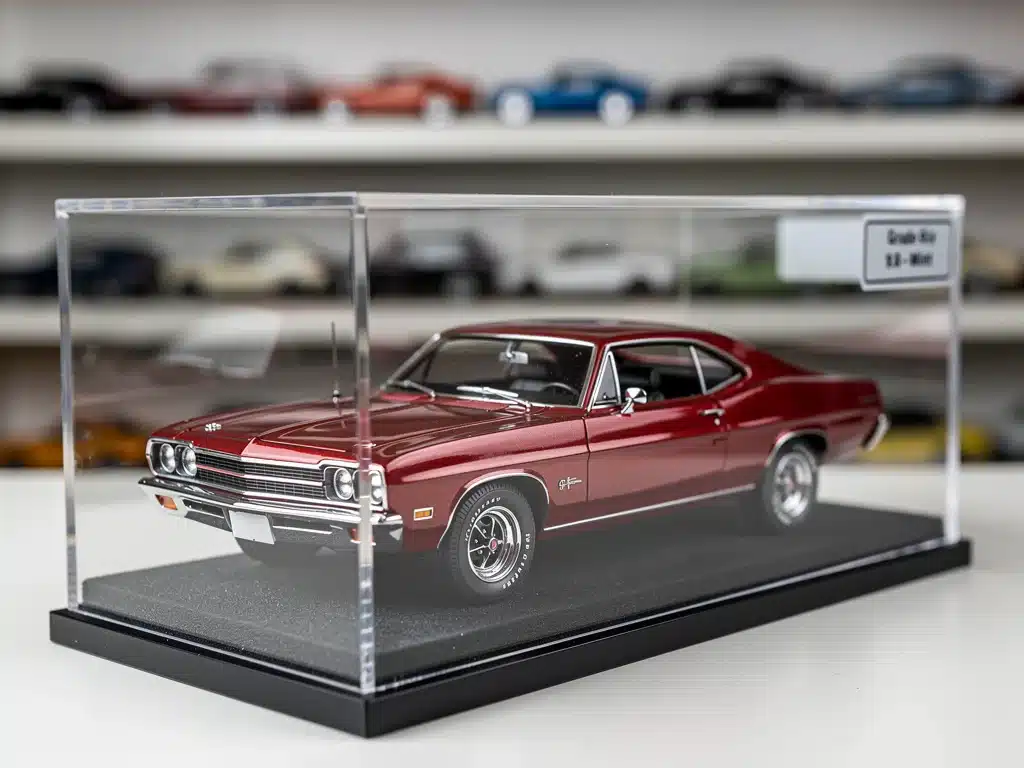
Understanding scale model grading is crucial for US collectors in 2026 to accurately assess value, authenticity, and preservation, ensuring informed buying and selling decisions in a dynamic market.
For enthusiasts and serious investors in the United States, mastering the nuances of scale model grading is becoming increasingly vital as we approach 2026. This comprehensive guide will illuminate the evolving standards, benefits, and essential considerations for any US collector looking to accurately assess and preserve their prized miniature vehicles, aircraft, or figures in an ever-competitive market.
Advertisements
The Evolution of Scale Model Grading in the US
The landscape of collectible scale models has transformed dramatically over the past decade, moving from a niche hobby to a significant investment avenue. In the US, the demand for standardized grading has grown exponentially, driven by a burgeoning collector base and the increasing value of rare or pristine models. Understanding this evolution is key to navigating the market effectively.
Initially, grading was often subjective, relying heavily on individual dealer assessments or community consensus. However, as the market matured, the need for objective, third-party evaluation became undeniable. This shift has given rise to specialized grading services that provide consistent and transparent evaluations, fostering greater trust and liquidity in transactions.
From Informal Assessments to Professional Standards
The journey from informal assessments to professional standards has been critical for the US scale model market. Early collectors often relied on visual inspection and general condition descriptions like “mint in box” or “good condition.” While these terms still hold some relevance, they lack the precision required for high-value collectibles.
- Early Days: Subjective visual inspections and word-of-mouth.
- Emergence of Forums: Online communities helped standardize informal terms.
- Rise of Grading Companies: Professional services introduced objective criteria.
- Market Acceptance: Graded models began commanding higher prices due to verified condition.
The adoption of professional grading has not only protected buyers from misrepresentation but also empowered sellers to achieve fair market value for their meticulously maintained collections. This professionalization reflects a broader trend in collectibles, where authenticity and condition verification are paramount.
Key Grading Criteria and Standards for 2026
As we look towards 2026, the criteria for grading scale models continue to refine, emphasizing precision and consistency. Collectors must familiarize themselves with these standards to accurately evaluate their own models and understand the assessments provided by professional grading services. These criteria encompass various aspects, from the model itself to its original packaging.
The core of effective scale model grading revolves around a meticulous examination of the model’s condition, the integrity of its paintwork, the presence of all original components, and the state of its packaging. Each element contributes significantly to the overall grade and, consequently, the model’s market value.
Understanding the Model’s Condition
The physical condition of the model is paramount. Graders scrutinize every surface for imperfections, no matter how minor. This includes the body, chassis, wheels, and any intricate accessories. A pristine model will exhibit no signs of wear, damage, or manufacturing defects.
- Paint Finish: Absence of chips, scratches, fading, or overspray.
- Decals and Tampo Prints: Intact, clear, and without peeling or misalignment.
- Component Integrity: All parts present, functional (if applicable), and undamaged.
- Material Quality: No warping, discoloration, or degradation of plastic, metal, or rubber parts.
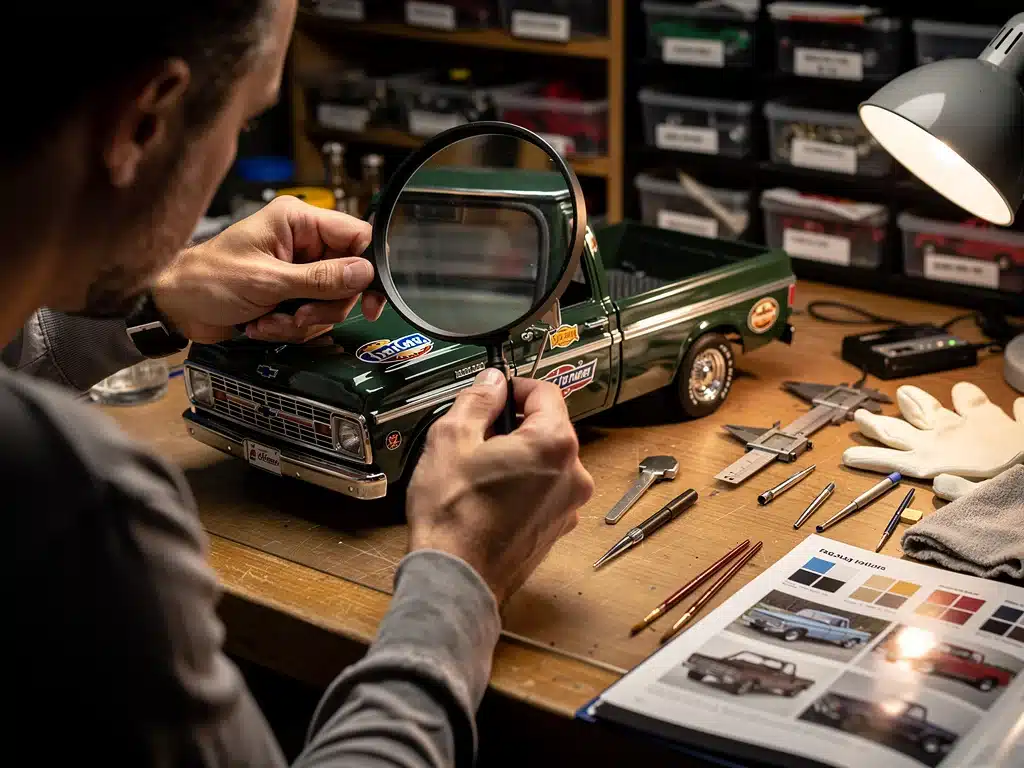
Even microscopic flaws can impact a model’s grade, especially for high-value items. Collectors should inspect their models under good lighting and, if possible, with magnification to catch any subtle issues. The goal is to identify any deviation from its original factory state.
The Importance of Packaging in Scale Model Valuation
While the model itself is crucial, the condition of its original packaging plays an equally significant role in its overall valuation and grade. For many collectors, a model is not truly complete without its pristine, original box or blister pack. This is especially true for models intended for display as part of a collection, where the packaging often tells a part of the model’s story and authenticity.
The packaging serves multiple purposes: it protects the model, identifies its origin, and often includes important details like limited edition numbers or specific variations. A damaged or missing package can significantly detract from a model’s appeal and market price, even if the model inside is in perfect condition.
Assessing Box and Blister Pack Condition
Grading services meticulously evaluate packaging using a set of specific criteria. These criteria ensure that the packaging’s condition is assessed as rigorously as the model itself, providing a holistic view of the collectible’s overall state.
- Box Integrity: Absence of tears, creases, dents, or crushing.
- Graphics and Coloring: No fading, scuffs, or water damage to printed artwork.
- Seals and Tapes: Original factory seals should be intact and undisturbed.
- Window Clarity: Clear plastic windows should be free of scratches, yellowing, or cracks.
Collectors should store models in their original packaging in controlled environments to prevent damage from light exposure, humidity, and physical impacts. Protecting the packaging is an extension of protecting the model’s value and historical integrity.
Choosing a Reputable Grading Service in the US
With the increasing emphasis on professional grading, selecting the right service is paramount for US collectors. Not all grading companies offer the same level of expertise, consistency, or market recognition. A reputable service will provide transparent processes, experienced graders, and widely accepted grading scales, adding verifiable value to your collection.
Before entrusting your valuable models to a grading company, it is essential to conduct thorough research. Look for services with a proven track record, positive collector reviews, and clear communication regarding their methodologies and pricing. The credibility of the grading company directly impacts the perceived value of the graded item.
Factors to Consider When Selecting a Grader
Several key factors should guide your decision-making process when choosing a scale model grading service. These considerations ensure that your investment in grading yields the desired benefits, from increased market value to enhanced collector confidence.
- Reputation and Experience: Look for companies with a long history and recognized expertise in scale models.
- Grading Scale Consistency: Ensure their grading scale is well-defined and consistently applied across all submissions.
- Turnaround Time and Cost: Compare pricing and estimated completion times to suit your needs and budget.
- Security and Insurance: Verify their procedures for handling, shipping, and insuring your valuable models.
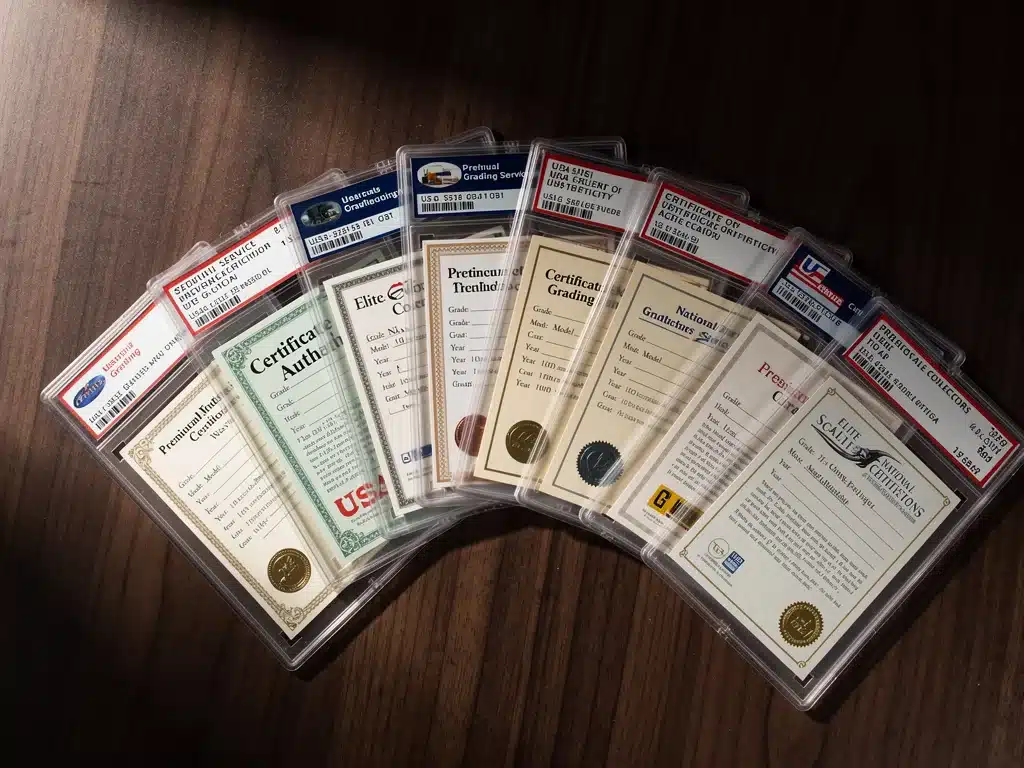
Some prominent grading services in the US have emerged as industry leaders, offering services that are highly regarded by collectors and dealers alike. These companies often provide secure encapsulation, detailed reports, and online databases for verifying graded items, further enhancing market transparency. Making an informed choice here can significantly impact the future liquidity and value of your graded models.
The Benefits of Professional Grading for US Collectors
Professional grading offers a multitude of benefits that extend beyond a simple condition assessment. For US collectors, it represents a strategic investment that can significantly enhance the value, authenticity, and overall enjoyment of their scale model collections. These advantages are becoming increasingly pronounced as the market continues to mature and attract more serious investors.
One of the primary benefits is the establishment of an objective, third-party assessment of a model’s condition. This eliminates subjective disagreements between buyers and sellers, streamlining transactions and building confidence. In a market where subtle differences can mean significant price variations, professional grading provides clarity and certainty.
Maximizing Resale Value and Authenticity
Graded models often command higher prices on the secondary market due to the verified condition and authenticity. Buyers are willing to pay a premium for assurance that they are acquiring exactly what is advertised, free from hidden defects or misrepresentations.
- Increased Market Value: Higher grades correlate directly with increased rarity and desirability, driving up prices.
- Enhanced Authenticity: Grading services often verify a model’s originality, protecting against counterfeits.
- Liquidity: Graded models are generally easier and quicker to sell due to buyer confidence.
- Dispute Resolution: A professional grade provides an objective benchmark in case of buyer-seller disagreements.
Furthermore, professional grading provides a permanent record of a model’s condition at a specific point in time. This documentation is invaluable for insurance purposes, estate planning, and simply for tracking the preservation of your collection over the years. It transforms a hobby item into a tangible, verifiable asset.
Future Trends in Scale Model Grading for 2026 and Beyond
The world of scale model collecting is dynamic, and grading standards are continuously evolving. Looking ahead to 2026 and beyond, several key trends are expected to shape how models are graded, valued, and collected in the US. Staying informed about these developments will be crucial for collectors aiming to maintain a competitive edge and protect their investments.
Technological advancements, such as AI-powered image analysis and blockchain for authenticity verification, are poised to revolutionize the grading process. These innovations promise even greater accuracy, efficiency, and security, further solidifying the role of professional grading in the market.
Technological Advancements and Digital Integration
The integration of cutting-edge technology will redefine precision and trust in grading. Digital tools will allow for more granular assessments and provide collectors with unprecedented access to information about their models.
- AI-Assisted Grading: Algorithms capable of detecting microscopic flaws and inconsistencies.
- Blockchain for Provenance: Secure, immutable records of ownership and grading history.
- High-Resolution Imaging: Advanced photographic techniques for detailed condition reports.
- NFC/RFID Tags: Embedded tags for instant digital verification of authenticity and grade.
These trends suggest a future where grading is not only more accurate but also more accessible and transparent. Collectors will benefit from a more standardized global market, where the provenance and condition of models can be verified with unprecedented ease, ultimately leading to a more robust and trustworthy collecting experience. Adapting to these changes will be key for any serious US collector.
| Key Aspect | Brief Description |
|---|---|
| Grading Evolution | Shift from subjective assessments to objective, third-party professional services for increased market trust. |
| Grading Criteria | Meticulous examination of model’s physical condition, paint, decals, and component integrity. |
| Packaging Importance | Original packaging condition significantly impacts overall value and grade; assessed rigorously. |
| Future Trends | AI, blockchain, and advanced imaging are set to enhance grading accuracy and transparency. |
Frequently Asked Questions About Scale Model Grading
Scale model grading is crucial for US collectors as it provides objective verification of a model’s condition and authenticity. This directly impacts its market value, facilitates smoother transactions, and helps protect investments in a rapidly evolving collectible market by establishing trust and transparency.
Primary factors include the model’s physical condition (paint, decals, component integrity, absence of damage), and the condition of its original packaging (box integrity, graphics, seals). Each aspect is meticulously inspected for any imperfections that could affect the overall grade and value.
Packaging condition is highly significant. A pristine, original box or blister pack, free from tears, creases, or fading, can substantially enhance a model’s grade and value. Conversely, damaged or missing packaging can significantly devalue even a perfect model, as it impacts completeness and historical integrity.
When selecting a grading service, prioritize reputation, experience, and the consistency of their grading scale. Also consider their turnaround time, cost, and security measures for handling valuable collectibles. A reputable service ensures transparent processes and widely accepted evaluations, boosting confidence in your graded models.
Future trends include AI-assisted grading for defect detection, blockchain for verifying provenance and ownership history, high-resolution imaging for detailed reports, and NFC/RFID tags for instant digital authentication. These technologies aim to enhance accuracy, transparency, and security in the grading process, benefiting collectors globally.
Conclusion
As the scale model collecting landscape continues to mature in the United States, a thorough understanding of professional grading standards is no longer just an advantage but a necessity. By embracing the evolving criteria, carefully selecting reputable grading services, and staying informed about future technological advancements, US collectors can confidently navigate the market. This proactive approach will not only protect their valuable investments but also enrich their collecting experience, ensuring that their cherished models are accurately valued, authenticated, and preserved for generations to come. The future of scale model collecting is bright, and informed grading practices will be at its core.