5G’s Impact on Automotive Connectivity: Faster Data by 2026
Advertisements
5G connectivity will fundamentally reshape the automotive industry by 2026, providing the necessary bandwidth and low latency for real-time data exchange, critical for enhancing vehicle safety, efficiency, and autonomous capabilities.
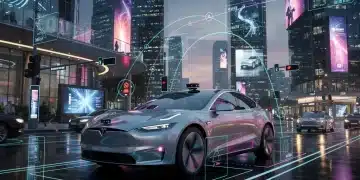
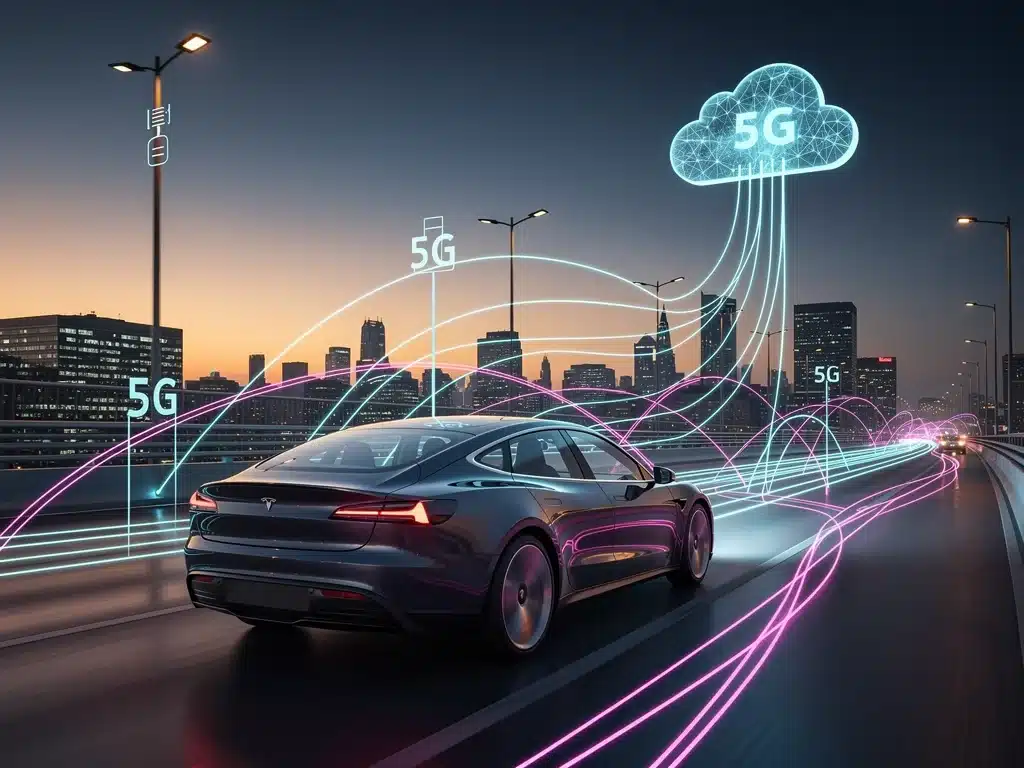
Imagine a world where your car communicates seamlessly with everything around it, from traffic lights to other vehicles, making every journey safer, more efficient, and incredibly intelligent. This isn’t a distant dream; it’s the imminent reality driven by The Impact of 5G on Automotive Connectivity: Faster Data and Real-Time Updates by 2026. The fifth generation of wireless technology is poised to revolutionize how vehicles operate, interact, and deliver experiences, fundamentally altering the landscape of transportation.
Advertisements
The foundational shift: why 5G matters for cars
The automotive industry is in the midst of a profound transformation, moving beyond mere transportation to become an integral part of our digital lives. At the heart of this evolution lies connectivity, and 5G is the ultimate enabler. Its unparalleled speed, ultra-low latency, and massive capacity are not just incremental improvements; they represent a fundamental paradigm shift for vehicle communication and functionality.
Traditional cellular networks simply cannot handle the sheer volume and critical nature of data required for future automotive applications. From streaming high-definition content to processing complex sensor data for autonomous driving, the demands are immense. 5G provides the robust infrastructure necessary to support these intricate systems, making real-time decisions and instantaneous reactions possible.
Speed and latency: the game changers
The core benefits of 5G—speed and latency—are critical for automotive applications. High bandwidth allows for the rapid transfer of large data packets, while low latency ensures that these transfers happen almost instantaneously, which is crucial for safety-critical functions.
- Ultra-high speed: 5G offers theoretical peak speeds of up to 10 gigabits per second (Gbps), significantly faster than 4G LTE. This enables rapid downloads of maps, software updates, and streaming of high-quality media.
- Near-zero latency: With latency as low as 1 millisecond (ms), 5G virtually eliminates communication delays. This is vital for vehicle-to-everything (V2X) communication, where milliseconds can mean the difference between avoiding an accident and a collision.
- Enhanced reliability: 5G networks are designed to be more reliable and resilient, ensuring continuous connectivity even in dense environments, which is essential for consistent performance of connected car features.
The ability to transmit and receive data with such efficiency unlocks a new realm of possibilities for vehicle safety, navigation, and entertainment. Without 5G’s capabilities, many of the advanced features we anticipate in future cars would remain theoretical, limited by the constraints of older network technologies.
Enhanced safety features: preventing accidents in real time
One of the most profound impacts of 5G on automotive connectivity will be in the realm of safety. By enabling real-time communication between vehicles, infrastructure, and pedestrians, 5G will significantly reduce the potential for accidents. This goes beyond current advanced driver-assistance systems (ADAS) by providing a much broader and more immediate understanding of the driving environment.
Imagine your car receiving instant alerts about a sudden stop two vehicles ahead, even before you can see it, or being warned about a pedestrian about to step into the road from behind a parked car. These scenarios, impossible with current network speeds, become reality with 5G’s low latency and high bandwidth, creating a proactive safety net.
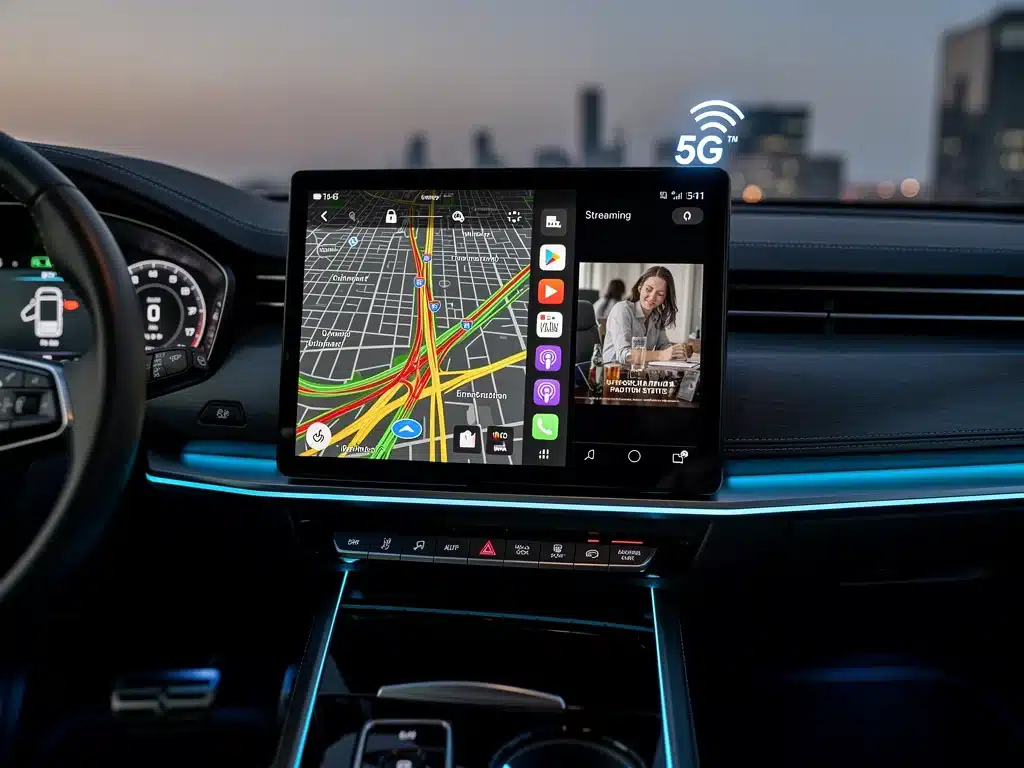
The integration of Vehicle-to-Everything (V2X) communication, powered by 5G, is central to these advancements. V2X encompasses various forms of communication that allow vehicles to share information with their surroundings.
Vehicle-to-everything (V2X) communication
- Vehicle-to-Vehicle (V2V): Cars can directly communicate with each other, sharing information about speed, direction, braking, and potential hazards. This allows for cooperative maneuvers and collision avoidance.
- Vehicle-to-Infrastructure (V2I): Vehicles can communicate with traffic lights, road signs, and other roadside units. This enables optimized traffic flow, warning drivers about construction zones, and providing real-time information on road conditions.
- Vehicle-to-Pedestrian (V2P): Cars can detect and communicate with pedestrians and cyclists, often through their smartphones or wearable devices, greatly enhancing safety in urban areas.
- Vehicle-to-Network (V2N): Communication with cloud-based services for navigation, emergency calls, and remote diagnostics, ensuring vehicles are always connected to vital information and assistance.
These interconnected systems work in concert to create a comprehensive awareness of the road environment, far exceeding what any single sensor or driver could achieve alone. The predictive capabilities enabled by 5G-powered V2X will be instrumental in preventing countless accidents and saving lives, making roads safer for everyone by 2026.
Autonomous driving: fueling the future of self-driving cars
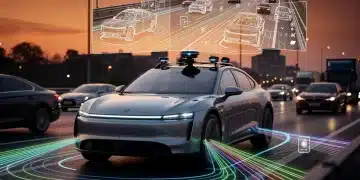
Autonomous vehicles rely heavily on vast amounts of data to perceive their surroundings, make decisions, and navigate safely. While onboard sensors provide a significant portion of this data, 5G connectivity is crucial for pushing autonomous driving to higher levels of sophistication and safety. By 2026, 5G will be indispensable for the widespread deployment of truly self-driving cars.
The complexity of real-world driving scenarios demands instantaneous processing and response. 5G’s low latency allows autonomous vehicles to receive and process critical information from external sources, such as high-definition maps, real-time traffic updates, and data from other vehicles, almost instantly. This enables more informed and safer decision-making, especially in dynamic and unpredictable environments.
Cloud connectivity and edge computing for autonomous vehicles
Autonomous driving systems require not only data collection but also sophisticated data processing and analysis. 5G facilitates this by enabling seamless interaction with cloud and edge computing resources.
- Cloud-based AI: Autonomous vehicles can offload complex AI processing tasks to powerful cloud servers via 5G, allowing for more advanced decision-making algorithms and continuous learning from a wider dataset.
- Edge computing: For critical, time-sensitive decisions, edge computing—processing data closer to the source (e.g., at a roadside unit or within the vehicle itself)—is vital. 5G ensures ultra-low latency communication between the vehicle and these edge nodes, enabling rapid responses.
- Over-the-Air (OTA) updates: 5G’s high bandwidth is perfect for delivering large software updates to autonomous vehicles, ensuring they always have the latest features, security patches, and performance enhancements without needing a visit to a service center.
The synergy between 5G, cloud computing, and edge computing is what will truly unlock the potential of autonomous driving. This robust connectivity ensures that self-driving cars are not only smart but also constantly learning and adapting, paving the way for safer and more efficient transportation systems by the middle of the decade.
Real-time updates and diagnostics: keeping cars optimized
Beyond immediate operational safety, 5G will profoundly impact the long-term health and performance of vehicles through real-time updates and advanced diagnostics. By 2026, cars will be more like continuously evolving smart devices, always connected and optimized, thanks to the capabilities of 5G automotive connectivity.
The days of waiting for a scheduled service appointment to get a software update or diagnose a minor issue will largely be behind us. 5G’s ability to handle large data transfers quickly and reliably means that vehicles can receive comprehensive over-the-air (OTA) updates for everything from infotainment systems to engine management software. This keeps cars current, enhances features, and rectifies issues proactively, often before the driver even notices.
Predictive maintenance and remote diagnostics
The continuous flow of data enabled by 5G allows for sophisticated predictive maintenance and remote diagnostic capabilities. This shifts vehicle care from reactive to proactive, improving reliability and reducing ownership costs.
- Proactive issue detection: Sensors within the vehicle can constantly monitor various components. With 5G, this data can be instantly transmitted to manufacturers or service centers for analysis, allowing potential issues to be identified and addressed before they lead to breakdowns.
- Remote troubleshooting: Technicians can remotely access vehicle diagnostics in real-time, often pinpointing the exact cause of a problem without the car needing to be physically present. This can lead to faster, more efficient repairs when service is required.
- Performance optimization: Manufacturers can gather anonymized data on vehicle performance under various conditions, using this information to refine future software updates and improve overall vehicle efficiency and longevity.
The continuous connectivity provided by 5G transforms vehicle ownership into a more seamless and less stressful experience. Drivers can rest assured that their cars are always running on the latest software, are constantly being monitored for optimal performance, and can receive necessary updates and diagnostics without significant inconvenience, marking a significant leap forward by 2026.
In-car experience: entertainment, productivity, and personalization
While safety and efficiency are paramount, 5G’s impact on automotive connectivity also extends significantly to the in-car experience. By 2026, vehicles will become true extensions of our digital lives, offering unparalleled entertainment, productivity, and personalization options, transforming travel into a more enjoyable and productive activity.
The high bandwidth of 5G makes buffering a thing of the past, even for multiple users streaming ultra-high-definition content simultaneously. This is a game-changer for long road trips, allowing passengers to enjoy seamless movies, gaming, and video calls. Furthermore, it enables more sophisticated augmented reality (AR) and virtual reality (VR) experiences within the vehicle, potentially turning windows into interactive displays.
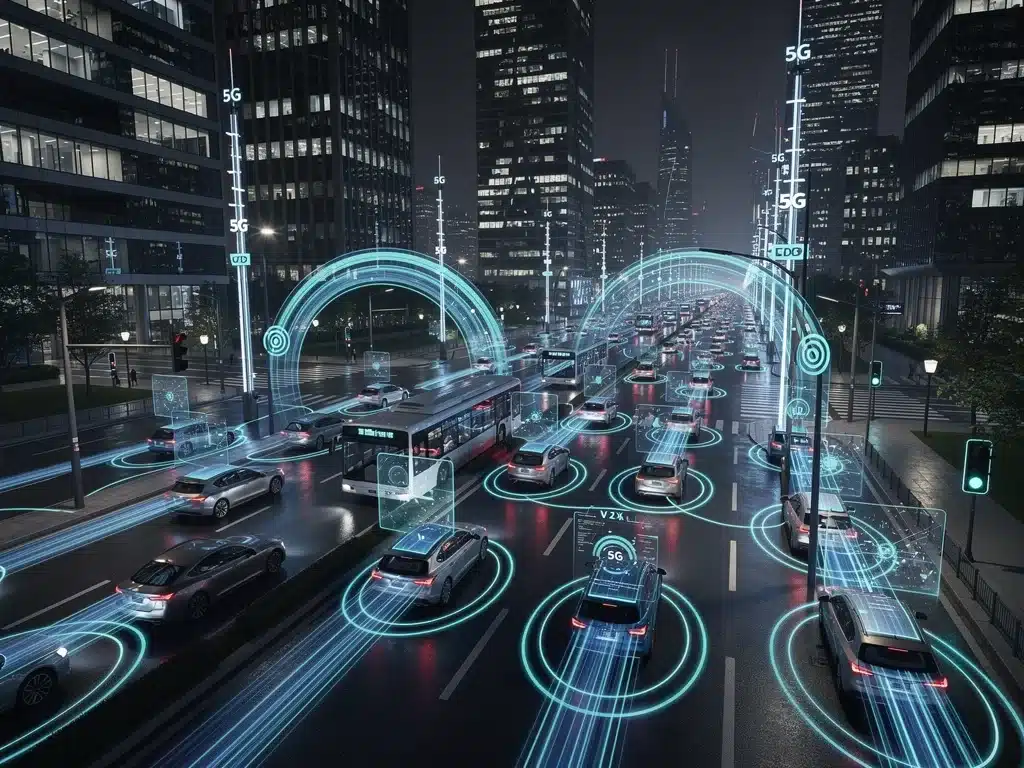
Advanced infotainment and connected services
5G will power a new generation of infotainment systems and connected services, making cars more integrated into our digital ecosystem.
- High-fidelity streaming: Passengers can stream 4K video, high-resolution audio, and graphics-intensive games without lag, turning the car into a mobile entertainment hub.
- Personalized experiences: With faster data, cars can download and update personalized profiles instantly, adjusting seat preferences, climate control, music, and navigation routes based on the driver or passenger.
- Mobile office capabilities: For business travelers, 5G enables reliable video conferencing, cloud access, and rapid file transfers, effectively turning the car into a mobile office on the go.
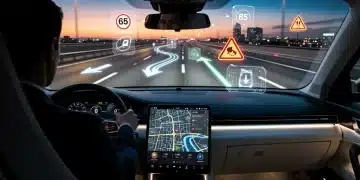
- Augmented reality navigation: High-bandwidth 5G can support advanced AR overlays on windshields or infotainment screens, providing intuitive navigation instructions, points of interest, and safety warnings directly within the driver’s line of sight.
The enhanced connectivity fosters a more immersive and adaptive environment within the vehicle. From personalized content to robust productivity tools, 5G ensures that the time spent in a car is not just about getting from point A to point B, but about a rich, connected experience that caters to individual needs and preferences, setting new standards for in-car technology by 2026.
Challenges and the road ahead for 5G in automotive
While the promise of 5G automotive connectivity is immense, its widespread implementation by 2026 also faces several challenges. These hurdles range from infrastructure deployment to cybersecurity, and addressing them will be crucial for realizing the full potential of this transformative technology.
The rollout of 5G infrastructure, particularly in rural areas and along major transportation corridors, is a massive undertaking. Unlike previous generations, 5G often requires a denser network of smaller cell towers, known as small cells, which can be costly and time-consuming to deploy. Furthermore, ensuring seamless handover between different 5G cells and even between 5G and other network types (like Wi-Fi) is critical for maintaining consistent connectivity in moving vehicles.
Overcoming obstacles to adoption
Several key challenges need to be systematically addressed to ensure a smooth transition to 5G-enabled automotive ecosystems.
- Infrastructure investment: Significant capital investment is required to build out the extensive 5G network necessary to support connected and autonomous vehicles across vast geographical areas, especially in the United States.
- Cybersecurity and privacy: With more data being transmitted and more systems connected, the risk of cyberattacks increases. Robust security protocols and data privacy measures are paramount to protect sensitive vehicle and personal information.
- Regulatory harmonization: Developing universal standards and regulations for V2X communication, data sharing, and autonomous vehicle operation across different regions is essential for global adoption and interoperability.
- Consumer acceptance and cost: The cost of 5G-enabled vehicles and services must be balanced with consumer willingness to pay. Educating the public about the benefits and ensuring affordability will be key to widespread adoption.
Despite these challenges, the automotive and telecommunications industries are actively collaborating to overcome them. Standard bodies, governments, and private companies are investing heavily in research, development, and deployment strategies. The momentum towards a 5G-connected automotive future is undeniable, and continuous innovation will pave the way for successful integration by 2026, making our roads smarter and safer.
| Key Aspect | Impact by 2026 |
|---|---|
| Real-Time Data | Enables instantaneous data exchange for V2X communication, critical for collision avoidance and traffic management. |
| Enhanced Safety | 5G-powered V2X communication provides proactive hazard warnings, significantly reducing accident rates. |
| Autonomous Driving | Low latency and high bandwidth are essential for advanced AI processing, cloud connectivity, and OTA updates for self-driving cars. |
| In-Car Experience | Transforms vehicles into mobile entertainment and productivity hubs with seamless streaming and personalized services. |
Frequently asked questions about 5G in automotive
5G significantly enhances vehicle safety through ultra-low latency and high bandwidth, enabling real-time V2X communication. This allows cars to transmit and receive critical data almost instantly, providing proactive warnings about road hazards, traffic conditions, and pedestrian movements, far beyond the capabilities of 4G networks.
V2X (Vehicle-to-Everything) communication allows vehicles to interact with other vehicles, infrastructure, pedestrians, and networks. 5G is essential because its near-zero latency ensures these interactions happen instantly, which is crucial for safety-critical applications like collision avoidance and cooperative driving maneuvers, where milliseconds matter.
By 2026, 5G will be a critical enabler for higher levels of autonomous driving, supporting complex AI processing, cloud connectivity, and real-time data exchange. While fully driverless cars in all conditions might still be evolving, 5G will significantly accelerate their development and deployment in defined operational domains.
5G dramatically improves in-car entertainment and productivity by providing seamless, high-bandwidth connectivity. This enables buffer-free 4K video streaming, high-fidelity audio, robust mobile office capabilities for video conferencing, and rapid cloud access, transforming the vehicle into a versatile mobile hub for all occupants.
Key challenges include substantial infrastructure investment for 5G network rollout, ensuring robust cybersecurity and data privacy, harmonizing global regulatory standards for V2X, and managing the cost of 5G-enabled vehicles and services to ensure broad consumer acceptance. These are being actively addressed by industry and governments.
The connected road ahead
The journey towards fully connected and intelligent vehicles is rapidly accelerating, with 5G serving as the indispensable engine driving this progress. By 2026, the comprehensive impact of 5G on automotive connectivity will be evident across every facet of the driving experience, from unparalleled safety enhancements to sophisticated in-car entertainment and the very architecture of autonomous operation. While challenges in infrastructure and standardization remain, the collaborative efforts across industries are paving the way for a future where vehicles are not just modes of transport but integral, intelligent nodes in our increasingly connected world. The promise of faster data and real-time updates is not merely an improvement; it is a fundamental redefinition of what a car can be, promising a safer, more efficient, and profoundly more enjoyable journey for everyone on the road.