US Automotive Market: 7% Growth in Q1 2026 Projections
Advertisements
The United States automotive market is projected to experience a robust 7% growth in the first quarter of 2026, driven by increasing consumer demand, significant electric vehicle adoption, and ongoing technological innovations. This expansion signals a dynamic period for the auto industry.
Advertisements
The automotive landscape in the United States is poised for a significant transformation, with projections indicating a robust United States automotive market growth of 7% in the first quarter of 2026. This anticipated surge is not merely a statistical anomaly but a reflection of deep-seated shifts in consumer preferences, technological advancements, and a resilient economic outlook. Understanding the intricate web of factors contributing to this growth is crucial for industry stakeholders, policymakers, and consumers alike. This article delves into the primary catalysts behind this optimistic forecast and explores what the future holds for the American auto industry.
Understanding the Current Market Dynamics and Q1 2026 Projections
The United States automotive market is a complex ecosystem, constantly influenced by a myriad of economic, technological, and social factors. As we approach 2026, the projections for a 7% growth in the first quarter signal a strong recovery and expansion phase, building on lessons learned from recent global challenges. This growth isn’t uniform across all segments; rather, it’s a nuanced picture reflecting evolving consumer demands and regulatory pressures.
Economic indicators play a pivotal role in shaping market performance. Factors such as disposable income levels, interest rates, and employment figures directly impact consumers’ ability and willingness to purchase new vehicles. A stable or improving economic environment typically correlates with increased automotive sales. Furthermore, the availability of financing options and competitive pricing strategies from manufacturers also significantly influence market dynamics.
Key Economic Indicators Driving Growth
- Consumer Confidence: A high level of consumer confidence translates into greater willingness to make large purchases, including new cars.
- Disposable Income: Increased disposable income provides consumers with more financial flexibility, directly boosting demand for vehicles.
- Interest Rates: Favorable interest rates on auto loans make vehicle financing more accessible and affordable, stimulating sales.
- Employment Rates: Low unemployment rates ensure a stable income for a larger segment of the population, supporting sustained purchasing power.
The 7% growth forecast for Q1 2026 suggests a confluence of these positive economic indicators. This optimistic outlook is further bolstered by strategic investments by automotive manufacturers in new technologies and production capabilities, ensuring a steady supply of innovative vehicles to meet anticipated demand. The market is also benefiting from a normalization of supply chains, which had previously constrained production and sales.
Ultimately, the projected growth for the United States automotive market in Q1 2026 is a testament to the industry’s resilience and its capacity to adapt to changing circumstances. It reflects a period where economic stability, consumer readiness, and strategic industry initiatives align to create a fertile ground for expansion.
The Surge of Electric Vehicle Adoption: A Primary Catalyst
One of the most significant forces propelling the United States automotive market growth is the accelerating adoption of electric vehicles (EVs). What was once a niche segment is rapidly becoming mainstream, driven by technological advancements, increasing environmental awareness, and supportive government policies. This shift is fundamentally reshaping the offerings from manufacturers and the choices available to consumers.
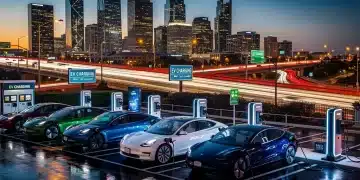
The appeal of EVs extends beyond their environmental benefits. Consumers are increasingly drawn to their lower operating costs, quieter rides, and the instant torque that provides a dynamic driving experience. Moreover, the continuous expansion of charging infrastructure, though still a work in progress, alleviates range anxiety and makes EVs a more practical option for a wider audience. Manufacturers are responding with a diverse array of EV models, from compact sedans to powerful trucks and SUVs, catering to various consumer needs and preferences.
Government Incentives and Infrastructure Development
- Tax Credits and Rebates: Federal and state incentives significantly reduce the upfront cost of EVs, making them more competitive with gasoline-powered vehicles.
- Charging Network Expansion: Investments in public and private charging stations are crucial for supporting widespread EV adoption and reducing range anxiety.
- Fleet Electrification: Government mandates and corporate sustainability goals are driving the electrification of commercial and public fleets, boosting EV sales.
The competitive landscape is also driving innovation in the EV sector. Established automakers are pouring billions into research and development, while new entrants are bringing disruptive technologies and business models to the forefront. This intense competition benefits consumers through lower prices, improved performance, and a broader selection of vehicles. The projected 7% growth in Q1 2026 is inextricably linked to this EV revolution, as a substantial portion of new vehicle sales is expected to come from electric models.
The transition to electric vehicles represents a monumental shift not just for the automotive industry, but for energy systems and urban planning. The continued growth of the United States automotive market will heavily depend on the sustained momentum of EV adoption and the collective efforts to build a robust supporting ecosystem.
Technological Advancements and Their Market Impact
Beyond electrification, a plethora of technological advancements are fundamentally transforming the automotive industry and contributing significantly to the projected United States automotive market growth. These innovations span various aspects of vehicle design, manufacturing, and user experience, making cars safer, more efficient, and increasingly connected. The integration of artificial intelligence (AI), advanced driver-assistance systems (ADAS), and enhanced connectivity features are not just luxuries but becoming standard expectations for many new car buyers.
Autonomous driving capabilities, while still in development for widespread adoption, are progressing rapidly. Features like adaptive cruise control, lane-keeping assist, and automatic emergency braking are already common, improving safety and reducing driver fatigue. These systems rely on sophisticated sensors, cameras, and AI algorithms to interpret real-time road conditions and respond accordingly. As these technologies mature, they promise to revolutionize transportation, potentially reducing accidents and improving traffic flow.
Key Technological Innovations in Modern Vehicles
- Advanced Driver-Assistance Systems (ADAS): Enhancements in ADAS features like automated parking, blind-spot monitoring, and cross-traffic alerts improve safety and convenience.
- Infotainment and Connectivity: Seamless integration with smartphones, over-the-air (OTA) updates, and in-car Wi-Fi create a more connected and personalized driving experience.
- Battery Technology: Breakthroughs in battery chemistry and manufacturing are leading to longer ranges, faster charging times, and reduced costs for EVs.
- AI and Machine Learning: AI is being used for predictive maintenance, personalized driving profiles, and optimizing vehicle performance and efficiency.
The impact of these technologies extends to manufacturing processes as well. Advanced robotics, 3D printing, and data analytics are streamlining production, improving quality, and reducing costs. This efficiency allows manufacturers to bring new models to market faster and respond more agilely to consumer demand. The appeal of cutting-edge technology is a strong driver for consumers to upgrade their vehicles, directly feeding into the market’s expansion.
The constant evolution of automotive technology creates a compelling reason for consumers to invest in new vehicles, ensuring that the United States automotive market remains dynamic and innovative. This technological leap is a cornerstone of the anticipated 7% growth in Q1 2026, promising a future of smarter, safer, and more enjoyable driving experiences.
Consumer Behavior Shifts and Preference for New Models
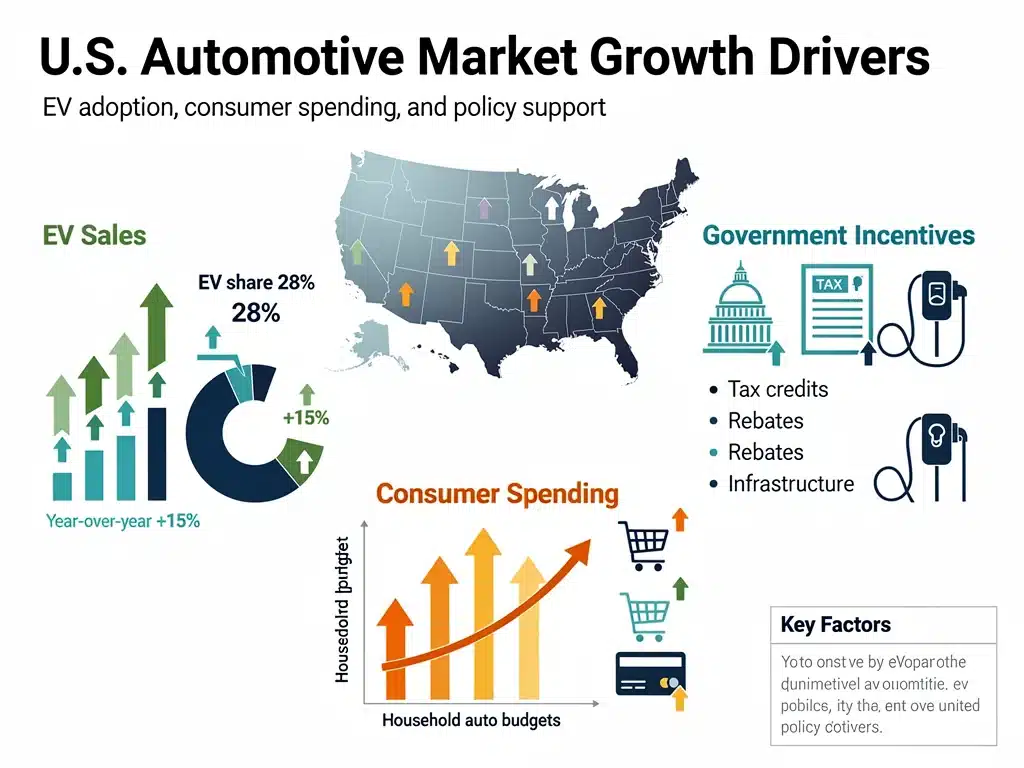
Consumer behavior is a dynamic force, and its current shifts are significantly contributing to the projected United States automotive market growth. Modern buyers are more informed, environmentally conscious, and tech-savvy than ever before, leading to distinct preferences that manufacturers are eager to meet. This evolving demand signals a departure from traditional purchasing patterns, with a greater emphasis on sustainability, connectivity, and personalized experiences.
There’s a growing inclination towards new vehicle models that offer advanced features, improved fuel efficiency, and a smaller carbon footprint. This is particularly evident in the increasing popularity of SUVs and crossovers, which combine practicality with a commanding driving position, alongside the aforementioned surge in EV interest. Consumers are also placing a higher value on vehicle safety, driving demand for cars equipped with the latest ADAS technologies and robust structural designs.
Evolving Consumer Priorities
- Sustainability: A strong preference for eco-friendly vehicles, including EVs and hybrids, due to environmental concerns.
- Technology Integration: High demand for vehicles with seamless smartphone integration, advanced infotainment systems, and intuitive user interfaces.
- Safety Features: Prioritization of vehicles equipped with cutting-edge safety technologies to protect occupants and pedestrians.
- Personalization: Desire for customizable options and features that cater to individual lifestyles and preferences.
The digital age has also transformed the car buying journey. Consumers are conducting extensive online research, comparing models, reading reviews, and even initiating purchases digitally before stepping into a dealership. This shift requires automakers and dealerships to adapt their sales strategies, focusing on a seamless omnichannel experience that caters to online and offline interactions. The ability to offer tailored digital experiences and transparent pricing is becoming a competitive differentiator.
Furthermore, the desire for newness and innovation drives many consumers to upgrade their vehicles more frequently, or at least consider newer models. This continuous churn creates a healthy market for both new and used car sales. The alignment of consumer preferences with the industry’s offerings is a powerful engine for the anticipated 7% growth in the United States automotive market, ensuring that demand remains robust and diversified.
Supply Chain Optimization and Manufacturing Efficiency
The resilience and growth of the United States automotive market, particularly the projected 7% increase in Q1 2026, are heavily reliant on the industry’s ability to maintain efficient supply chains and optimize manufacturing processes. Recent years have highlighted the vulnerabilities of global supply networks, prompting automakers to invest significantly in strengthening their operations and reducing dependencies. This focus on operational excellence is now paying dividends, ensuring a more stable and predictable production environment.
Manufacturers are implementing advanced analytics and AI-driven forecasting tools to better anticipate demand and manage inventory. This proactive approach helps mitigate potential disruptions, such as shortages of critical components or raw materials. Furthermore, there’s a growing trend towards regionalizing supply chains, bringing production closer to home markets to reduce lead times and transportation costs, while also enhancing control over quality and ethical sourcing.
Strategies for Supply Chain Resilience
- Diversification of Suppliers: Reducing reliance on a single source for critical components to minimize disruption risks.
- Regionalization of Production: Shifting manufacturing and sourcing closer to consumer markets to improve responsiveness and reduce logistics complexities.
- Digital Twin Technology: Using virtual models of the supply chain to simulate scenarios and identify potential bottlenecks before they occur.
- Enhanced Data Analytics: Leveraging big data to forecast demand, optimize inventory levels, and track supply chain performance in real-time.
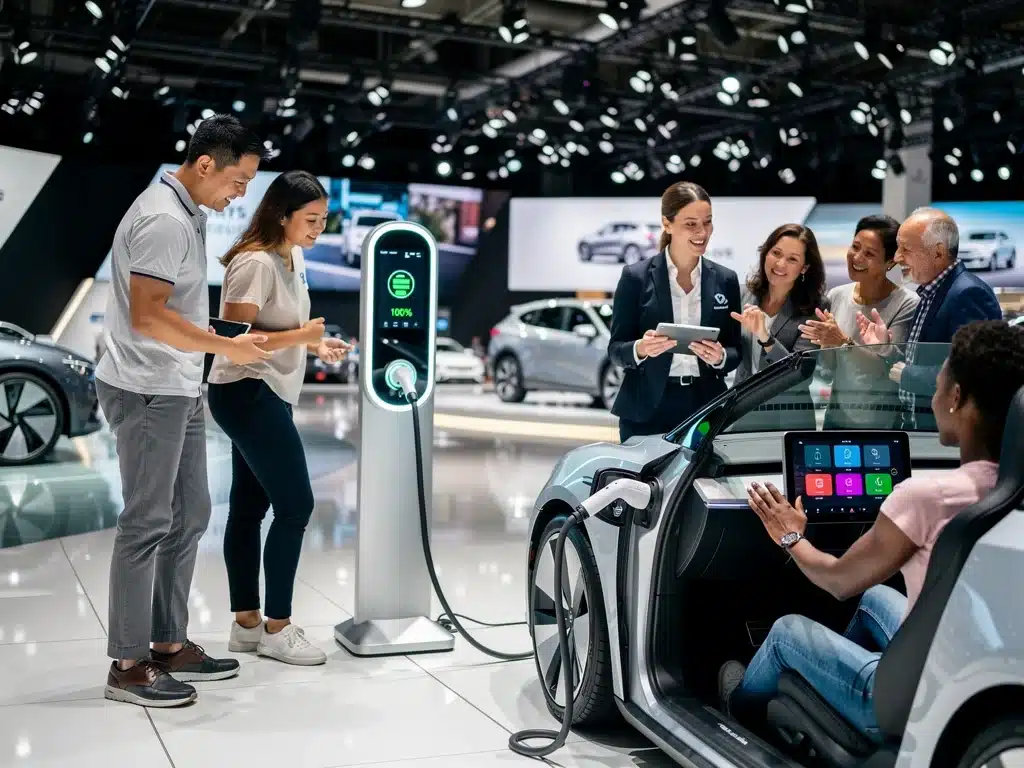
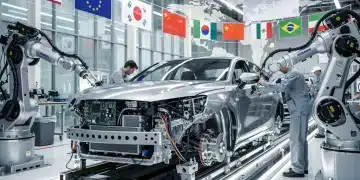
Manufacturing facilities are also undergoing significant modernization. Automation, robotics, and lean manufacturing principles are being adopted to increase production efficiency, reduce waste, and improve product quality. These investments not only boost output but also enable greater flexibility in manufacturing, allowing automakers to quickly adapt to changes in market demand or introduce new models with greater agility. The ability to produce a wider variety of vehicles, including a growing number of EVs, efficiently is crucial for capitalizing on market opportunities.
The continuous improvement in supply chain management and manufacturing efficiency is a quiet but powerful driver of the United States automotive market growth. By ensuring a steady flow of vehicles to consumers and optimizing operational costs, the industry is laying a solid foundation for sustainable expansion and profitability in the competitive landscape of 2026 and beyond.
Forecasting the Future: Challenges and Opportunities
While the forecast for a 7% United States automotive market growth in Q1 2026 is undoubtedly positive, the industry is not without its challenges and opportunities. Navigating this dynamic landscape requires foresight, adaptability, and a continued commitment to innovation. Understanding these future dynamics is essential for sustained success and for maintaining the upward trajectory of the market.
One significant challenge lies in the rapid pace of technological change. While new technologies drive growth, they also demand substantial investment in research and development, as well as the constant retraining of the workforce. Keeping up with advancements in EV battery technology, autonomous driving, and connected car features requires continuous innovation cycles. Additionally, cybersecurity threats to increasingly connected vehicles represent a growing concern that manufacturers must address proactively to maintain consumer trust.
Emerging Opportunities for Growth
- New Mobility Services: The rise of ride-sharing, car-sharing, and subscription models offers new revenue streams and ways for consumers to access transportation.
- Sustainable Manufacturing: Opportunities to implement greener production processes and materials, appealing to environmentally conscious consumers and reducing operational costs.
- Data Monetization: Leveraging vehicle data (with appropriate privacy safeguards) to offer personalized services, insurance, and predictive maintenance solutions.
- Global Market Expansion: US automakers can capitalize on growing demand in emerging markets, diversifying their revenue base beyond domestic sales.
Another area of focus is regulatory evolution. Governments worldwide are imposing stricter emissions standards and promoting EV adoption through various policies. While these regulations can initially present hurdles, they also create a clear pathway for innovation and market leadership for companies that embrace sustainable practices. The challenge lies in balancing compliance with profitability and ensuring that new regulations foster, rather than hinder, market growth.
Despite these challenges, the opportunities for the United States automotive market are immense. The ongoing shift towards electrification and autonomous driving is opening up entirely new business models and revenue streams. The focus on customer experience, personalized services, and advanced in-car technology will continue to differentiate brands and attract new buyers. The industry’s ability to innovate, adapt, and address emerging challenges will be key to realizing its full potential and sustaining the impressive growth seen in Q1 2026.
Investment Trends and Economic Impact
The projected 7% United States automotive market growth in Q1 2026 is not merely a sales figure; it signifies a substantial economic impact, driven by significant investment trends across the industry. This influx of capital is fueling innovation, creating jobs, and stimulating economic activity across various sectors. Understanding where these investments are directed provides insight into the future trajectory of the automotive landscape.
Automakers are investing heavily in retooling their manufacturing plants to produce electric vehicles and components, including batteries. This often involves building entirely new facilities or significantly upgrading existing ones, creating thousands of construction jobs and long-term manufacturing positions. Furthermore, research and development budgets are soaring as companies race to develop next-generation technologies like solid-state batteries, advanced AI for autonomous driving, and sophisticated connectivity solutions.
Key Investment Areas
- Electric Vehicle Manufacturing: Billions are being poured into EV and battery production facilities to meet burgeoning demand.
- Research and Development: Significant investment in autonomous driving, AI, advanced materials, and sustainable technologies.
- Charging Infrastructure: Public and private sector investments are expanding the EV charging network nationwide.
- Digital Transformation: Funding for software development, data analytics, and cybersecurity to support connected vehicles and digital sales platforms.
Beyond direct automotive manufacturing, the ripple effect of these investments is profound. Industries supplying raw materials, electronic components, and software solutions are also experiencing growth. The expansion of the charging infrastructure, for instance, creates demand for construction services, electrical equipment, and energy management systems. This interconnected growth fosters a robust economic environment, supporting small and medium-sized businesses across the supply chain.
The automotive industry’s economic impact also extends to job creation in sales, service, and after-market sectors. As more advanced vehicles hit the road, there’s a growing need for skilled technicians capable of servicing complex EV and autonomous systems. This necessitates investments in training and education programs to equip the workforce with the necessary expertise. The sustained investment in the United States automotive market is a strong indicator of long-term economic health and innovation, making the Q1 2026 growth forecast a positive sign for the broader economy.
| Key Factor | Brief Description |
|---|---|
| EV Adoption | Increasing consumer and fleet interest in electric vehicles drives significant market expansion. |
| Technological Advances | Innovations in ADAS, AI, and connectivity enhance vehicle appeal and functionality. |
| Economic Stability | Favorable economic conditions, consumer confidence, and disposable income boost purchasing power. |
| Supply Chain Efficiency | Optimized manufacturing and diversified supply chains ensure consistent vehicle availability. |
Frequently Asked Questions About the US Automotive Market Growth
The primary contributors to the projected 7% growth include robust electric vehicle (EV) adoption, significant technological advancements in vehicle features, a resilient economic environment boosting consumer confidence, and improved supply chain efficiencies ensuring vehicle availability. These factors combine to create strong market momentum.
EV adoption is a crucial catalyst. Increasing consumer interest in sustainable transportation, coupled with expanding charging infrastructure and supportive government incentives, is driving a substantial portion of new vehicle sales. EVs are no longer a niche but a mainstream segment, heavily influencing overall market expansion.
Technological advancements, such as advanced driver-assistance systems (ADAS), artificial intelligence (AI) integration, and enhanced connectivity, make new vehicles more attractive to consumers. These innovations improve safety, efficiency, and the overall driving experience, compelling buyers to upgrade to newer, more feature-rich models.
Despite the positive outlook, challenges remain. These include managing the rapid pace of technological change, ensuring cybersecurity for connected vehicles, adapting to evolving regulatory landscapes, and navigating potential global economic uncertainties. Industry players must remain agile to mitigate these risks effectively.
The 7% growth is expected to have a significant positive economic impact. It will fuel substantial investments in manufacturing and R&D, create numerous jobs across the industry and its supply chains, and stimulate economic activity in related sectors like raw materials and technology. This growth signifies broader economic health.
Conclusion
The projected 7% growth for the United States automotive market in Q1 2026 marks a pivotal moment for the industry, signaling a period of robust expansion and profound transformation. This optimistic forecast is underpinned by a powerful combination of factors: the relentless surge in electric vehicle adoption, groundbreaking technological advancements, a stable economic environment, and optimized supply chain operations. As consumer preferences continue to evolve towards more sustainable, connected, and technologically advanced vehicles, automakers are responding with innovation and strategic investments. While challenges such as rapid technological shifts and regulatory complexities persist, the opportunities for growth, job creation, and economic stimulation are immense. The American automotive landscape is not just recovering; it is redefining itself, poised for a dynamic and innovative future.