Lidar Technology in Autonomous Driving: 2026 Deep Dive
Advertisements
By 2026, Lidar technology is set to revolutionize autonomous driving, delivering unparalleled precision and safety while achieving significant cost reductions that accelerate its widespread adoption in the automotive industry.
The journey towards fully autonomous vehicles is paved with technological advancements, and at its forefront stands Lidar Technology in Autonomous Driving: A 2026 Deep Dive into Its Precision and Cost Reduction. This sophisticated sensor system is rapidly evolving, promising a future where vehicles navigate our roads with unprecedented safety and efficiency. As we approach 2026, the industry is witnessing a pivotal shift, driven by enhanced performance and significantly reduced manufacturing costs, making Lidar a cornerstone for the next generation of self-driving cars.
Advertisements
The Pivotal Role of Lidar in Autonomous Navigation
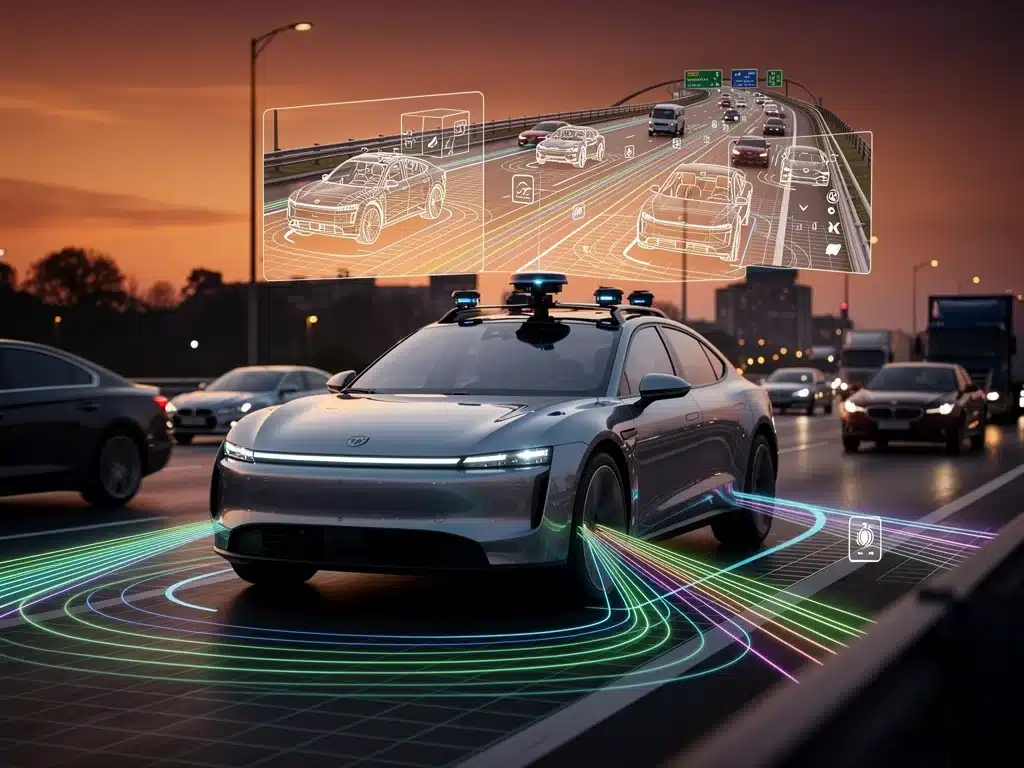
Lidar, an acronym for Light Detection and Ranging, operates by emitting pulsed laser light to measure distances to objects and create detailed 3D maps of the surrounding environment. This capability is paramount for autonomous vehicles, providing a high-resolution perception that complements other sensors like cameras and radar. By 2026, Lidar’s role will have solidified as an indispensable component, offering robust performance in varying lighting and weather conditions, which is critical for reliable autonomous operation.
The precision offered by Lidar is unmatched by other sensor modalities alone. It allows self-driving cars to accurately detect pedestrians, cyclists, other vehicles, and even small obstacles on the road, distinguishing them with remarkable clarity. This detailed environmental understanding is crucial for safe navigation, collision avoidance, and making informed driving decisions in complex urban and highway scenarios.
Enhanced Environmental Mapping
Lidar systems generate point clouds, which are dense collections of data points representing the shape and distance of objects. These point clouds are then processed by the vehicle’s onboard computer to construct a real-time, comprehensive 3D model of the vehicle’s surroundings. This detailed mapping is vital for:
- Accurate localization within high-definition maps.
- Precise object detection and classification.
- Understanding dynamic changes in the environment.
- Predicting the movement of other road users.
Furthermore, the ability of Lidar to function effectively in low-light conditions, where cameras struggle, and its independence from ambient light, sets it apart. While radar provides velocity and distance, its angular resolution is often lower than Lidar, meaning it cannot distinguish between closely spaced objects as effectively. This synergistic relationship with other sensors creates a robust perception system, bolstering the overall safety and reliability of autonomous vehicles.
In essence, Lidar provides the foundational spatial awareness that autonomous vehicles need to operate safely and effectively. Its ability to create precise, real-time 3D models of the environment ensures that the vehicle always knows its exact position and the precise location of everything around it, a critical factor for achieving higher levels of autonomy.
Technological Advancements Driving Lidar Evolution
The Lidar landscape is undergoing rapid innovation, with significant technological leaps expected to mature by 2026. These advancements are not only improving performance but are also directly contributing to the anticipated cost reductions that will make Lidar more accessible for mass-market automotive integration. The shift from traditional mechanical Lidar to more compact and cost-effective solid-state alternatives is a prime example of this evolution.
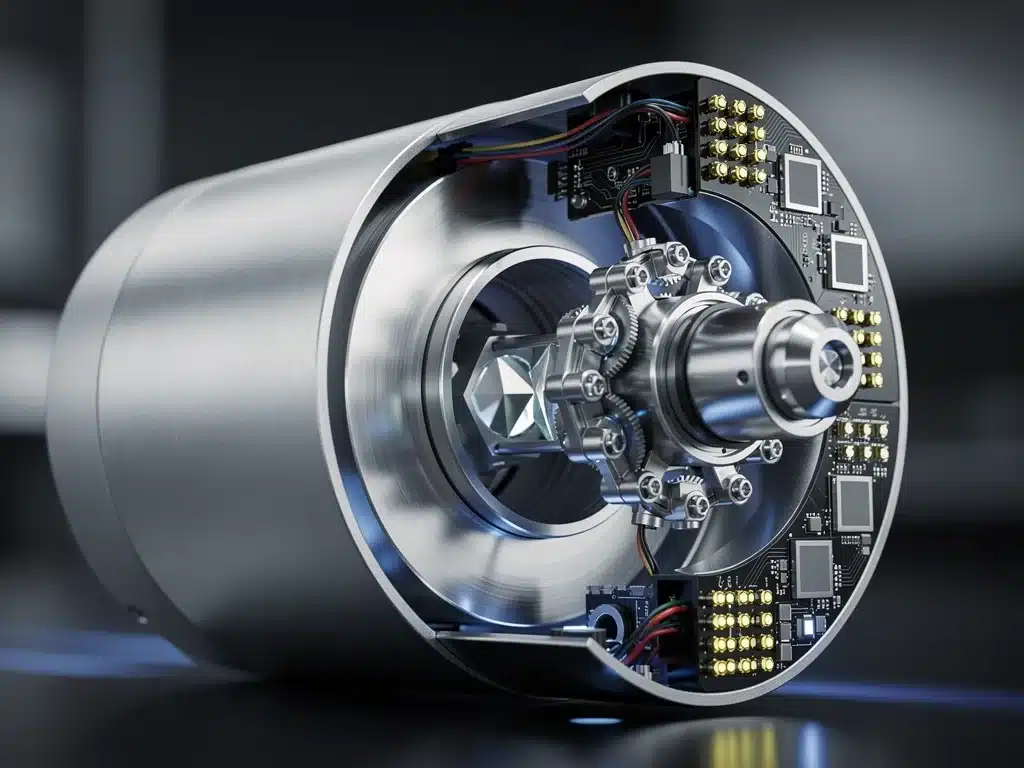
Solid-state Lidar, unlike its mechanical predecessors that use rotating parts, employs micro-electromechanical systems (MEMS) or optical phased arrays to steer laser beams. This eliminates the need for bulky, expensive, and fragile moving components, leading to smaller form factors, increased durability, and lower manufacturing costs. By 2026, solid-state Lidar is expected to be the dominant form factor in production vehicles.
Key Innovations and Their Impact
- Solid-State Lidar: Reduces size, cost, and improves reliability by eliminating mechanical scanning.
- Frequency Modulated Continuous Wave (FMCW) Lidar: Offers advantages such as direct velocity measurement (Doppler effect), immunity to interference from other Lidar sensors, and improved range resolution.
- Software-Defined Lidar: Enables greater flexibility and adaptability, allowing Lidar systems to be optimized for different driving scenarios through software updates.
- Advanced Signal Processing: Enhanced algorithms improve the ability to filter out noise, detect distant objects, and operate effectively in adverse weather conditions like fog, rain, and snow.
These innovations are not isolated; they often build upon each other to create a more sophisticated and robust Lidar ecosystem. For instance, the combination of solid-state architecture with FMCW technology promises a Lidar unit that is not only compact and affordable but also highly performant and resistant to environmental challenges. This convergence of technologies is accelerating the timeline for widespread Lidar adoption in consumer vehicles.
The continuous push for smaller, more efficient, and more capable Lidar units is a testament to the industry’s commitment to autonomous driving. These technological advancements are not just theoretical; they are being rigorously tested and validated, paving the way for their integration into production vehicles in the very near future, fundamentally transforming how cars perceive and interact with their environment.
The Pursuit of Cost Reduction: A 2026 Outlook
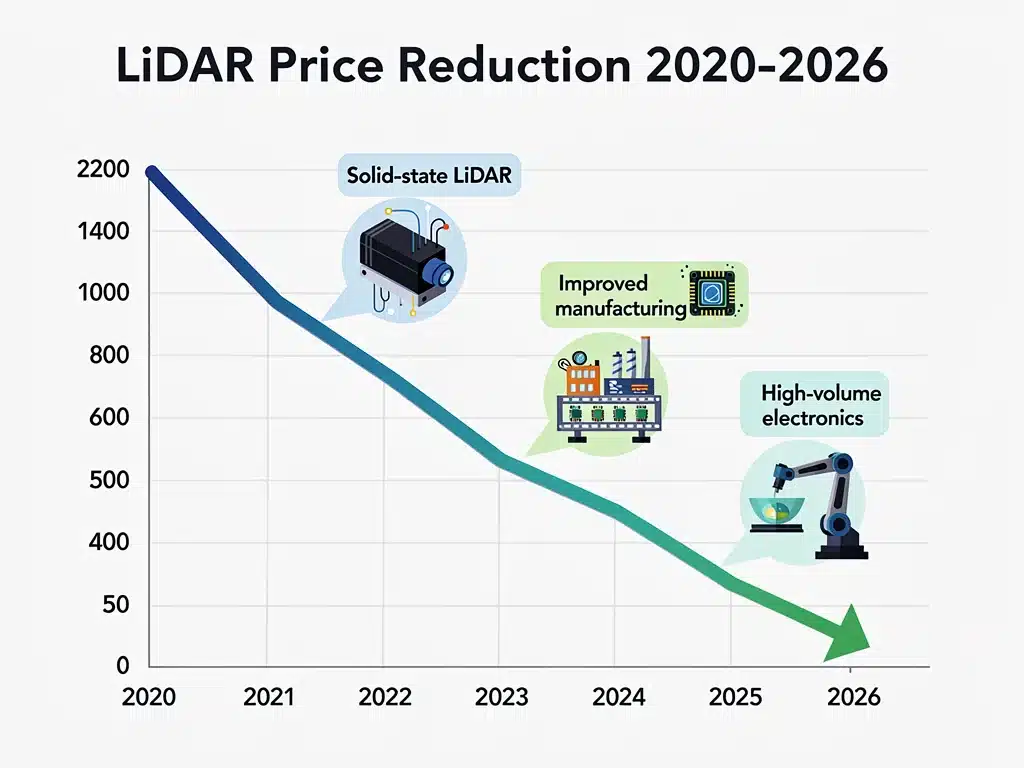
One of the most significant barriers to widespread adoption of Lidar in autonomous vehicles has historically been its high cost. Early Lidar units often commanded prices in the tens of thousands of dollars, making them prohibitive for all but experimental or high-end luxury vehicles. However, the outlook for 2026 is dramatically different, with significant strides made in driving down these costs, making Lidar an increasingly viable option for mass-produced cars.
The cost reduction is a multi-faceted effort, encompassing improvements in manufacturing processes, the economies of scale achieved through increased demand, and the aforementioned technological shifts towards solid-state designs. As more automotive manufacturers commit to integrating Lidar into their autonomous driving platforms, the volume of production naturally increases, leading to lower per-unit costs.
Strategies for Cost Efficiency
- Mass Production: As demand grows, manufacturing processes become more streamlined and efficient, driving down unit costs.
- Component Miniaturization: Smaller components are generally less expensive to produce and integrate.
- Standardization: Industry-wide standards for Lidar components and interfaces can lead to economies of scale and reduced development costs.
- Advanced Packaging Techniques: Innovations in how Lidar components are assembled and protected further reduce manufacturing expenses.
- Vertical Integration: Some automotive OEMs are investing in or acquiring Lidar companies to control the supply chain and reduce costs.
By 2026, it is projected that the cost of automotive-grade Lidar sensors could drop to a few hundred dollars per unit for certain applications, a staggering reduction from previous figures. This affordability opens the door for Lidar to be integrated not just into Level 4 and Level 5 autonomous vehicles but also into more advanced Level 2 and Level 3 driver-assistance systems, enhancing safety features across a wider range of vehicles.
The continuous innovation in materials science, semiconductor manufacturing, and optical engineering is also playing a crucial role. Researchers and engineers are constantly seeking novel ways to produce Lidar components more cheaply without compromising performance or reliability. This relentless pursuit of cost efficiency is critical for Lidar to achieve its full potential in the autonomous driving revolution, making advanced safety features accessible to a broader consumer base.
Lidar’s Precision in Diverse Driving Scenarios
The precision of Lidar technology is not merely about detecting objects; it’s about doing so reliably and accurately across a vast array of driving conditions and environments. This capability is what truly elevates Lidar as a critical sensor for autonomous vehicles, enabling them to navigate complex scenarios with human-like, or even superhuman, perception. By 2026, Lidar systems will be even more refined, offering enhanced performance in challenging situations.
Consider urban environments, which are notoriously difficult for autonomous systems due to their dynamic nature. Pedestrians, cyclists, sudden lane changes, construction zones, and intricate intersections all demand an extremely high level of spatial awareness. Lidar’s ability to create a dense, highly accurate 3D point cloud allows autonomous vehicles to precisely map these complex scenes, identifying potential hazards and predicting movements with remarkable accuracy.
Navigating Challenging Conditions
- Low Light and Night Driving: Unlike cameras, Lidar does not rely on ambient light, maintaining high performance in darkness.
- Harsh Weather: While extreme conditions like heavy fog or snow can still pose challenges, advancements in Lidar (e.g., higher power lasers, advanced filtering) are improving its resilience.
- Complex Intersections: Lidar’s 3D mapping helps distinguish between multiple moving objects and static infrastructure, crucial for safe navigation.
- Unforeseen Obstacles: The high resolution allows for the detection of small, unexpected objects on the road, such as debris.
On highways, Lidar’s extended range and precision are vital for detecting fast-moving vehicles at a distance, enabling timely reactions and safe lane changes. It can accurately measure the distance and speed of surrounding traffic, feeding this critical data into the vehicle’s decision-making algorithms. This level of detail ensures that autonomous vehicles can maintain safe following distances and execute maneuvers smoothly and confidently.
The continuous refinement of Lidar algorithms, coupled with improved sensor hardware, means that by 2026, Lidar will be even more adept at handling edge cases and ambiguous situations that currently challenge autonomous systems. This enhanced precision will contribute significantly to the overall safety and trustworthiness of self-driving cars, accelerating public acceptance and regulatory approval.
Integration Challenges and Solutions for Lidar
While the benefits of Lidar are clear, its integration into autonomous vehicles presents a unique set of challenges that the industry is actively addressing. These challenges range from the physical placement of sensors on a vehicle to the complex task of fusing Lidar data with information from other sensors. By 2026, significant progress is anticipated in overcoming these hurdles, leading to more seamless and aesthetically integrated Lidar solutions.
One primary challenge involves sensor placement. Lidar units need an unobstructed view of the environment, often requiring them to be mounted high on the vehicle or at various points around its periphery. This can impact vehicle aesthetics, aerodynamics, and even pedestrian safety in the event of a collision. Manufacturers are exploring various solutions, including integrating Lidar directly into headlights, taillights, side mirrors, and even within the vehicle’s bodywork to maintain a sleek design.
Overcoming Integration Hurdles
- Aesthetic Integration: Developing smaller, more discreet Lidar units that can be seamlessly blended into vehicle design.
- Data Fusion: Creating sophisticated algorithms to effectively combine Lidar data with camera and radar inputs for a comprehensive perception model.
- Thermal Management: Ensuring Lidar sensors operate reliably in extreme temperatures, which is critical for their longevity and performance.
- Durability and Cleaning: Protecting Lidar units from road debris, dirt, and adverse weather, and developing self-cleaning mechanisms.
Another significant challenge lies in data processing and fusion. Lidar generates vast amounts of data, which must be processed in real-time and combined with data from cameras, radar, and ultrasonic sensors to create a unified and accurate perception of the world. This requires powerful onboard computing capabilities and highly optimized algorithms to ensure low latency and high reliability.
By 2026, advancements in edge computing and specialized AI accelerators are expected to significantly enhance the processing capabilities of autonomous vehicles, allowing for more efficient and robust sensor fusion. Furthermore, the development of standardized data formats and communication protocols will streamline the integration process, reducing development time and costs for automotive OEMs. These solutions are crucial for Lidar to move beyond pilot projects and become a standard feature in autonomous vehicles.
The Future Landscape: Lidar’s Impact Beyond 2026
While 2026 marks a significant milestone for Lidar technology in autonomous driving, its impact is poised to extend far beyond this immediate horizon. The innovations and cost reductions achieved by this time will lay the groundwork for even more advanced and pervasive applications of Lidar, not just in personal vehicles but across various sectors. The long-term vision involves Lidar becoming an ubiquitous sensor, fundamentally altering how we interact with our physical environment.
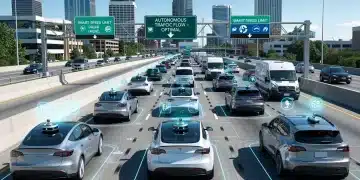
Beyond Level 5 autonomous vehicles, which will rely heavily on Lidar for their unparalleled safety and reliability, we can expect to see Lidar integrated into smart city infrastructure. Imagine traffic lights and intersections equipped with Lidar sensors, providing real-time data on traffic flow, pedestrian movement, and potential hazards to optimize urban mobility and enhance public safety. This ‘smart infrastructure’ would communicate directly with autonomous vehicles, creating a highly efficient and safe transportation ecosystem.
Emerging Applications and Trends
- Robotics and Logistics: Lidar will continue to play a crucial role in autonomous robots for warehousing, delivery, and industrial automation.
- Mapping and Surveying: Enhanced Lidar systems will provide even more detailed and efficient 3D mapping of terrains and urban areas.
- Advanced Driver Assistance Systems (ADAS): Lidar could become standard in ADAS, offering superior collision avoidance and adaptive cruise control.
- Personal Mobility Devices: Integration into wheelchairs, scooters, and other personal mobility solutions for enhanced navigation and safety.
The evolution of Lidar will also likely involve further miniaturization and increased resolution, allowing for even finer detail in environmental perception. Developments in quantum Lidar, which utilizes quantum phenomena to achieve higher sensitivity and range, could revolutionize performance in challenging conditions. The ongoing research into solid-state Lidar will also push the boundaries of cost-effectiveness and reliability even further, making Lidar an increasingly attractive option for a multitude of applications.
Ultimately, the trajectory of Lidar technology suggests a future where our world is increasingly perceived and understood by machines with remarkable precision. The foundational work being done up to and through 2026 will not only enable safer and more efficient autonomous driving but will also unlock a wealth of possibilities across industries, fundamentally reshaping our technological landscape and the way we experience mobility and interaction with our surroundings.
| Key Aspect | Description by 2026 |
|---|---|
| Precision | Unmatched 3D environmental mapping, crucial for robust object detection and safe navigation in diverse conditions. |
| Cost Reduction | Significant decrease in unit price, driven by solid-state technology and mass production, enabling wider adoption. |
| Technological Advancements | Solid-state, FMCW Lidar, and advanced signal processing enhance performance and reliability. |
| Integration Solutions | Efforts to seamlessly blend Lidar into vehicle design and improve data fusion with other sensors. |
Frequently Asked Questions About Lidar in Autonomous Driving
Lidar (Light Detection and Ranging) uses pulsed laser light to measure distances and create precise 3D maps of a vehicle’s surroundings. It emits millions of laser points per second, which bounce off objects and return to the sensor, allowing the car to perceive its environment in real-time, crucial for navigation.
Lidar offers superior precision in 3D depth perception, creating highly detailed environmental maps regardless of lighting conditions. While cameras provide color and texture, and radar offers velocity, Lidar’s accurate spatial data is indispensable for robust object detection and safe autonomous navigation, especially in complex scenarios.
By 2026, Lidar costs are projected to significantly decrease due to advancements in solid-state technology, which eliminates expensive mechanical parts. Increased demand and economies of scale from mass production, along with more efficient manufacturing processes and component miniaturization, will drive prices down, making Lidar more accessible.
Key advancements include solid-state Lidar for smaller, more durable units, and Frequency Modulated Continuous Wave (FMCW) Lidar, which offers direct velocity measurement and immunity to interference. Enhanced signal processing and software-defined Lidar further improve its ability to operate reliably in diverse and challenging conditions.
Challenges include aesthetic integration into vehicle design, effective data fusion with other sensors, thermal management for reliable operation, and durability against environmental factors like dirt and debris. Solutions involve miniaturization, advanced algorithms, and robust packaging to overcome these hurdles for widespread adoption.
Conclusion
As we look towards 2026, the trajectory of Lidar Technology in Autonomous Driving: A 2026 Deep Dive into Its Precision and Cost Reduction is undeniably upward. The convergence of technological breakthroughs, particularly in solid-state Lidar and advanced data processing, with aggressive cost reduction strategies, positions Lidar as an indispensable component for the next generation of autonomous vehicles. Its unparalleled precision in environmental perception, coupled with increasing affordability, will not only enhance the safety and reliability of self-driving cars but also accelerate their widespread adoption. Beyond personal mobility, the foundational advancements made in Lidar by 2026 will unlock a wealth of opportunities across smart city infrastructure, logistics, and robotics, cementing its role as a transformative technology that redefines how machines understand and interact with the world around us.