Digital Product Passports: US Apparel Transparency by 2026

Advertisements
Digital product passports will fundamentally transform the US apparel industry by 2026, providing consumers with comprehensive, verifiable information about a product’s lifecycle, from sourcing to disposal, to promote greater transparency and sustainability.
As the year 2026 approaches, a significant shift is on the horizon for the US apparel industry, driven by the impending implementation of digital product passports. This innovative concept is poised to redefine how consumers interact with their clothing, offering unprecedented levels of transparency and insight into the garments they purchase.
Advertisements
Understanding Digital Product Passports
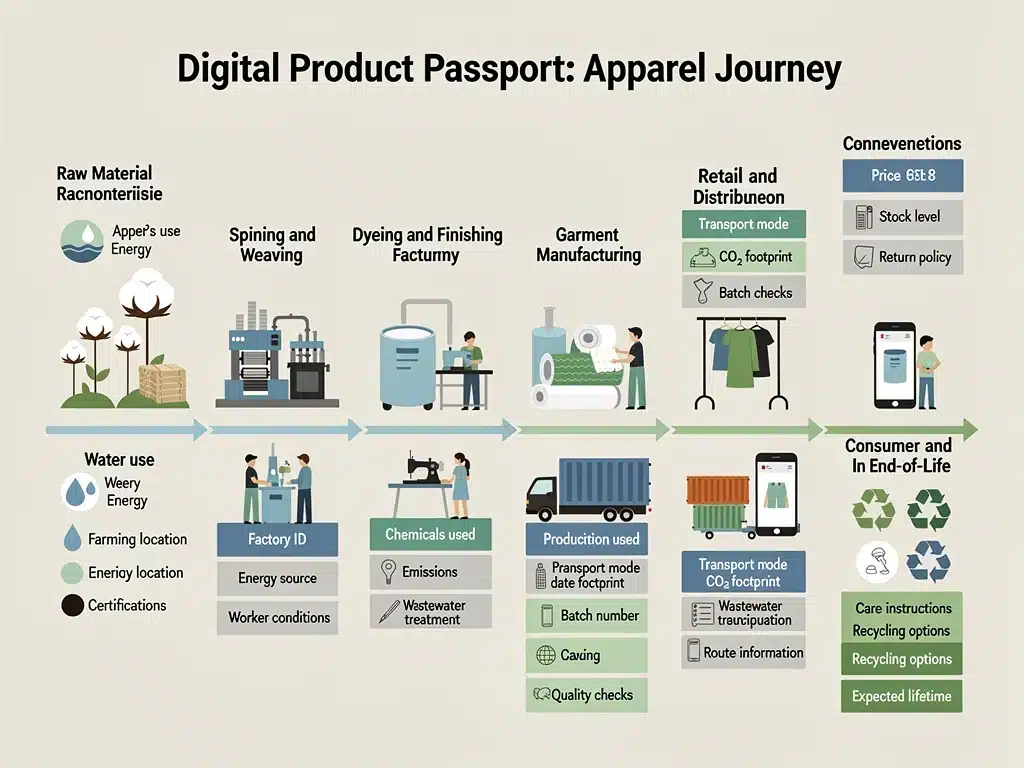
Digital product passports (DPPs) are essentially electronic records that provide comprehensive information about a product’s lifecycle. For apparel, this means a detailed history from the raw materials used, through manufacturing processes, transportation, retail, and even end-of-life options like recycling or repair. This digital identity aims to empower consumers with knowledge.
The concept stems from a growing global push for greater sustainability and accountability within various industries, with the European Union leading the charge. While specific US regulations are still evolving, the global momentum, coupled with increasing consumer demand for ethical and sustainable products, suggests that similar mandates or market-driven adoption will become standard in the US apparel sector by 2026.
What Information Will a DPP Contain?
A digital product passport for apparel is designed to be a rich data repository. It will go far beyond a simple care label, offering a granular view of a garment’s journey and composition. This will include details that were previously difficult, if not impossible, for the average consumer to access.
- Material Origin: Where and how raw materials (e.g., cotton, polyester, wool) were sourced, including certifications for organic, recycled, or fair-trade origins.
- Manufacturing Details: Information about the factories involved, including labor practices, energy consumption, and water usage, potentially with audit reports.
- Environmental Impact: Data on carbon footprint, water footprint, and chemical use throughout the production process.
- Durability and Repairability: Expected lifespan of the garment, instructions for repair, and availability of spare parts or repair services.
- Recycling and Disposal: Clear guidance on how to properly recycle or dispose of the garment at the end of its life, including information on take-back programs.
In essence, DPPs are set to transform the opaque supply chains of the fashion industry into transparent, verifiable narratives. This shift means consumers will be able to make purchasing decisions not just based on style or price, but also on a product’s environmental and social credentials. The move towards these passports reflects a broader societal push for more responsible consumption and production practices across the globe.
The Drive Towards Transparency: Why Now?
The acceleration towards digital product passports in the apparel sector isn’t arbitrary; it’s a response to several converging pressures. Consumers are increasingly aware of the environmental and social costs associated with fast fashion, demanding more ethical choices. Regulatory bodies, both domestically and internationally, are also stepping up to address these concerns, pushing for greater accountability from brands.
The fashion industry has long been criticized for its complex and often obscure supply chains, making it difficult for even brands themselves to fully track the journey of their products. This lack of transparency has allowed issues such as forced labor, unsustainable resource extraction, and excessive waste to proliferate. Digital product passports offer a technological solution to these systemic problems, leveraging digital tools to create a verifiable record.
Consumer Demand and Ethical Sourcing
Today’s US consumers, particularly younger generations, are not just buying clothes; they are buying into values. They want to know that their purchases align with their ethical stance on environmental protection, fair labor, and social justice. This demand has put immense pressure on apparel companies to provide more than just marketing claims.
- Increased Awareness: Documentaries, social media, and investigative journalism have raised public awareness about the negative impacts of the fashion industry.
- Brand Reputation: Companies are realizing that transparency is no longer a niche concern but a critical component of brand reputation and consumer loyalty.
- Competitive Advantage: Brands that embrace transparency early can differentiate themselves in a crowded market, attracting consumers who prioritize ethical purchasing.
Beyond consumer sentiment, regulatory actions are playing a pivotal role. The European Union’s ambitious Circular Economy Action Plan, which includes the development of digital product passports, creates a ripple effect. Many global brands operate in both the EU and the US, meaning that compliance with EU regulations often translates into similar practices being adopted worldwide. This global convergence makes the 2026 timeline for US apparel transparency highly plausible, even without direct federal mandates yet.
How DPPs Will Impact US Apparel Consumers
For the average US apparel consumer, the introduction of digital product passports by 2026 will bring about a transformative shopping experience. No longer will purchasing decisions be based solely on aesthetics, brand loyalty, or price. Instead, a wealth of verifiable information will be readily available, empowering consumers to make choices that truly reflect their values and preferences.
Imagine scanning a QR code on a garment tag in a store or online and instantly accessing a comprehensive digital history of that item. This isn’t a futuristic fantasy; it’s the reality that DPPs promise. This level of access will shift the power dynamic, placing more information directly into the hands of the consumer, thereby driving greater accountability from brands.
Empowering Informed Purchasing Decisions
The primary benefit of digital product passports for consumers is the ability to make genuinely informed choices. This goes beyond understanding the fabric composition; it delves into the very ethos of the brand and the product’s journey.
- Sustainability Verification: Consumers can verify claims of organic cotton, recycled materials, or reduced water usage, rather than relying solely on marketing.
- Ethical Sourcing Assurance: Information on labor conditions, fair wages, and ethical manufacturing practices will be accessible, allowing consumers to support brands aligned with their social values.
- Durability and Longevity: Data on a garment’s expected lifespan and repairability can help consumers invest in higher-quality, more durable items, moving away from disposable fashion.
Furthermore, DPPs will foster a deeper connection between consumers and their clothing. By understanding the story behind each garment, consumers may develop a greater appreciation for their purchases, potentially leading to more mindful consumption habits. This enhanced transparency is not just about avoiding ‘bad’ products, but about actively choosing ‘good’ ones, supporting brands that demonstrate genuine commitment to responsible practices.
Challenges and Opportunities for Brands
While digital product passports present significant advantages for consumers, their implementation poses both challenges and opportunities for apparel brands operating in the US. The transition to a fully transparent, data-rich supply chain will require substantial investment in technology, process re-engineering, and cultural shifts within organizations. However, those who embrace this change stand to gain a considerable competitive edge.
The initial hurdles include integrating complex data systems, ensuring data accuracy and security, and establishing standardized reporting mechanisms across diverse global supply chains. Many brands currently lack the infrastructure to collect and disseminate such granular information efficiently. This necessitates collaboration with technology providers and a willingness to overhaul traditional operational models.
Navigating Data Collection and Integration
One of the most formidable challenges will be the sheer volume and complexity of data required for digital product passports. Apparel supply chains are notoriously intricate, often involving numerous suppliers, manufacturers, and logistics partners across different continents. Collecting, verifying, and integrating this data into a coherent digital passport system will be a monumental task.
- Supply Chain Mapping: Brands will need to meticulously map their entire supply chain, identifying all actors and data points from fiber to finished product.
- Technology Adoption: Investment in blockchain, RFID, QR codes, and other data management technologies will be crucial for secure and verifiable data.
- Standardization: Developing common standards for data collection and reporting will be essential to ensure consistency and comparability across the industry.
Despite these challenges, the opportunities for brands are equally compelling. Beyond compliance, DPPs can unlock new avenues for brand storytelling, build deeper consumer trust, and even enhance operational efficiency. Brands that successfully implement digital product passports can position themselves as leaders in sustainability and innovation, appealing to a growing segment of conscious consumers. This proactive approach can transform a regulatory burden into a strategic advantage, fostering long-term resilience and growth in a rapidly evolving market.
The Role of Technology in Enabling DPPs
The successful implementation of digital product passports hinges entirely on robust and innovative technological solutions. Without advanced digital infrastructure, the vision of comprehensive, verifiable product information would remain an aspiration. Various technologies are converging to make DPPs a reality, each playing a critical role in data collection, storage, security, and accessibility.
Blockchain technology, for instance, is frequently cited as a foundational element due to its immutable and decentralized ledger capabilities, which can ensure the integrity and trustworthiness of the data contained within a DPP. Complementing this are technologies like QR codes, NFC (Near Field Communication) tags, and RFID (Radio-Frequency Identification) chips, which serve as the physical gateways to the digital passport information for consumers and supply chain partners alike.
Key Technologies Driving DPP Adoption
The synergy between these technologies is what makes digital product passports powerful. Each contributes a unique capability essential for the system’s functionality and reliability.
- Blockchain: Provides a secure, transparent, and tamper-proof record of all product information and transactions, building trust in the data’s authenticity.
- QR Codes/NFC Tags: Offer simple, universal access points for consumers to scan and retrieve DPP information using their smartphones.
- RFID Chips: Enable efficient tracking of products through the supply chain, facilitating automated data capture and inventory management.
- Cloud Computing & AI: Support the massive data storage requirements and enable advanced analytics to derive insights from the collected information, optimizing supply chains and sustainability efforts.

The integration of these technologies will not only make DPPs functional but also scalable and user-friendly. For consumers, the interaction will be as simple as scanning a code. For brands, the underlying technological framework will ensure that the data is accurate, up-to-date, and secure, meeting the stringent requirements of future regulations and consumer expectations. This technological backbone is critical for transforming the abstract concept of transparency into a tangible, accessible reality for the US apparel market.
Preparing for 2026: What Consumers Can Do
As the 2026 deadline for increased transparency in US apparel, driven by digital product passports, draws nearer, consumers also have a role to play in preparing for this new era. While brands are working on implementing the necessary systems, consumers can begin to adapt their purchasing habits and expectations to fully leverage the benefits that DPPs will offer. This preparation involves a shift in mindset towards more conscious consumption and an eagerness to engage with the new information provided.
One of the most impactful things consumers can do is to start demanding more information from brands now. Even before DPPs are fully mandated, many brands are already making efforts towards greater transparency. By asking questions about sourcing, manufacturing, and sustainability, consumers can signal to the market that these details matter, accelerating the industry’s adoption of more transparent practices.
Embracing Mindful Consumption
The advent of digital product passports aligns perfectly with the growing movement towards mindful consumption. This approach encourages consumers to think critically about their purchases, considering the broader impact of each item they bring into their lives. DPPs will provide the tools to make this level of scrutiny easier and more effective.
- Educate Yourself: Learn about what constitutes sustainable and ethical practices in the apparel industry. Understand terms like ‘circular fashion,’ ‘fair trade,’ and ‘organic certifications.’
- Ask Questions: Don’t hesitate to ask brands about their supply chains and sustainability initiatives, even if a formal DPP isn’t yet available for specific products.
- Support Transparent Brands: Prioritize purchasing from companies that are already demonstrating a commitment to transparency and ethical production.
- Utilize Information: Once DPPs are widespread, actively use the information provided to make informed decisions and hold brands accountable.
Ultimately, the success of digital product passports in fostering a more sustainable and ethical apparel industry depends not just on brands implementing the technology, but also on consumers actively engaging with the information. By being proactive and demanding transparency, US apparel consumers can collectively drive positive change, ensuring that the promise of DPPs is fully realized by 2026 and beyond. This collaborative effort will shape a future where every garment tells a clear, verifiable story, empowering consumers like never before.
| Key Aspect | Consumer Impact by 2026 |
|---|---|
| Transparency | Full visibility into product origins, materials, and ethical practices. |
| Sustainability | Access to environmental impact data, promoting eco-conscious choices. |
| Informed Decisions | Ability to align purchases with personal values and ethical standards. |
| Product Lifecycle | Guidance on repair, recycling, and responsible end-of-life options. |
Frequently Asked Questions About Digital Product Passports
A digital product passport for apparel is an electronic record containing detailed, verifiable information about a garment’s entire lifecycle. This includes material sourcing, manufacturing processes, environmental impact, durability, and end-of-life instructions, accessible via a scannable code on the product.
DPPs are gaining importance due to increasing consumer demand for transparency and sustainability, coupled with global regulatory pressures. By 2026, they are expected to become a standard, allowing US consumers to make more informed and ethical purchasing decisions based on detailed product information.
Consumers will typically access DPP information by scanning a QR code or NFC tag physically attached to the garment, usually on the label or packaging, using their smartphone. This scan will direct them to a digital platform displaying all the relevant product data.
While direct federal mandates in the US are still developing, global trends, particularly from the EU, indicate widespread adoption by 2026. Many international brands operating in the US will likely implement DPPs for global consistency, driving industry-wide change and consumer expectation.
Beyond transparency, DPPs foster greater trust between brands and consumers, promote circular economy practices by facilitating repair and recycling, and can help reduce the environmental footprint of the fashion industry by encouraging more sustainable production and consumption patterns.
Conclusion
The impending arrival of digital product passports in the US apparel market by 2026 signifies a pivotal moment for both consumers and the industry. This technological innovation promises to usher in an era of unprecedented transparency, empowering consumers with the detailed, verifiable information needed to make truly informed purchasing decisions. While brands face the challenge of adapting their complex supply chains, the long-term benefits of enhanced trust, sustainability, and competitive differentiation are substantial. As consumers, embracing this change and actively utilizing the information provided will be crucial in shaping a more ethical and environmentally responsible future for fashion.