Smart Textiles in 2026: 4 Wearable Tech Trends Reshaping US Apparel

Advertisements
By 2026, smart textiles will dramatically reshape US apparel, integrating advanced wearable technology for enhanced functionality, comfort, and user experience, driving innovation across various sectors.
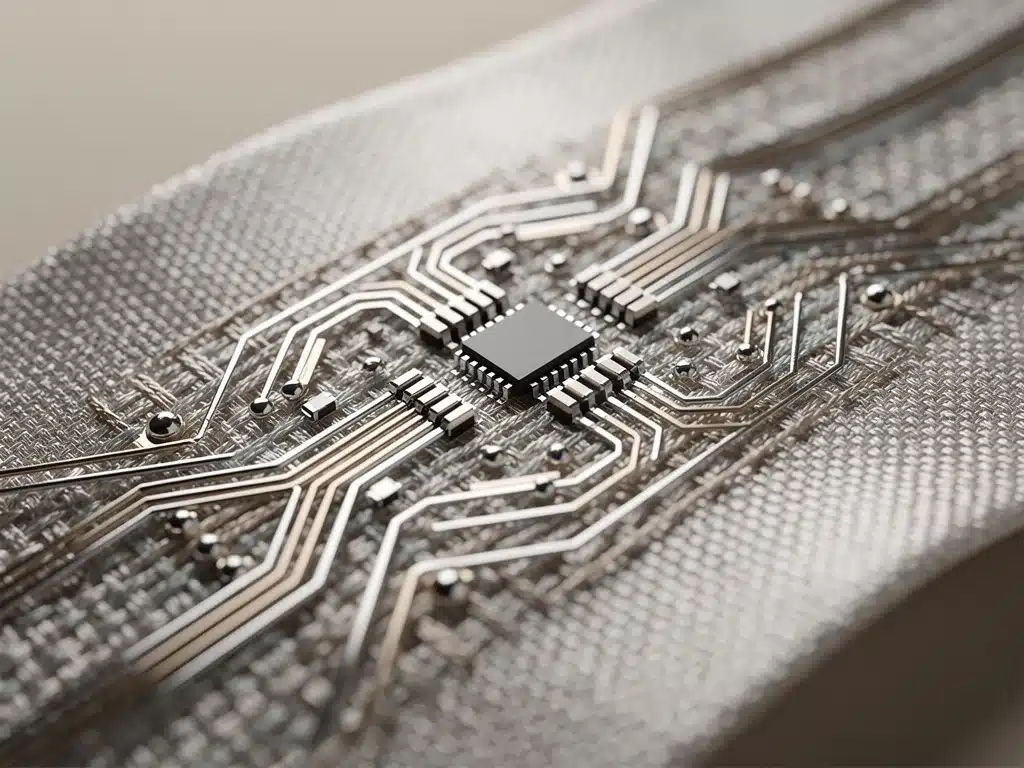
The landscape of clothing is undergoing a profound transformation. In 2026, smart textiles are not just a futuristic concept but a rapidly evolving reality, poised to redefine US apparel. This isn’t merely about tech gadgets attached to clothes; it’s about technology seamlessly interwoven into the very fabric of what we wear, enhancing our daily lives in ways previously unimagined.
Advertisements
The rise of health monitoring apparel
The integration of health monitoring capabilities into everyday clothing is one of the most significant trends reshaping US apparel. By 2026, smart textiles will offer discreet, continuous health tracking, moving beyond bulky wearables to provide seamless data collection for personal wellness and medical applications alike. This evolution promises to empower individuals with more insights into their bodies and offer healthcare providers unprecedented access to real-time patient data.
Imagine your shirt actively monitoring your heart rate, respiration, and even stress levels throughout the day, without you ever noticing. These advancements are driven by breakthroughs in conductive fibers, micro-sensors, and flexible electronics, making the clothing itself a sophisticated diagnostic tool.
Biometric tracking becomes seamless
Traditional wearables often come with limitations like battery life, comfort, and the need for separate devices. Smart textiles overcome these by embedding sensors directly into the fabric. This allows for continuous, unobtrusive monitoring, making health tracking a natural part of daily wear.
- Heart Rate Variability (HRV): Advanced shirts and bras can measure HRV, offering insights into stress and recovery.
- Respiration Rate: Garments can track breathing patterns, useful for sleep analysis and managing respiratory conditions.
- Body Temperature: Integrated sensors provide continuous temperature monitoring, critical for athletes and those with certain health conditions.
- Activity Levels: Beyond step counting, smart textiles can analyze posture, gait, and specific exercise movements for performance optimization and injury prevention.
The data collected by these garments can be wirelessly transmitted to smartphones or cloud platforms, where AI algorithms analyze patterns and provide personalized feedback. This continuous feedback loop helps users make informed decisions about their health and lifestyle.
Preventive healthcare through smart wear
The potential for smart textiles in preventive healthcare is immense. By detecting subtle changes in physiological parameters early on, these garments can alert users to potential health issues before they become critical. This proactive approach can lead to earlier interventions and better health outcomes.
For example, a smart undershirt could detect early signs of cardiac irregularities, prompting the wearer to seek medical attention. Similarly, clothing designed for elderly individuals could monitor for falls or unusual activity patterns, alerting caregivers to potential emergencies. The shift from reactive to proactive healthcare is a cornerstone of this trend, promising a future where our clothes actively contribute to our well-being.
Conclusively, health monitoring apparel is set to revolutionize personal health management, offering unparalleled convenience and accuracy. Its widespread adoption will undoubtedly make smart textiles a cornerstone of the US apparel market by 2026, blurring the lines between fashion and medical technology.
Adaptive and responsive clothing systems
Another compelling trend in smart textiles for 2026 is the emergence of adaptive and responsive clothing systems. These garments are designed to react to environmental changes or the wearer’s physiological state, providing dynamic comfort, protection, and functionality. This goes beyond simple insulation, entering a realm where clothing actively participates in managing our interaction with the surroundings.
The core of adaptive clothing lies in materials that can change their properties in response to external stimuli. Think about a jacket that automatically adjusts its warmth based on ambient temperature or sportswear that optimizes ventilation during intense physical activity. Such innovations enhance user experience and push the boundaries of what apparel can achieve.
Temperature regulation and climate control
One of the most immediate applications of adaptive textiles is in personal temperature regulation. Fabrics embedded with thermoreactive polymers or micro-heaters can expand or contract, open or close pores, or generate heat to maintain an optimal microclimate around the body. This eliminates the need for layering and provides consistent comfort in varying conditions.
- Phase-Change Materials (PCMs): These materials absorb and release latent heat as they change phase (solid to liquid and vice versa), helping to regulate body temperature.
- Electro-Thermal Fabrics: Incorporating fine conductive wires, these fabrics can be actively heated or cooled with minimal power, often from small, integrated batteries.
- Ventilation Control: Smart fabrics can have pores that open and close in response to humidity or temperature, allowing for dynamic airflow management.
The implications for outdoor gear, workwear, and even everyday fashion are profound. Imagine hikers no longer needing to shed or add layers, or construction workers being comfortably insulated in extreme weather. This level of climate control offers both practical benefits and a new dimension of personal comfort.
Smart fabrics for enhanced protection
Beyond comfort, adaptive clothing also offers enhanced protection. This includes garments that can detect and react to hazardous environments, offering a new layer of safety for professionals and adventurers alike. From UV-sensitive fabrics that indicate sun exposure to self-cleaning materials, the protective capabilities are expanding rapidly.
Consider construction workers wearing vests that detect proximity to heavy machinery, or firefighters with suits that monitor their core body temperature and alert them to heat stress. This proactive safety monitoring can prevent accidents and save lives. Furthermore, smart workwear can integrate communication devices, allowing for seamless team coordination in complex environments.
The future of workwear involves clothing that not only protects but also empowers workers with real-time information and enhanced capabilities. This includes garments with integrated GPS for tracking, biometric monitoring for fatigue detection, and even haptic feedback for navigation or warnings. The fusion of textiles and technology is creating a safer, more efficient workforce.
Ultimately, adaptive and responsive clothing systems represent a monumental leap in textile technology. By responding intelligently to the wearer and the environment, these smart textiles will deliver unparalleled comfort, safety, and utility, further cementing their place in the US apparel market by 2026.
Performance enhancement in sportswear and workwear
The realm of performance textiles is experiencing a revolution, driven by smart innovations that promise to elevate human capabilities in both athletic and professional settings. By 2026, smart textiles will be indispensable in sportswear and workwear, offering unprecedented levels of support, monitoring, and ergonomic design. This shift is not just about incremental improvements but about fundamentally changing how clothing contributes to performance and safety.
The integration of technology into fabric allows for garments that do more than just cover the body. They actively assist, protect, and inform the wearer, turning apparel into a functional extension of human potential. From aiding muscle recovery to preventing injuries, the benefits are wide-ranging and impactful.
Optimizing athletic performance
In sportswear, smart textiles are designed to enhance every aspect of an athlete’s performance. This includes targeted compression, biometric feedback, and even integrated hydration systems. The goal is to provide a competitive edge through scientifically engineered apparel.
- Muscle Support and Recovery: Garments with embedded sensors can provide dynamic compression, adjusting to muscle activity to reduce fatigue and aid recovery.
- Biometric Data for Training: Beyond heart rate, smart sportswear can track lactate levels, sweat composition, and even muscle oxygenation, offering a holistic view of an athlete’s physiological state.
- Injury Prevention: Sensors can detect improper form or excessive strain, providing real-time alerts to prevent injuries during training or competition.
The data gathered by these smart garments can be invaluable for coaches and athletes, allowing for highly personalized training regimens and immediate adjustments. This level of data-driven insight was once confined to laboratories but is now becoming accessible through everyday athletic wear.
Enhancing safety and efficiency in work environments
For workwear, particularly in hazardous or physically demanding professions, smart textiles offer significant advancements in safety and efficiency. These garments can monitor environmental conditions, track worker well-being, and even provide augmented reality interfaces.
Consider construction workers wearing vests that detect proximity to heavy machinery, or firefighters with suits that monitor their core body temperature and alert them to heat stress. This proactive safety monitoring can prevent accidents and save lives. Furthermore, smart workwear can integrate communication devices, allowing for seamless team coordination in complex environments.
The future of workwear involves clothing that not only protects but also empowers workers with real-time information and enhanced capabilities. This includes garments with integrated GPS for tracking, biometric monitoring for fatigue detection, and even haptic feedback for navigation or warnings. The fusion of textiles and technology is creating a safer, more efficient workforce.
In conclusion, performance-enhancing smart textiles are poised to transform both athletic and professional fields. By providing advanced monitoring, support, and protection, these innovations will redefine what clothing can do, making them a crucial component of US apparel by 2026.
Sustainable and circular smart fashion
As technology advances, so too does the imperative for sustainability. In 2026, smart textiles are not just about functionality but also about fostering a more sustainable and circular fashion industry. This trend focuses on developing intelligent garments that minimize environmental impact throughout their lifecycle, from production to disposal and recycling. The goal is to create apparel that is both high-tech and eco-conscious, addressing the growing concerns about fashion’s environmental footprint.
The integration of sustainability into smart textile development involves innovative material science, responsible manufacturing processes, and end-of-life solutions. This holistic approach ensures that the benefits of smart apparel extend beyond the wearer to the planet itself.
Eco-friendly materials and production
The foundation of sustainable smart fashion lies in the materials used. Researchers and manufacturers are increasingly exploring eco-friendly fibers, biodegradable components, and energy-efficient production methods to create smart textiles. This includes using recycled content, organic fibers, and manufacturing processes that reduce water and chemical consumption.
- Biodegradable Electronics: Developing sensors and conductive elements that can safely decompose or be easily separated for recycling.
- Recycled Fibers: Utilizing recycled polyester, nylon, and other materials as base fabrics for smart garments, reducing reliance on virgin resources.
- Low-Impact Dyes: Employing natural dyes or advanced dyeing techniques that minimize water pollution and energy use.
Furthermore, the manufacturing of smart textiles is becoming more localized and transparent. This reduces transportation emissions and allows for greater oversight of labor practices and environmental standards. The entire supply chain is being scrutinized to ensure a truly sustainable product.
Longevity and end-of-life solutions
A key aspect of circular fashion is designing products for longevity and ensuring they can be effectively recycled or repurposed at the end of their useful life. Smart textiles, with their integrated electronic components, present unique challenges but also opportunities for innovative solutions.
Manufacturers are focusing on modular designs where electronic components can be easily removed or upgraded, extending the life of the garment. Additionally, research into textile-to-textile recycling processes that can handle mixed materials, including conductive threads and sensors, is advancing rapidly. The aim is to close the loop, turning old smart garments into new raw materials, thereby minimizing waste.
The concept of ‘product-as-a-service’ is also gaining traction, where consumers might lease smart apparel rather than owning it outright. This model encourages manufacturers to design for durability and facilitates the collection and recycling of garments at the end of their service life, promoting a truly circular economy. This holistic approach ensures that smart textiles contribute positively to environmental stewardship.
In summary, sustainable and circular smart fashion is not just a trend but a necessity. By prioritizing eco-friendly materials, responsible production, and effective end-of-life solutions, smart textiles in 2026 will lead the way in creating an apparel industry that is both innovative and environmentally responsible.
Interactive and communicative apparel
The future of US apparel in 2026 is also characterized by the rise of interactive and communicative garments. These smart textiles move beyond passive data collection to actively engage with the wearer and their environment, offering new forms of communication, entertainment, and personalized experiences. This trend transforms clothing from a mere covering into an intelligent interface.
Interactive apparel can respond to touch, gestures, or voice commands, while communicative apparel can display information or connect with other devices. This opens up a vast array of possibilities for personal expression, social interaction, and functional utility, blurring the lines between fashion, technology, and human-computer interaction.
Fashion as a digital interface
Imagine clothing that doubles as a personal display or a tactile control panel. Smart textiles are enabling garments to become dynamic interfaces, capable of displaying information, changing patterns, or even emitting light in response to various inputs. This allows for unprecedented levels of personalization and interaction.
- LED-Integrated Fabrics: Garments with embedded LEDs can display dynamic patterns, messages, or even act as safety indicators in low light.
- Haptic Feedback Clothing: Apparel that provides tactile sensations, useful for navigation, gaming, or subtle communication.
- Gesture Recognition: Smart fabrics can interpret gestures, allowing wearers to control connected devices or interact with digital content through their clothing.
These innovations offer new avenues for self-expression, allowing individuals to customize their appearance in real-time or convey information without speaking. From concertgoers with light-up jackets to individuals who want a subtle way to receive notifications, the possibilities are diverse.
Seamless integration with the IoT ecosystem
Communicative apparel is designed to seamlessly integrate into the broader Internet of Things (IoT) ecosystem. This means smart textiles can connect with other smart devices, home automation systems, and digital platforms, creating a more interconnected and responsive personal environment. Your clothing can become a central hub for your digital life.
For example, a smart jacket could automatically unlock your front door as you approach, or a shirt could adjust your smart home’s thermostat based on your body temperature. This level of interconnectedness enhances convenience and creates a truly personalized user experience. The data generated by these garments can also feed into AI-driven systems, leading to more intelligent and predictive interactions.
The ability of clothing to communicate with its surroundings and other devices marks a significant leap forward. It moves smart textiles beyond mere utility to become an integral part of our digital lives, offering new forms of interaction and connectivity. This trend will profoundly impact US apparel by 2026, making our clothes smarter and more responsive than ever before.
Ethical considerations and data privacy in smart textiles
As smart textiles become more pervasive in US apparel by 2026, the discussion around ethical considerations and data privacy intensifies. The very nature of these garments, which collect intimate physiological and behavioral data, necessitates a robust framework for safeguarding user information and ensuring responsible development and deployment. This is a critical aspect that underpins the trust and widespread adoption of intelligent clothing.
The continuous collection of personal data, whether for health monitoring, performance tracking, or interactive features, raises important questions about who owns this data, how it is stored, and with whom it is shared. Addressing these concerns is paramount for the sustainable growth of the smart textile industry.
Protecting personal data and privacy
The volume and sensitivity of data collected by smart textiles require stringent privacy protocols. Companies developing these products must prioritize data security and transparency, clearly communicating to users how their information is handled. This includes robust encryption, anonymization techniques, and clear consent mechanisms.
- Transparent Data Policies: Users must be fully informed about what data is collected, why it’s collected, and how it will be used.
- Data Minimization: Only essential data should be collected, reducing the risk of over-collection and potential misuse.
- Secure Storage and Transmission: Implementing state-of-the-art cybersecurity measures to protect data from breaches during storage and transmission.
Furthermore, regulatory bodies will play an increasingly important role in establishing standards for data privacy in smart textiles. Compliance with regulations like HIPAA (for health data) and evolving privacy laws will be crucial for companies operating in this space. Building user trust through transparent and secure data practices is not just an ethical obligation but a business imperative.
Addressing algorithmic bias and equitable access
Another ethical consideration revolves around algorithmic bias and equitable access to smart textile technology. The algorithms that process data from smart garments must be developed with fairness and inclusivity in mind, ensuring they do not perpetuate or amplify existing societal biases. This is particularly important for health monitoring applications, where biased algorithms could lead to misdiagnoses or inadequate care for certain demographic groups.
Ensuring equitable access also means addressing the potential for a ‘digital divide’ in smart apparel. As these technologies become more advanced, there’s a risk that they may only be accessible to certain segments of the population, exacerbating existing inequalities. Efforts to make smart textiles affordable and widely available will be vital for their societal benefit.
The development of smart textiles must be guided by a strong ethical compass, considering the societal impact beyond mere technological innovation. By proactively addressing data privacy, algorithmic bias, and equitable access, the industry can build a future where smart apparel benefits everyone, fostering trust and widespread adoption. These considerations are not secondary; they are integral to the successful integration of smart textiles into US apparel by 2026.
The economic impact and market growth of smart textiles
The burgeoning field of smart textiles is not just a technological marvel; it’s a significant economic driver, poised to reshape the US apparel market and beyond by 2026. The confluence of consumer demand for innovative products, advancements in material science, and strategic investments is fueling substantial market growth. This expansion is creating new opportunities across various sectors, from manufacturing and retail to healthcare and sports.
Understanding the economic impact involves analyzing market projections, investment trends, and the ripple effect on related industries. Smart textiles are not merely a niche; they are becoming a mainstream component of the apparel industry, driving innovation and generating considerable revenue.

Market projections and investment trends
Analysts project significant growth for the smart textile market over the next few years, with the US playing a pivotal role in this expansion. This growth is attributed to increasing consumer awareness, technological maturity, and the diverse applications of intelligent fabrics. Investments are flowing into research and development, startups, and established apparel companies looking to integrate smart technology.
- Compound Annual Growth Rate (CAGR): The global smart textile market is expected to grow at a robust CAGR, with the US being a major contributor due to its strong innovation ecosystem and consumer base.
- Key Investment Areas: Significant investments are being made in flexible electronics, advanced sensor technology, sustainable materials, and data analytics platforms for smart apparel.
- Startup Ecosystem: A vibrant startup scene is emerging, focusing on niche applications and specialized smart textile solutions, attracting venture capital and fostering rapid innovation.
Major apparel brands are also strategically partnering with tech companies and material scientists to integrate smart features into their product lines. This collaboration is crucial for bringing these advanced textiles to mass markets, making them accessible and desirable to a broader consumer base. The economic momentum is undeniable, indicating a future where smart textiles are a standard offering.
Impact on manufacturing and retail sectors
The growth of smart textiles has a profound impact on both the manufacturing and retail sectors. Manufacturing processes are evolving to accommodate the integration of electronics into fabrics, requiring new machinery, skilled labor, and quality control standards. This shift is driving innovation in textile production and creating new jobs.
In retail, smart textiles are changing how products are marketed and sold. Retailers need to educate consumers about the benefits and functionalities of intelligent apparel, often requiring interactive displays and knowledgeable staff. The value proposition shifts from mere aesthetics to a combination of fashion, function, and technology, influencing consumer purchasing decisions.
Furthermore, the data collected by smart textiles offers retailers and brands unprecedented insights into consumer behavior and product performance. This data can inform future design, inventory management, and marketing strategies, creating a more responsive and efficient retail ecosystem. The economic ripple effect extends throughout the entire value chain, fostering a dynamic and innovative apparel industry.
In conclusion, the economic impact and market growth of smart textiles are set to be transformative for the US apparel industry by 2026. With substantial investments, innovative manufacturing, and evolving retail strategies, intelligent clothing will not only redefine fashion but also create significant economic opportunities and drive widespread adoption.
| Key Trend | Brief Description |
|---|---|
| Health Monitoring Apparel | Clothing with embedded sensors for continuous biometric tracking, aiding personal wellness and preventive healthcare. |
| Adaptive Clothing Systems | Garments that dynamically adjust to environmental changes or wearer’s state for optimal comfort and protection. |
| Performance Enhancement | Smart textiles for sportswear and workwear that improve athletic performance, safety, and efficiency. |
| Sustainable Smart Fashion | Eco-friendly smart textiles focusing on circularity, biodegradable components, and responsible production. |
Frequently asked questions about smart textiles
Smart textiles, or e-textiles, are fabrics with integrated digital components like sensors or batteries, offering enhanced functionalities beyond traditional clothing. They can monitor health, adapt to environments, and communicate, unlike regular apparel which provides basic coverage and comfort.
By 2026, smart textiles will revolutionize personal health monitoring by providing continuous, discreet biometric data collection. This enables early detection of health issues, personalized wellness insights, and a shift towards proactive, preventive healthcare directly through everyday apparel.
The smart textile industry is increasingly focusing on sustainability, developing eco-friendly materials, biodegradable electronics, and circular production models. While challenges remain due to integrated tech, efforts are underway to make smart fashion as sustainable as possible, addressing ethical and environmental concerns.
Manufacturers are implementing robust security measures for data from smart apparel, including encryption, anonymization, and transparent data policies. Compliance with privacy regulations like HIPAA is also crucial to ensure user data is protected and handled responsibly, building trust in these innovative products.
Many modern smart textiles are designed to be washable, often requiring specific care instructions like hand washing or gentle machine cycles. Advancements in waterproof electronics and modular designs are making them increasingly durable and convenient, but checking individual garment labels is always recommended.
Conclusion
The trajectory of smart textiles in 2026 points to a future where apparel is far more than just fabric; it’s an intelligent, interactive, and integral part of our lives. From advanced health monitoring and adaptive comfort to performance enhancement and a strong push towards sustainability, these wearable tech trends are fundamentally reshaping the US apparel landscape. As technology continues to weave itself seamlessly into our clothing, we can anticipate a future where our garments actively contribute to our well-being, safety, and connection with the digital world, all while striving for greater environmental responsibility. The evolution of smart textiles is an exciting frontier, promising innovation that will redefine our relationship with what we wear.