Textile Recycling in 2026: 2 Major Breakthroughs for US Apparel Waste Management
Advertisements
Two pivotal advancements in automated sorting and chemical recycling are projected to fundamentally reshape textile recycling in the United States by 2026, offering unprecedented efficiency and scalability for managing apparel waste.
The landscape of waste management is constantly evolving, and perhaps nowhere is this more critical than in the apparel industry. With mountains of textile waste accumulating annually, the need for sustainable solutions has never been more urgent. By 2026, two major breakthroughs are set to revolutionize textile recycling in 2026: 2 major breakthroughs for US apparel waste management, promising a future where discarded garments are no longer destined for landfills but are instead transformed into valuable resources.
Advertisements
The looming textile waste crisis in the US
The United States faces a significant challenge with textile waste. Each year, millions of tons of clothing and textiles are discarded, contributing to landfill overload and environmental pollution. This includes everything from fast fashion items to durable home textiles, all of which pose unique recycling challenges.
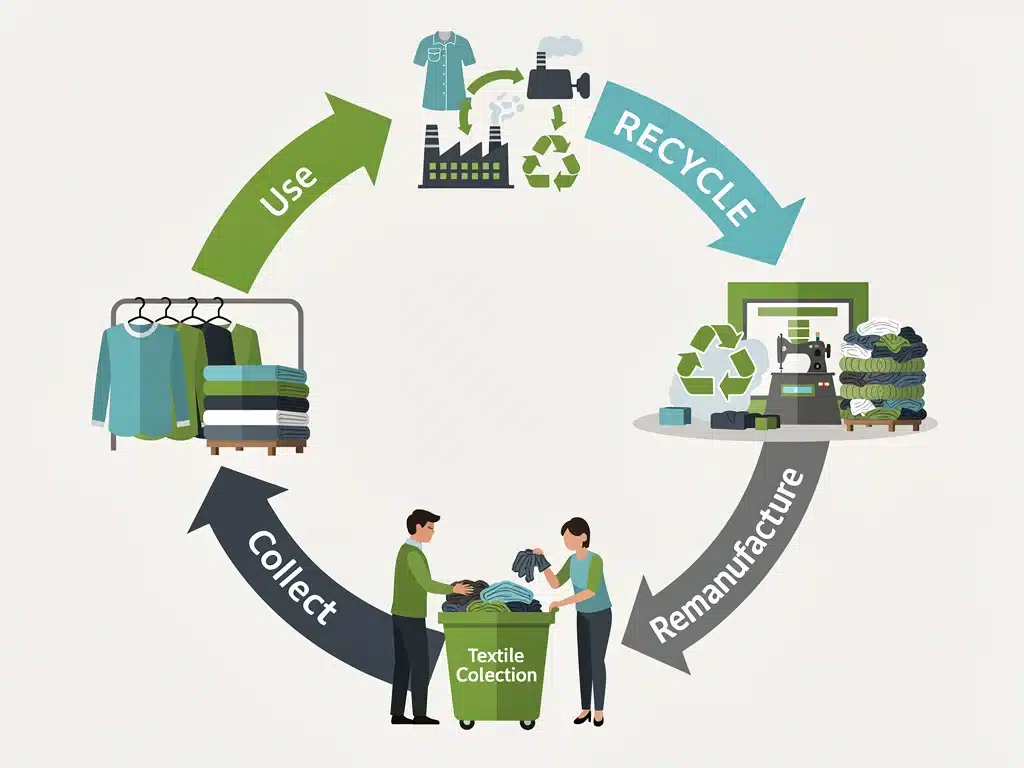
The sheer volume of this waste is staggering, and its impact extends beyond mere landfill space. Decomposing textiles release methane, a potent greenhouse gas, while synthetic fibers can persist for centuries, leaching microplastics into our ecosystems. Addressing this crisis requires not just better disposal methods, but a fundamental shift towards a circular economy where textiles are reused, repaired, and ultimately, recycled efficiently.
Consumer habits, driven by affordable and trend-driven fashion, exacerbate the problem. The lifecycle of garments has shortened dramatically, leading to increased consumption and disposal. Without innovative solutions, the environmental footprint of the US apparel industry will continue to grow, making these upcoming breakthroughs even more vital for a sustainable future.
Breakthrough 1: advanced automated sorting technologies
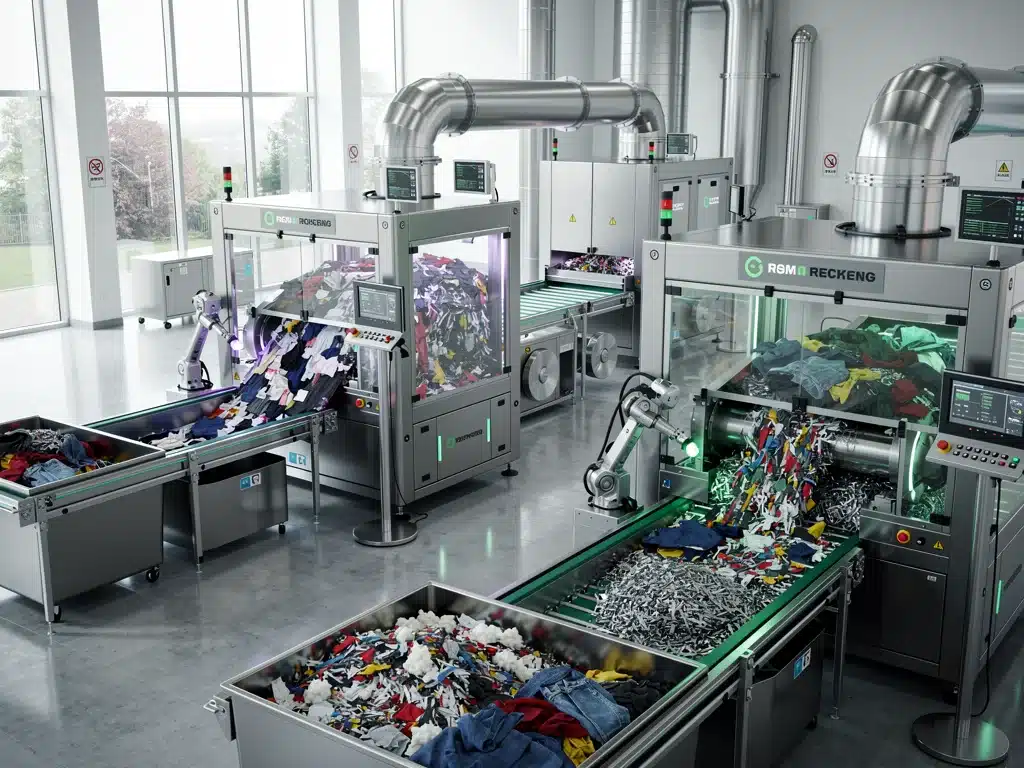
One of the most significant hurdles in textile recycling has always been the laborious and often inaccurate process of sorting. Traditional methods rely heavily on manual labor, which is slow, expensive, and prone to error, especially when dealing with mixed fiber compositions. However, 2026 is poised to see the widespread adoption of advanced automated sorting technologies that promise to change this entirely.
Hyperspectral imaging for fiber identification
A key innovation in automated sorting is the use of hyperspectral imaging. This technology can analyze the chemical composition of textiles at a molecular level, accurately identifying different fiber types (e.g., cotton, polyester, wool, blends) with remarkable precision. This is crucial because effective recycling often depends on separating materials into homogeneous streams.
- Precision: Identifies fiber types with over 95% accuracy, even in complex blends.
- Speed: Processes thousands of items per hour, dramatically increasing throughput.
- Cost-effectiveness: Reduces reliance on manual labor, lowering operational costs significantly.
- Versatility: Adapts to various textile formats, from whole garments to shredded materials.
Robotics and AI-driven sorting systems
Complementing hyperspectral imaging are sophisticated robotic systems powered by artificial intelligence. These robots can pick and sort textiles based on the data provided by imaging systems, ensuring that materials are directed to the correct recycling stream. AI algorithms continuously learn and improve their sorting capabilities, making the process more efficient over time.
The integration of these technologies means that large volumes of mixed post-consumer textile waste can be rapidly and accurately sorted into specific categories. This level of precision was previously unimaginable, and it unlocks the potential for high-quality recycling processes that demand pure material inputs. The impact on the US apparel waste management system will be transformative, moving us closer to a truly circular economy for fashion.
Breakthrough 2: scalable fiber-to-fiber chemical recycling
While mechanical recycling has its place, it often degrades fiber quality, limiting the number of times a material can be recycled. The second major breakthrough involves scalable fiber-to-fiber chemical recycling processes, which can regenerate textile fibers to their original quality, or even better, allowing for endless recycling loops without compromising material integrity.
Depolymerization and repolymerization techniques
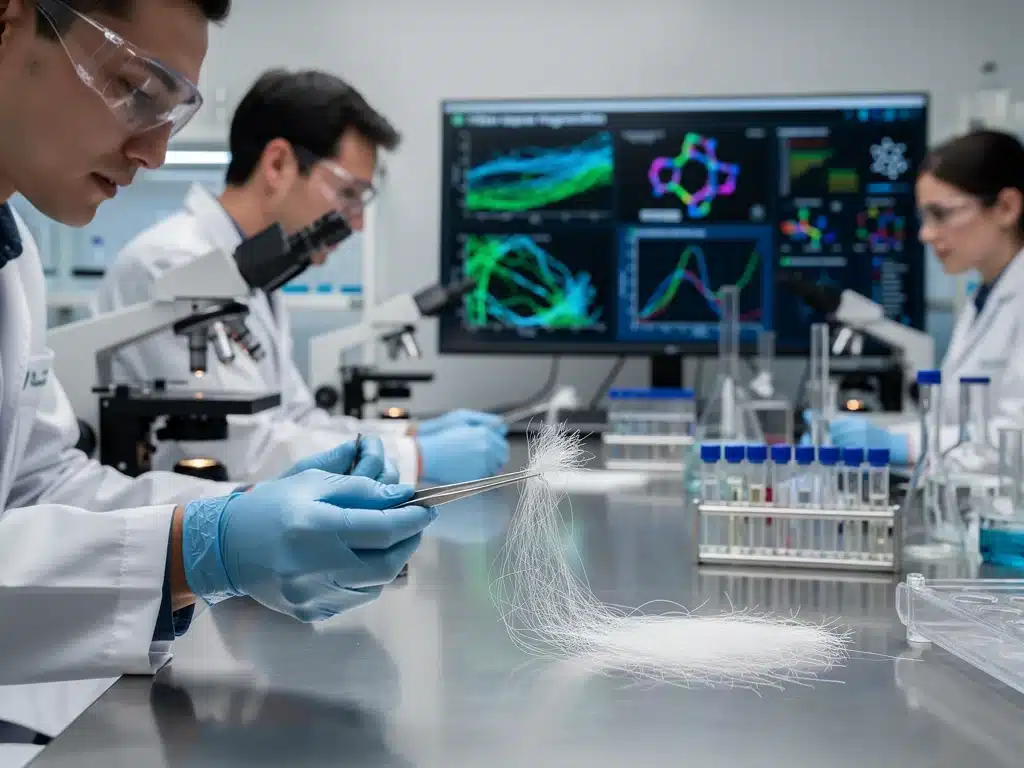
Chemical recycling focuses on breaking down textile polymers into their constituent monomers or oligomers, purifying them, and then re-polymerizing them into new, high-quality fibers. This is particularly effective for synthetic fibers like polyester, where technologies such as glycolysis or methanolysis can depolymerize PET into its original building blocks.
- Quality retention: Produces fibers comparable to virgin materials, maintaining performance standards.
- Diverse input: Can handle contaminated or blended textiles that mechanical recycling struggles with.
- Reduced resource use: Less reliance on virgin fossil fuels for new synthetic fiber production.
- Closed-loop systems: Enables a truly circular approach where textiles are continuously regenerated.
Cellulose regeneration for natural fibers
For natural cellulosic fibers like cotton, innovative solvent-based systems are emerging. These processes dissolve the cellulose from discarded cotton textiles, removing impurities and dyes, and then spin it into new, high-quality regenerated cellulosic fibers such as lyocell. This addresses the significant challenge of recycling cotton, which often gets downcycled into insulation or rags.
These scalable chemical recycling methods represent a paradigm shift. They allow for the transformation of what was once considered waste into valuable raw materials, reducing the demand for virgin resources and significantly lessening the environmental impact of textile production. The ability to regenerate fibers to their original quality means that the fashion industry can finally move towards truly sustainable practices.
Economic implications for the US apparel industry
The adoption of these advanced textile recycling methods will have profound economic implications for the US apparel industry. Beyond the environmental benefits, these breakthroughs present opportunities for new business models, job creation, and increased supply chain resilience. The shift towards a circular economy is not just an ecological imperative but also an economic opportunity.
Reduced reliance on virgin materials
By effectively recycling textile waste, the industry can significantly reduce its dependence on virgin raw materials, whether it’s petroleum for synthetics or cotton crops that require vast amounts of land and water. This reduction in demand can lead to more stable material costs and mitigate risks associated with fluctuating commodity markets.
Furthermore, localizing recycling operations within the US can shorten supply chains, reducing transportation costs and lead times. This increased self-sufficiency can make the US apparel industry more competitive globally, fostering innovation and creating a more robust domestic manufacturing sector. The economic incentive to invest in these technologies is becoming increasingly clear.
New business models and job creation
The establishment of advanced recycling facilities will create new jobs in technology development, engineering, operations, and logistics. Beyond direct employment, these breakthroughs will foster new service models, such as textile collection, sorting, and feedstock preparation. Brands can also explore new circular business models, including take-back programs and resale platforms, further integrating recycling into their core operations.
This economic transformation moves the industry away from a linear ‘take-make-dispose’ model towards a more regenerative one, where economic value is retained within materials. It encourages investment in green technologies and sustainable infrastructure, positioning the US as a leader in circular fashion practices.
Environmental benefits and sustainability impact
The environmental benefits of these two breakthroughs are immense, directly addressing some of the most pressing sustainability challenges facing the apparel industry. From reducing landfill waste to mitigating greenhouse gas emissions and conserving natural resources, the impact is multifaceted and far-reaching.
Significant reduction in landfill waste
Perhaps the most immediate and visible benefit is the drastic reduction in textile waste sent to landfills. By effectively diverting millions of tons of discarded clothing and textiles into recycling streams, these technologies will ease the burden on landfill capacity and prevent the associated environmental harms, such as methane gas emissions and soil contamination.
This shift also reduces the need for incinerating textiles, which releases harmful pollutants into the atmosphere. Instead, materials are kept in circulation, retaining their value and minimizing their environmental footprint throughout their lifecycle. This represents a critical step towards a zero-waste textile industry.
Lower carbon footprint and resource conservation
Producing new fibers from recycled materials generally requires less energy, water, and chemicals compared to manufacturing virgin fibers. Chemical recycling, in particular, can significantly lower the carbon footprint of textile production by reducing reliance on fossil fuels and energy-intensive manufacturing processes.
Moreover, the conservation of natural resources like water and land, which are heavily utilized in conventional cotton farming and synthetic fiber production, is a major win for ecological sustainability. These breakthroughs offer a tangible pathway to a more resource-efficient and environmentally responsible apparel sector.
Challenges and opportunities for widespread adoption
While the potential of these breakthroughs is undeniable, their widespread adoption by 2026 is not without challenges. Overcoming these obstacles will require concerted effort from industry, government, and consumers alike. However, each challenge also presents an opportunity for innovation and collaboration.
Infrastructure development and investment
Building the necessary infrastructure for advanced automated sorting and chemical recycling on a national scale requires substantial investment. This includes constructing new facilities, upgrading existing ones, and establishing robust collection and logistics networks for post-consumer textile waste. Securing funding, whether through private capital, government grants, or public-private partnerships, will be critical.
Furthermore, developing standardized processes and quality control measures across different recycling facilities will be essential to ensure consistency and reliability of recycled materials. This standardization will foster greater trust and adoption by apparel manufacturers.
Consumer awareness and participation
The success of textile recycling ultimately depends on consumer participation. Educating the public about the importance of proper textile disposal, encouraging them to utilize collection points, and promoting the purchase of recycled-content garments are vital steps. Brands and retailers have a significant role to play in communicating these messages and making it easy for consumers to participate in circular initiatives.
Creating incentives for consumers to recycle, such as discount programs or loyalty rewards, could also boost participation rates. A shift in consumer mindset from merely disposing of old clothes to actively participating in their circular journey is a key opportunity.
The future of apparel waste management in the US
Looking ahead to 2026 and beyond, these two major breakthroughs in textile recycling are set to redefine apparel waste management in the US. The integration of advanced automated sorting with scalable fiber-to-fiber chemical recycling processes promises a future where textile waste is no longer a burden but a valuable resource. This transformation will foster a more sustainable, resilient, and economically vibrant apparel industry.
The journey towards a truly circular economy for fashion is complex, but these innovations provide the technological backbone needed to make it a reality. As these technologies mature and become more widely implemented, we can expect to see significant reductions in environmental impact, coupled with the creation of new economic opportunities and a renewed sense of responsibility across the entire textile value chain. The next few years will be pivotal in shaping this sustainable future.
| Key Point | Brief Description |
|---|---|
| Advanced Automated Sorting | Utilizes hyperspectral imaging and AI robotics for precise, rapid identification and separation of textile fibers. |
| Scalable Fiber-to-Fiber Chemical Recycling | Breaks down textile polymers to regenerate high-quality fibers, enabling infinite recycling loops for various materials. |
| Economic & Environmental Impact | Reduces landfill waste, lowers carbon footprint, conserves resources, and fosters new business models and job creation. |
| Challenges & Opportunities | Requires significant infrastructure investment and increased consumer awareness for widespread adoption and success. |
Frequently asked questions about textile recycling
The two major breakthroughs are advanced automated sorting technologies, utilizing hyperspectral imaging and AI, and scalable fiber-to-fiber chemical recycling methods. These innovations allow for precise material separation and regeneration of fibers to their original quality, significantly improving efficiency and sustainability in apparel waste management.
Automated sorting, through technologies like hyperspectral imaging and AI-driven robotics, will dramatically increase the speed and accuracy of identifying and separating different textile fibers. This precision is crucial for providing high-quality, homogeneous material streams required for efficient chemical recycling processes, reducing manual labor and costs.
Fiber-to-fiber chemical recycling breaks down textile polymers into their basic molecular components, which are then re-polymerized into new, high-quality fibers. This is vital because it allows textiles to be recycled indefinitely without degradation, unlike mechanical recycling, thus closing the loop on textile production and reducing reliance on virgin materials.
Economically, these breakthroughs will reduce the US apparel industry’s reliance on virgin materials, stabilize costs, and foster new business models and job creation in recycling facilities, logistics, and sustainable fashion. They promote a more resilient domestic supply chain and position the US as a leader in circular economy practices.
Key challenges include significant investment in new infrastructure for recycling facilities and collection networks, as well as increasing consumer awareness and participation in textile collection programs. Overcoming these requires collaboration between industry, government, and consumers to build a robust and efficient circular system.
Conclusion
The year 2026 marks a pivotal moment for textile recycling in the United States, driven by the emergence of two groundbreaking advancements: sophisticated automated sorting and scalable fiber-to-fiber chemical recycling. These innovations are not merely incremental improvements; they represent a fundamental shift in how the nation will manage its vast apparel waste. By enabling precise material identification and the regeneration of high-quality fibers, these technologies promise to significantly reductions in environmental impact, coupled with the creation of new economic opportunities and a renewed sense of responsibility across the entire textile value chain. The next few years will be pivotal in shaping this sustainable future.