Circular Economy in Apparel: 3 Steps for US Brands by 2026
Advertisements
Implementing a circular economy in apparel by 2026 requires US brands to embrace sustainable design, establish robust reverse logistics, and explore innovative consumption models to transform their environmental footprint and foster long-term resilience.
Advertisements
The fashion industry stands at a critical juncture, with growing consumer demand and regulatory pressures pushing for more sustainable practices. For US brands, embracing the circular economy in apparel is no longer an option but a strategic imperative. This shift moves beyond traditional linear models of ‘take-make-dispose’ towards a regenerative system where products and materials are kept in use for as long as possible, minimizing waste and maximizing resource efficiency. By 2026, brands that proactively integrate circular principles will not only enhance their environmental credentials but also unlock new avenues for innovation, customer loyalty, and economic growth.
Understanding the circular economy in apparel
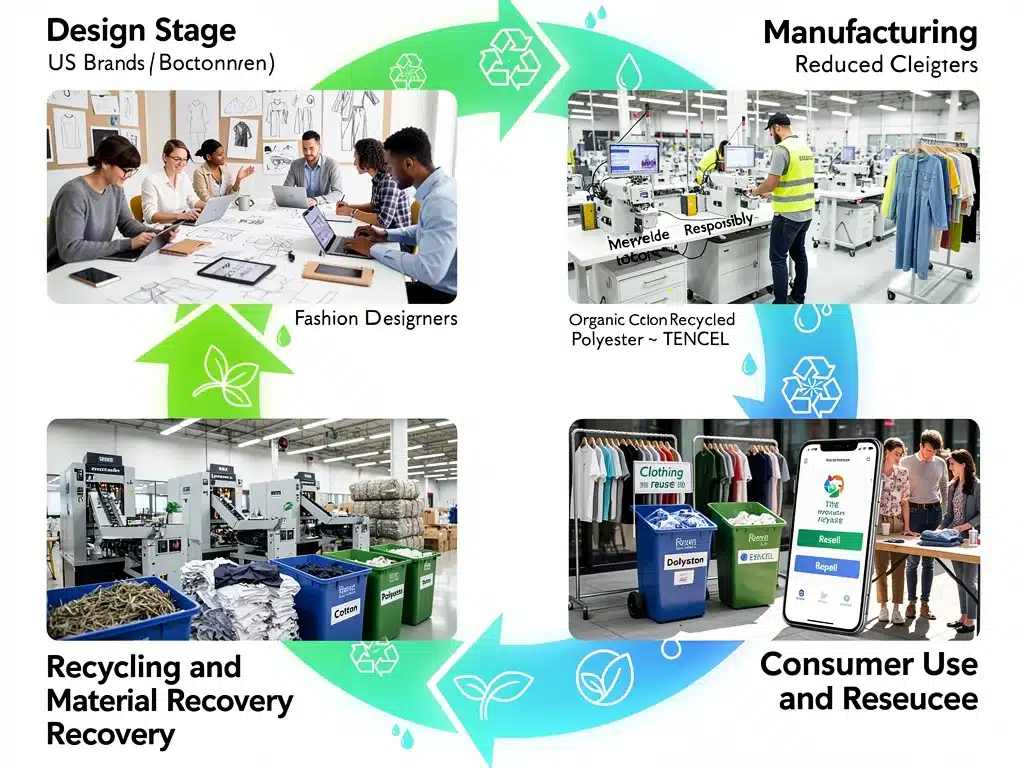
The circular economy represents a fundamental paradigm shift from our current linear economic model. Instead of extracting raw materials, manufacturing products, and then disposing of them after use, a circular system aims to keep resources in use for as long as possible. In the apparel sector, this means designing clothes for durability, repairability, and recyclability, ensuring that materials retain their value and never become waste. This approach tackles the industry’s significant environmental impact, from resource depletion and pollution to massive textile waste in landfills.
For US brands, understanding this framework is the first step towards meaningful change. It involves a holistic view of the product lifecycle, from sourcing and production to consumption and end-of-life. This understanding allows brands to identify intervention points where circular principles can be most effectively applied. It’s about creating value, not just from new products, but also from existing ones, through repair, resale, and recycling, thereby fostering a more resilient and sustainable industry.
The imperative for change
The urgency for adopting circular practices in apparel is driven by several factors. Environmental concerns are paramount, with the fashion industry being one of the largest polluters globally. Social responsibility also plays a significant role, as consumers increasingly demand transparency and ethical production. Economically, embracing circularity can lead to cost savings through reduced material consumption and waste management, while also opening up new market opportunities.
- Environmental impact: Reducing carbon footprint, water usage, and pollution.
- Consumer demand: Meeting the growing preference for sustainable and ethical products.
- Regulatory landscape: Preparing for potential future legislation on waste and material use.
- Resource scarcity: Mitigating risks associated with volatile raw material prices and availability.
Ultimately, a successful transition to a circular economy requires a collaborative effort across the entire value chain, from designers and manufacturers to retailers and consumers. US brands have a unique opportunity to lead this transformation, setting new standards for sustainability and innovation in the global apparel market.
Step 1: Design for circularity and longevity
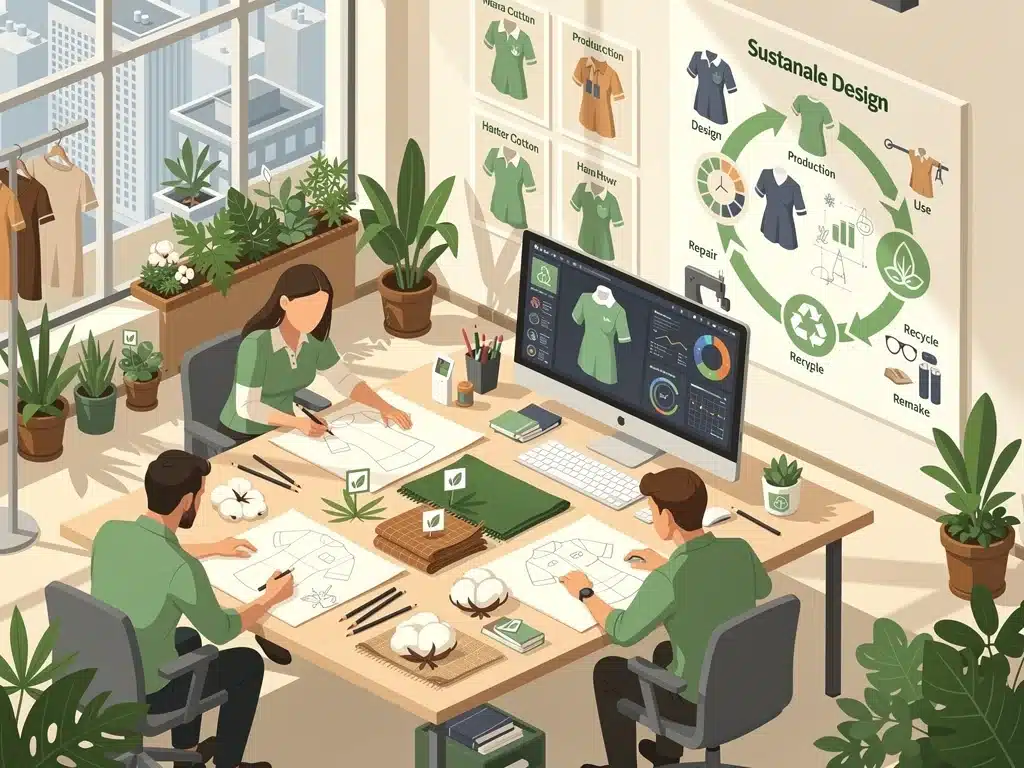
The journey towards a circular apparel industry begins at the design stage. Designing for circularity means creating products with their entire lifecycle in mind, from material selection to end-of-life. This approach prioritizes durability, versatility, repairability, and recyclability, ensuring that garments can be used for longer and their components can be recovered and reused. For US brands aiming to implement a circular economy by 2026, this step is foundational, influencing every subsequent stage of the product’s existence.
Longevity is key; fast fashion’s model of rapid consumption and disposal is inherently unsustainable. By focusing on timeless designs, high-quality materials, and robust construction, brands can create garments that withstand the test of time, reducing the frequency of purchases and the overall demand for new resources. This also fosters a deeper connection between consumers and their clothing, encouraging care and maintenance.
Material innovation and selection
Choosing the right materials is crucial for circular design. Brands should prioritize renewable, recycled, and biodegradable fibers that have a lower environmental impact. This involves rigorous research and collaboration with material scientists and suppliers to identify innovative textiles that meet both performance and sustainability criteria. The goal is to move away from virgin, fossil-fuel-derived synthetics and resource-intensive natural fibers.
- Recycled content: Utilizing fabrics made from post-consumer or post-industrial waste.
- Bio-based materials: Exploring alternatives like organic cotton, hemp, or innovative plant-based fibers.
- Mono-material designs: Creating garments from a single type of fiber to simplify recycling processes.
- Non-toxic dyes and finishes: Ensuring chemical safety throughout the production and disposal phases.
Investing in material innovation not only reduces environmental harm but can also lead to unique product offerings that resonate with eco-conscious consumers. Transparency about material sourcing and composition builds trust and demonstrates a genuine commitment to sustainability.
Modular and repairable design
Beyond material choice, the actual construction of a garment can significantly impact its circular potential. Modular design, where components can be easily replaced or updated, extends product life and allows for customization. Similarly, designing for repairability means making it easy for consumers or repair services to fix common issues, thereby preventing garments from being discarded prematurely.
This includes features like easily replaceable zippers, buttons, or patches, and providing clear instructions or services for repairs. Brands can also offer repair workshops or partner with local repair businesses, creating a new service-based revenue stream and strengthening community ties. Such initiatives not only prolong the life of products but also educate consumers on the value of their clothes and the importance of responsible consumption.
By integrating these principles from the outset, US apparel brands can lay a strong foundation for a truly circular business model, ensuring that their products are not just fashionable but also environmentally responsible and built to last.
Step 2: Establish robust reverse logistics and take-back programs
Once a product has been designed for circularity, the next crucial step for US apparel brands is to create systems that enable its return and recovery. This involves establishing robust reverse logistics and effective take-back programs. Without these mechanisms, even the most sustainably designed garment will ultimately end up in a landfill. By 2026, brands need to have well-defined processes in place to collect used clothing from consumers, sort it, and channel it towards its next best use, whether that’s repair, resale, or recycling.
Reverse logistics is the process of moving goods from their typical final destination for the purpose of capturing value or proper disposal. In the context of apparel, this means setting up collection points, managing transportation, and developing infrastructure for processing returned items. This system is complex but essential for closing the loop and transforming waste into valuable resources.
Implementing collection infrastructure
A key challenge for take-back programs is making it easy and convenient for consumers to return their used garments. This requires strategic planning for collection points and partnerships. Brands can leverage their existing retail footprint, establish mail-back programs, or collaborate with third-party logistics providers and textile recycling organizations.
- In-store drop-offs: Utilizing physical retail locations as collection points for used garments.
- Mail-back services: Providing prepaid shipping labels for customers to send items back.
- Partnerships with recyclers: Collaborating with specialized textile recycling facilities.
- Community collection events: Organizing or participating in local textile drives.
The success of these programs hinges on clear communication with consumers about what can be returned, how to prepare items, and what happens to the garments after collection. Transparency builds trust and encourages participation, making the take-back program an integral part of the brand’s customer experience.
Sorting, repair, and recycling facilities
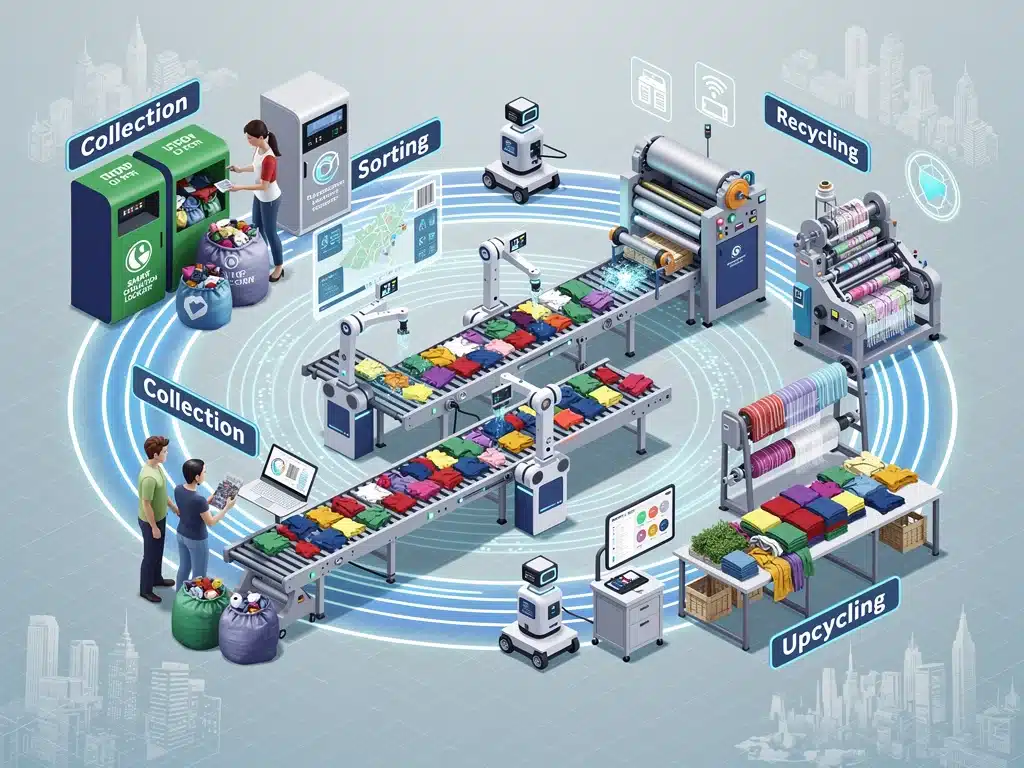
Once collected, garments need to be efficiently sorted to determine their optimal next life. This sorting process can be labor-intensive but is critical for maximizing value. Items in good condition can be prepared for resale or donation, while those requiring minor fixes can be repaired. Heavily damaged or worn-out garments are then directed to recycling facilities where their fibers can be recovered and processed into new materials.
Investing in or partnering with advanced sorting and recycling technologies is vital. Innovations in automated sorting and fiber-to-fiber recycling are rapidly evolving, offering more efficient and scalable solutions. For US brands, this means exploring opportunities to invest in domestic recycling infrastructure, fostering a localized circular economy that reduces transportation emissions and supports local industries.
By establishing robust reverse logistics and take-back programs, brands not only divert waste from landfills but also create a valuable supply of secondary raw materials, reducing their reliance on virgin resources and strengthening their commitment to a truly circular future.
Step 3: Explore innovative business models for circular consumption
Beyond designing sustainable products and implementing efficient take-back systems, US apparel brands must also innovate their business models to fully embrace the circular economy. This means shifting from a traditional ownership-based model to one that emphasizes access, service, and extended product life. By 2026, successful brands will be exploring and implementing new ways for consumers to engage with clothing that minimizes waste and maximizes utility, such as rental, resale, and subscription services.
These innovative models not only support circularity but also cater to evolving consumer preferences for flexibility, affordability, and unique experiences. They represent a significant opportunity for brands to diversify revenue streams, attract new customer segments, and build stronger, more enduring relationships with their audience.
Rental and subscription services
Offering clothing rental or subscription services allows consumers to access a wider variety of garments without the commitment of ownership. This model is particularly appealing for special occasions, fast-changing trends, or for those who prefer to rotate their wardrobe frequently without contributing to textile waste. Brands can offer curated collections, allowing customers to try out styles and return them for cleaning and re-rental.
- Occasion wear rental: Providing access to high-end or specialized garments for events.
- Everyday wardrobe subscriptions: Offering rotating selections of daily wear.
- Workwear programs: Supplying professional attire on a subscription basis.
- Customer engagement: Building loyalty through flexible and personalized services.
Implementing these services requires robust inventory management, cleaning, and repair processes to ensure garments remain in excellent condition for multiple uses. It also necessitates a shift in marketing strategies, focusing on the value of access and experience rather than just ownership.
Resale and recommerce platforms
The burgeoning resale market presents another significant opportunity for circularity. Brands can either launch their own recommerce platforms or partner with existing ones to facilitate the buying and selling of pre-owned garments. This extends the life of products, reduces the need for new production, and taps into the growing consumer demand for affordable and sustainable fashion.
By taking ownership of the resale process, brands can maintain quality control, authenticate their products, and offer incentives for customers to participate. This also allows them to recapture some of the value of their products that might otherwise be lost to third-party marketplaces. Furthermore, recommerce can serve as an entry point for new customers who may not be able to afford full-price items, potentially converting them into loyal patrons.
These innovative business models require a forward-thinking approach and a willingness to experiment. By embracing rental, subscription, and resale, US apparel brands can not only drive circular consumption but also redefine their relationship with consumers, creating a more sustainable and economically viable future for the industry.
Overcoming challenges and leveraging technology
Implementing a circular economy in apparel, while highly beneficial, is not without its challenges. US brands will encounter hurdles ranging from technological limitations in recycling to consumer behavior shifts and significant upfront investments. However, by proactively addressing these challenges and strategically leveraging technology, brands can pave a smoother path towards circularity. The key lies in understanding the complexities and seeking innovative solutions that drive both environmental benefit and economic viability.
One of the primary challenges is the current state of textile recycling infrastructure. Many existing facilities are not equipped to handle mixed fiber textiles efficiently, leading to downcycling or landfilling. Consumer education is another significant hurdle; convincing shoppers to participate in take-back programs or embrace new consumption models requires clear communication and compelling incentives. Overcoming these obstacles demands a multifaceted approach.
Technological advancements in recycling
Advances in textile recycling technology are critical for achieving true circularity. Innovations in chemical and mechanical recycling methods are making it possible to process a wider range of materials and recover high-quality fibers. For US brands, investing in or partnering with facilities that utilize these cutting-edge technologies is paramount. This can involve supporting research and development, forming industry consortia, or advocating for policy changes that incentivize sustainable infrastructure.
- Fiber-to-fiber recycling: Developing processes to convert old garments directly into new fibers.
- Automated sorting: Using AI and robotics to efficiently sort textiles by composition.
- Digital product passports: Tracking garment materials and lifecycle data for easier recycling.
- Waterless dyeing technologies: Reducing water consumption and pollution in production.
By embracing these technological solutions, brands can significantly improve the circularity of their products, reducing waste and creating a more sustainable supply chain. This also positions them as leaders in innovation, attracting talent and investment.
Consumer engagement and education
Ultimately, the success of a circular economy hinges on consumer participation. Brands must go beyond simply offering sustainable products and actively educate their customers about the benefits of circular practices. This involves transparent communication about material sourcing, product care, and end-of-life options. Engaging consumers through storytelling, interactive campaigns, and educational content can foster a sense of shared responsibility.
Incentivizing participation in take-back programs, offering repair services, and promoting resale options are also crucial. This could include discounts on future purchases for returned items, loyalty points for renting, or community events focused on mending and upcycling. By making circular practices accessible and rewarding, brands can transform consumer behavior and build a loyal community around shared values.
Addressing these challenges head-on and strategically leveraging technology and consumer engagement will be vital for US apparel brands to successfully implement a circular economy by 2026, securing a more sustainable and prosperous future.
Measuring impact and ensuring transparency
As US apparel brands embark on their journey towards a circular economy, it’s not enough to simply implement new processes; they must also diligently measure their impact and ensure transparency. By 2026, consumers, investors, and regulators will increasingly demand verifiable data on sustainability claims. Establishing clear metrics and reporting frameworks is crucial for demonstrating progress, identifying areas for improvement, and building trust with all stakeholders. This step validates the efforts made and reinforces a brand’s commitment to genuine circularity.
Measuring impact involves tracking key performance indicators (KPIs) across the entire product lifecycle, from material sourcing to end-of-life. Transparency, on the other hand, means openly communicating these findings, both successes and challenges, to the public. Together, measurement and transparency form the backbone of credible sustainability initiatives, allowing brands to stand out in a crowded market.
Key performance indicators for circularity
To effectively measure progress, brands need to define specific and measurable KPIs that align with circular principles. These metrics should cover various aspects of their operations, providing a comprehensive view of their environmental and social performance. Regular reporting on these KPIs allows for continuous improvement and accountability.
- Material circularity index: Quantifying the percentage of recycled or renewable content.
- Waste diversion rate: Measuring the proportion of textile waste diverted from landfills.
- Product utilization rate: Tracking the number of times garments are used or rented.
- Repair and resale volume: Monitoring the amount of clothing extended through these services.
- Emissions reductions: Calculating the decrease in carbon footprint due to circular practices.
These KPIs should be integrated into business strategies and regularly reviewed by leadership. This ensures that circularity is not just a separate initiative but a core component of the brand’s operational and strategic decision-making.
Communicating with integrity
Transparency is about more than just reporting numbers; it’s about communicating with integrity and authenticity. Brands should be open about their supply chains, their environmental footprint, and their goals for improvement. This builds consumer trust and fosters a sense of shared purpose. Avoiding greenwashing is paramount; claims must be substantiated with data and verifiable actions.
Utilizing digital platforms, annual sustainability reports, and clear product labeling can help convey information effectively. Engaging in third-party certifications and audits further enhances credibility. By being transparent, US apparel brands can cultivate a loyal customer base that values their commitment to sustainability and supports their journey towards a more circular future, ensuring their efforts resonate positively in the market.
The future of apparel: a circular vision for 2026 and beyond
The transition to a circular economy in apparel is not a fleeting trend but a fundamental shift that will redefine the industry. For US brands, the proactive implementation of circular principles by 2026 is a strategic move that prepares them for a future where resource scarcity, environmental regulations, and conscious consumerism are dominant forces. This vision extends beyond mere compliance; it’s about fostering innovation, building resilient supply chains, and creating a more ethical and sustainable business model that benefits both planet and profit.
The future of apparel will be characterized by interconnected systems where materials flow in continuous loops, products are valued for their longevity and versatility, and waste is designed out of the system. This requires a collaborative ecosystem involving designers, manufacturers, recyclers, technology providers, and consumers. US brands have the opportunity to be pioneers in this transformation, setting global benchmarks for responsible production and consumption.
Collaboration and policy advocacy
Achieving a fully circular apparel industry requires more than individual brand efforts; it demands industry-wide collaboration and supportive policy frameworks. US brands should actively participate in industry associations, share best practices, and collaborate on research and development initiatives. Collective action can accelerate the development of necessary infrastructure, such as advanced textile recycling facilities, and standardize metrics for circularity.
- Industry consortia: Joining forces with other brands to invest in shared infrastructure.
- Government engagement: Advocating for policies that incentivize circular practices.
- Cross-sector partnerships: Collaborating with technology firms, waste management companies, and academic institutions.
- Open innovation: Sharing knowledge and solutions to accelerate industry-wide progress.
By engaging in policy advocacy, brands can help shape a regulatory environment that supports circularity, creating a level playing field and driving systemic change. This includes advocating for extended producer responsibility (EPR) schemes that hold brands accountable for the end-of-life management of their products.
Long-term benefits and brand resilience
While the initial investment in circular practices may seem substantial, the long-term benefits are profound. Brands that successfully transition to a circular model will enhance their resilience against supply chain disruptions, reduce their reliance on volatile raw material markets, and mitigate regulatory risks. They will also build stronger brand equity, attracting and retaining customers who value sustainability and ethical practices.
A circular economy fosters innovation, encouraging brands to rethink product design, manufacturing processes, and customer engagement. This continuous cycle of improvement leads to more efficient operations, new revenue streams from rental and resale, and a deeper connection with consumers. By embracing this circular vision, US apparel brands can not only meet the challenges of today but also thrive in the sustainable economy of tomorrow, securing their relevance and impact for generations to come.
| Key Step | Brief Description |
|---|---|
| Design for Circularity | Create durable, repairable, and recyclable garments using sustainable materials from the outset. |
| Reverse Logistics | Establish efficient systems for collecting, sorting, and processing used garments for reuse or recycling. |
| Innovative Business Models | Implement rental, resale, or subscription services to extend product life and reduce ownership. |
| Measure & Transparency | Track KPIs and communicate sustainability efforts openly to build trust and drive continuous improvement. |
Frequently asked questions about circular apparel
The primary goal is to minimize waste and maximize resource utilization by keeping materials and products in use for as long as possible. This involves designing for longevity, fostering reuse, and enabling efficient recycling to eliminate the concept of waste.
Designing for circularity is crucial because it determines a garment’s potential for repair, reuse, and recycling from the outset. It ensures products are durable, made from sustainable materials, and can be easily disassembled or processed at their end-of-life, reducing environmental impact.
Reverse logistics systems are vital for collecting used garments and channeling them back into the value chain. They enable brands to recover materials, facilitate repair and resale, and ensure proper recycling, effectively closing the loop and preventing textile waste from reaching landfills.
Innovative models like clothing rental, subscription services, and recommerce platforms encourage circular consumption. They allow consumers access to garments without ownership, extend product life through resale, and reduce the overall demand for new production, promoting resource efficiency.
Brands can ensure transparency by measuring and openly reporting on key performance indicators (KPIs) related to circularity, such as material use and waste diversion. Clear communication, third-party certifications, and avoiding greenwashing build trust with consumers and stakeholders, validating sustainability claims.
Conclusion
The journey towards a fully circular economy in apparel is complex but essential for US brands aiming for long-term sustainability and resilience. By focusing on designing for longevity, establishing robust reverse logistics, and embracing innovative business models, brands can significantly reduce their environmental footprint and meet the evolving demands of conscious consumers. The deadline of 2026 serves as a powerful motivator for proactive change, pushing the industry towards a more responsible, resource-efficient, and ultimately more profitable future. The brands that lead this transformation will not only secure their own success but also contribute to a healthier planet and a more equitable global fashion landscape.