Autonomous Driving Technology Market in US: 20% Expansion by 2027
Advertisements
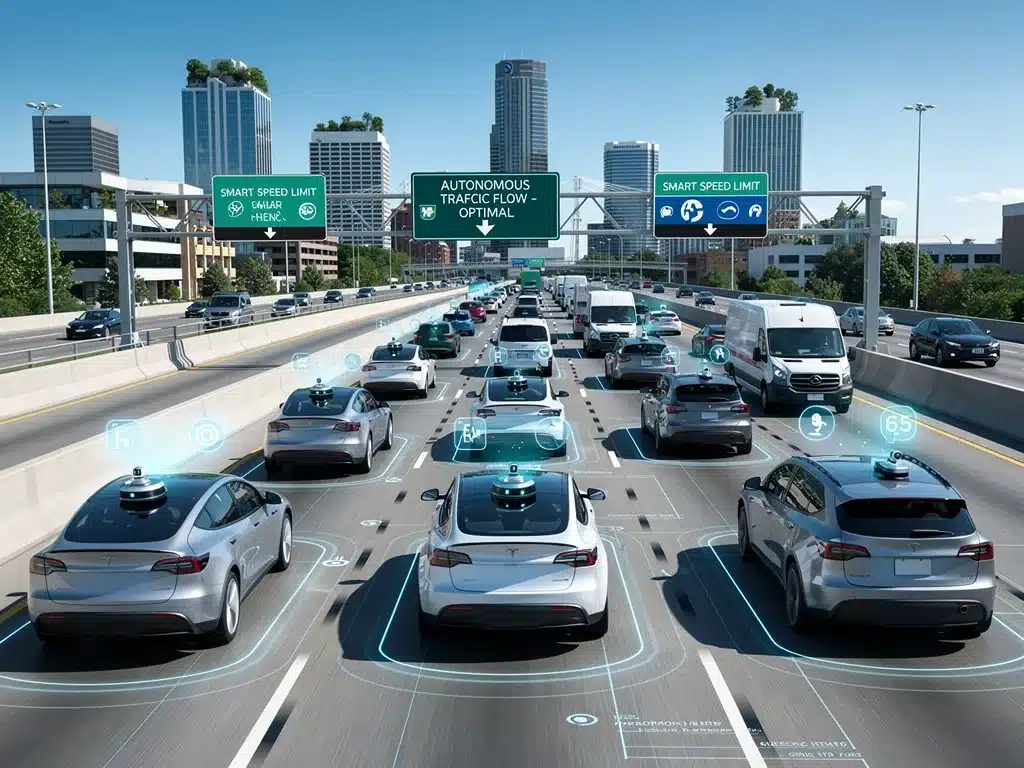
The autonomous driving technology market in the United States is projected for a significant 20% expansion by 2027, driven by technological advancements and increasing investment, according to the 2026 outlook.
Advertisements
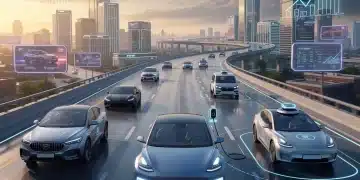
Imagine a future where your daily commute transforms from a stressful chore into productive personal time. This vision is rapidly approaching, as the autonomous driving technology market in the United States is projected for a remarkable 20% expansion by 2027, according to the latest 2026 outlook. What forces are driving this accelerated growth, and what can we expect as these intelligent vehicles become a more common sight on American roads?
Understanding the autonomous driving landscape
The autonomous driving landscape in the U.S. is a dynamic and rapidly evolving sector, characterized by groundbreaking innovations and substantial investments. This market encompasses a broad spectrum of technologies, from advanced driver-assistance systems (ADAS) to fully self-driving vehicles, each playing a crucial role in shaping the future of transportation.
The journey towards full autonomy is not a singular path but a series of incremental advancements, each building upon the last. These steps involve complex interplay between hardware, software, and artificial intelligence, all designed to enhance vehicle safety and efficiency. Companies are investing heavily in research and development to overcome technical hurdles and regulatory challenges.
Key technological pillars
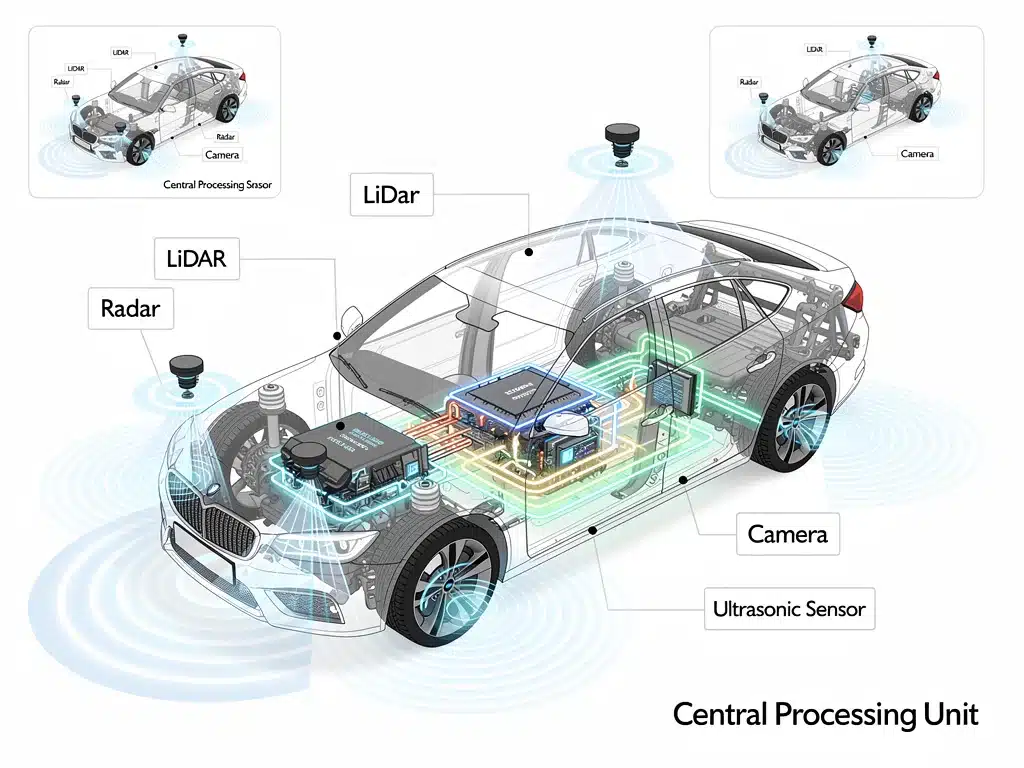
- Sensor Fusion: Combining data from various sensors like cameras, radar, and LiDAR for a comprehensive environmental understanding.
- Artificial Intelligence (AI) and Machine Learning: Enabling vehicles to perceive, predict, and plan in real-time.
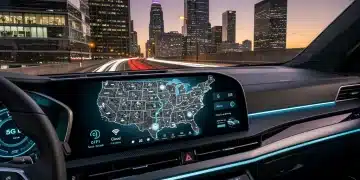
- High-Definition (HD) Mapping: Providing precise lane-level and object-level information for navigation.
- Vehicle-to-Everything (V2X) Communication: Allowing vehicles to communicate with other vehicles, infrastructure, and pedestrians.
The integration of these technologies is creating a robust ecosystem that supports higher levels of autonomous functionality. Each component contributes to the vehicle’s ability to operate independently, reducing human intervention and improving overall road safety. The ongoing refinement of these systems is critical for market acceptance and regulatory approval.
In conclusion, the foundation of autonomous driving is built on sophisticated technological pillars that are continuously being refined. This intricate network of sensors, AI, and communication systems is what enables vehicles to perceive their surroundings and make informed decisions, paving the way for a transformative shift in how we travel.
Market drivers and growth catalysts
The projected 20% expansion of the autonomous driving market in the U.S. by 2027 is fueled by several powerful market drivers and growth catalysts. These factors collectively create a fertile ground for innovation and adoption, propelling the industry forward at an unprecedented pace.
One of the primary drivers is the increasing demand for enhanced safety features. Autonomous technologies have the potential to significantly reduce human error, which is a leading cause of traffic accidents. Consumers are becoming more aware of these safety benefits, influencing their purchasing decisions and encouraging automakers to integrate more advanced ADAS features.
Regulatory support and infrastructure investment
Government initiatives and the development of supportive regulatory frameworks are also crucial. States and federal agencies are working to establish guidelines for testing and deploying autonomous vehicles, providing a clearer path for companies to bring their innovations to market. Alongside this, investments in smart infrastructure are essential to support the widespread adoption of these vehicles.
- Improved Road Safety: Autonomous systems aim to minimize accidents caused by human factors.
- Enhanced Efficiency: Optimized traffic flow and reduced congestion through coordinated vehicle movements.
- Increased Productivity: Commuters can utilize travel time for work or leisure instead of driving.
- Accessibility for All: Providing mobility solutions for individuals unable to drive.
Furthermore, the competitive landscape among automotive manufacturers and technology companies is driving rapid innovation. Each player strives to differentiate its offerings by introducing more sophisticated and reliable autonomous capabilities. This healthy competition accelerates the pace of development and brings advanced features to market faster.
In summary, the growth of the autonomous driving market is propelled by a confluence of safety demands, regulatory advancements, infrastructure development, and intense industry competition. These elements combine to create a compelling case for the continued expansion of this transformative technology.
Key players and competitive landscape
The competitive landscape within the U.S. autonomous driving market is a complex web of established automotive giants, innovative tech startups, and collaborative partnerships. Each entity brings unique strengths and strategies to the table, vying for a significant share of the projected 20% expansion.
Traditional automakers, such as General Motors, Ford, and Tesla, are heavily investing in developing their proprietary autonomous driving systems. These companies leverage their extensive manufacturing capabilities and brand recognition to integrate self-driving features directly into their vehicle lines. Their approach often involves a phased rollout, starting with advanced driver-assistance systems and gradually moving towards higher levels of autonomy.
Emerging tech companies and partnerships
Alongside the traditional players, technology companies like Waymo (an Alphabet subsidiary) and Cruise (majority-owned by GM) are at the forefront of developing fully autonomous ride-hailing services. These companies often focus on Level 4 and Level 5 autonomy, aiming to remove the human driver entirely from the equation. Their strategies emphasize extensive real-world testing and data collection to refine their AI algorithms.
- Waymo: Pioneering fully autonomous ride-hailing services in select U.S. cities.
- Cruise: Deploying robotaxi services, focusing on urban environments.
- Argo AI (formerly): Although dissolved, its efforts highlighted the importance of partnerships between tech and auto companies.
- Mobileye: A leading provider of ADAS and autonomous driving solutions, partnering with numerous automakers.
The market also sees a rise in strategic partnerships and acquisitions, where automakers collaborate with tech firms to combine their expertise. These alliances help share the immense costs of research and development, mitigate risks, and accelerate the pace of innovation. For instance, Volkswagen’s investment in Argo AI (before its dissolution) exemplified such a trend.
In essence, the autonomous driving market is characterized by a blend of direct competition and strategic collaboration. This dynamic environment ensures continuous innovation and a rapid push towards more advanced and safer autonomous solutions for consumers across the United States.
Challenges and hurdles to widespread adoption
Despite the optimistic projections for the autonomous driving technology market in the United States, several significant challenges and hurdles must be overcome before widespread adoption becomes a reality. These obstacles span technological, regulatory, ethical, and public perception domains, requiring concerted efforts from all stakeholders.
One of the most prominent technological hurdles is ensuring absolute safety and reliability in all driving conditions. Autonomous vehicles must be capable of handling unpredictable situations, extreme weather, and complex urban environments without fail. The ‘edge cases’ – rare and unusual scenarios – remain particularly difficult to program and test for, demanding continuous refinement of AI and sensor capabilities.
Regulatory complexities and public trust
The regulatory framework for autonomous vehicles is still evolving, creating a patchwork of state-level laws and federal guidelines. A unified national standard is essential to streamline testing, deployment, and liability issues. Without clear and consistent regulations, companies face uncertainty, which can slow down progress and investment.
- Safety and Reliability: Ensuring flawless operation in all scenarios, especially edge cases.
- Cybersecurity Risks: Protecting vehicles from hacking and data breaches.
- Ethical Dilemmas: Programming vehicles to make difficult moral decisions in unavoidable accident situations.
- Public Acceptance: Overcoming skepticism and building trust among potential users.
Public perception and trust are equally critical. High-profile accidents involving autonomous vehicles, even if rare, can significantly erode public confidence. Educating the public about the benefits and safety measures of self-driving technology is paramount to fostering acceptance. Addressing concerns about job displacement and data privacy also falls under this umbrella.
In conclusion, while the potential of autonomous driving is immense, the path to mass adoption is fraught with challenges. Overcoming these technological, regulatory, ethical, and societal hurdles will require sustained innovation, clear policy-making, and effective public engagement from all entities involved.
Innovations shaping the 2026 outlook
The 2026 outlook for the autonomous driving market in the U.S. is heavily influenced by a wave of ongoing innovations that are pushing the boundaries of what’s possible. These advancements are not just incremental improvements but often represent significant leaps in capability, addressing previous limitations and paving the way for more robust systems.
One such innovation is the continued development of more sophisticated sensor technologies. LiDAR systems are becoming smaller, more affordable, and more powerful, offering enhanced 3D environmental mapping. Similarly, radar and camera systems are gaining higher resolution and better processing capabilities, allowing for more accurate object detection and classification in diverse conditions.
Advanced AI and simulation environments
Artificial intelligence and machine learning algorithms are also seeing rapid progress. Deep learning models are becoming more adept at predicting human behavior, understanding complex road scenarios, and making split-second decisions. The integration of explainable AI (XAI) is also gaining traction, aiming to make autonomous decisions more transparent and auditable, which is crucial for regulatory approval and public trust.
- Next-generation LiDAR: Miniaturized and more cost-effective solutions for broader adoption.
- Predictive AI: Enhancing the ability to anticipate actions of other road users.
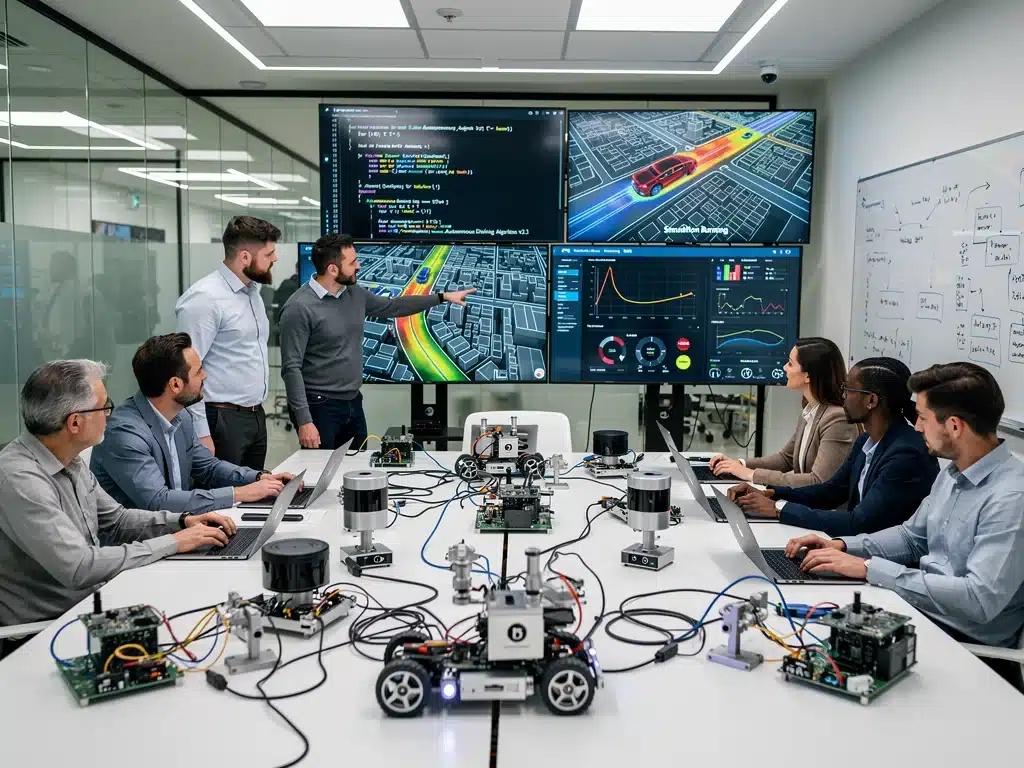
- Digital Twin Simulations: Creating hyper-realistic virtual environments for extensive, safe testing.
- Over-the-Air (OTA) Updates: Enabling continuous improvement and feature deployment post-purchase.
Furthermore, the advent of digital twin technology and advanced simulation environments is revolutionizing the testing phase. Companies can now simulate millions of miles of driving in virtual worlds, exposing their AI to countless scenarios, including those ‘edge cases’ that are difficult to reproduce in physical testing. This accelerates development cycles and enhances system safety before real-world deployment.
In conclusion, the innovations emerging in sensor technology, AI, and simulation platforms are critical drivers for the projected market expansion. These advancements are not only making autonomous vehicles safer and more reliable but also accelerating their path towards widespread integration into the American transportation system.
Economic impact and job market implications
The projected 20% expansion of the autonomous driving market in the U.S. will undoubtedly have a profound economic impact, influencing various sectors and reshaping the job market. While concerns about job displacement are valid, the emergence of new industries and roles is also a significant aspect of this transformation.
Economically, autonomous vehicles are expected to bring substantial benefits. Reduced accidents could lead to lower insurance premiums and healthcare costs associated with traffic injuries. Increased efficiency in logistics and transportation, through optimized routes and continuous operation, could lower shipping costs and boost productivity across industries. This ripple effect could stimulate economic growth.
New job opportunities and reskilling
Regarding the job market, some roles, particularly those in professional driving, may see a decline. However, the development, deployment, and maintenance of autonomous systems will create a plethora of new, high-skilled jobs. These include roles for AI engineers, data scientists, cybersecurity experts, robotics technicians, and specialized mechanics for autonomous fleets.
- Reduced Transportation Costs: Lower operational expenses for businesses and consumers.
- Increased Productivity: Time saved from driving can be reallocated to other activities.
- New High-Tech Jobs: Demand for engineers, data scientists, and AI specialists.
- Reskilling Initiatives: Need for training programs to transition workers into new roles.
There will be a strong emphasis on reskilling and upskilling the workforce to meet the demands of these new roles. Educational institutions and government programs will play a crucial part in preparing individuals for the jobs of the future. The transition will require careful planning and investment in human capital.
Ultimately, the economic impact of autonomous driving is multifaceted. While it presents challenges for certain job sectors, it also promises significant economic gains through efficiency and safety improvements, alongside the creation of a new generation of highly technical jobs. Navigating this transition effectively will be key to maximizing the benefits for the U.S. economy.
The road ahead: 2027 and beyond
As we look towards 2027 and beyond, the road ahead for the autonomous driving technology market in the United States is one of continued innovation, increased integration, and evolving societal adaptation. The projected 20% expansion is just a stepping stone towards a future where autonomous mobility plays a central role in daily life.
Further technological breakthroughs will focus on enhancing the robustness of AI in handling unpredictable human behavior and diverse environmental conditions. The goal is to achieve Level 5 autonomy, where vehicles can operate completely independently in all situations, without any human intervention. This will require even more advanced sensor fusion, AI processing, and real-time decision-making capabilities.
Societal integration and urban planning
Beyond technology, the future will involve significant societal integration. Urban planning will need to adapt to accommodate autonomous fleets, potentially redesigning roads, parking infrastructure, and traffic management systems. The concept of car ownership might evolve, with a greater emphasis on shared autonomous mobility services, particularly in dense urban areas.
- Achieving Level 5 Autonomy: The ultimate goal of full self-driving capability.
- Smart City Integration: Autonomous vehicles as part of a larger interconnected urban ecosystem.
- New Business Models: Growth of robotaxis, autonomous delivery services, and subscription models.
- Ethical Frameworks: Development of comprehensive ethical guidelines for autonomous decision-making.
The regulatory landscape will also mature, providing clearer guidelines and international standards, which are crucial for global deployment and interoperability. Ethical considerations, such as accident liability and the moral algorithms embedded in AI, will continue to be debated and refined as the technology becomes more pervasive.
In conclusion, the journey for autonomous driving extends far beyond 2027. It represents a continuous evolution of technology, infrastructure, and societal norms. The trajectory points towards a future where autonomous vehicles not only enhance safety and efficiency but also fundamentally transform our urban environments and personal mobility experiences.
| Key Point | Brief Description |
|---|---|
| Market Growth | U.S. autonomous driving market projected for 20% expansion by 2027. |
| Key Drivers | Enhanced safety demand, regulatory support, and tech innovation. |
| Main Challenges | Ensuring reliability, regulatory complexities, and public acceptance. |
| Future Outlook | Continued innovation towards Level 5 autonomy and smart city integration. |
Frequently asked questions about autonomous driving
Currently, the U.S. has vehicles with Level 2 and Level 3 autonomy available to consumers, offering advanced driver-assistance systems. Level 4 autonomous ride-hailing services are operational in limited areas, with ongoing testing and development for broader deployment.
The primary benefits include a significant reduction in traffic accidents due to human error, improved traffic flow and reduced congestion, increased productivity for commuters, and enhanced mobility options for individuals who cannot drive themselves.
While some driving-related jobs may decline, the autonomous driving industry is creating numerous high-skilled positions in AI engineering, data science, cybersecurity, and robotics. Reskilling initiatives are crucial to prepare the workforce for these new opportunities.
Regulations are critical for ensuring safety, establishing liability, and providing a clear framework for development and deployment. Unified national standards are essential to streamline processes and foster greater investment and consumer trust across states.
While Level 5 autonomy is the ultimate goal, widespread deployment is still several years away. Significant hurdles in AI robustness, ethical programming, and comprehensive testing need to be overcome before vehicles can operate entirely independently in all conditions.
Conclusion
The autonomous driving technology market in the United States is on a clear trajectory for substantial growth, with a projected 20% expansion by 2027. This remarkable forecast is underpinned by continuous technological innovation, robust investment, and a growing societal demand for safer and more efficient transportation solutions. While challenges related to regulatory complexities, public acceptance, and the ultimate reliability of AI systems persist, the industry’s commitment to overcoming these hurdles is evident. The future promises not just self-driving cars, but a fundamental transformation of our urban landscapes, economic structures, and daily lives, driven by a blend of human ingenuity and artificial intelligence.