Quantum Computing in Automotive Design: 2026 Simulation Breakthroughs
Advertisements
By 2026, quantum computing is poised to fundamentally transform automotive design, enabling simulation breakthroughs that will accelerate vehicle development, enhance safety, and unlock innovative materials and performance capabilities through unparalleled computational power.
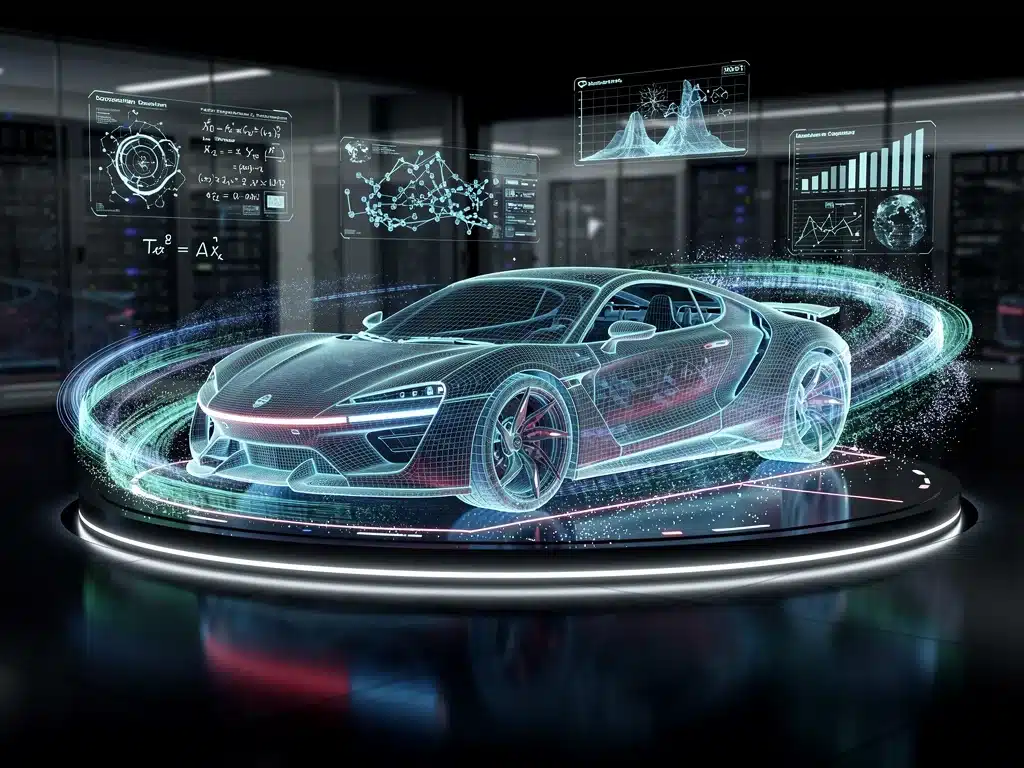
The automotive industry stands on the brink of a revolution, driven by advancements in computational power. By 2026, the profound impact of quantum computing’s role in automotive design: a 2026 perspective on simulation breakthroughs is becoming increasingly clear, promising to reshape how vehicles are conceived, developed, and optimized. This transformative technology offers a paradigm shift in simulation capabilities, moving beyond the limits of classical computing to unlock unprecedented levels of detail and speed.
Advertisements
Understanding Quantum Computing’s Foundational Impact on Automotive
Quantum computing, leveraging principles of quantum mechanics like superposition and entanglement, represents a radical departure from traditional binary computing. This foundational difference allows quantum computers to process and analyze vast datasets and complex interactions far more efficiently than their classical counterparts. For the automotive sector, this means moving from approximations to highly accurate, multi-dimensional simulations that were previously unattainable.
The ability of quantum systems to explore numerous possibilities simultaneously opens doors to optimizing intricate design parameters. This includes everything from aerodynamic efficiency and material science to battery performance and complex supply chain logistics. Automotive engineers in 2026 are beginning to harness this power to solve problems that have long been considered intractable, thereby accelerating innovation cycles and reducing development costs.
Quantum Mechanics in Design Optimization
At its core, quantum computing allows for the exploration of a combinatorial explosion of variables that define a vehicle’s performance and characteristics. This is crucial for optimizing designs where small changes can have cascading effects across the entire system. Traditional simulations often rely on simplifying assumptions, but quantum approaches can handle the true complexity.
- Aerodynamic Efficiency: Simulating airflow around a vehicle with quantum precision can lead to significant improvements in drag reduction and fuel economy.
- Material Science: Designing new alloys or composite materials at the molecular level for lighter, stronger, and more sustainable vehicles.
- Battery Chemistry: Optimizing battery cell structures and chemical compositions to enhance energy density, charging speed, and longevity.
The intricate nature of these optimizations requires computational resources that classical computers struggle to provide. Quantum computing offers a pathway to not just incremental improvements but potentially revolutionary breakthroughs in these areas, redefining what’s possible in vehicle design.
Overcoming Simulation Bottlenecks
One of the biggest challenges in automotive design has always been the sheer computational time required for high-fidelity simulations. Crash tests, fluid dynamics, and material stress analyses can take days or even weeks on supercomputers. Quantum algorithms, particularly those designed for optimization and quantum machine learning, promise to drastically reduce these simulation times.
This acceleration allows design teams to iterate much faster, testing a wider range of design variations and material combinations in a fraction of the time. The result is a more robust design process, leading to safer, more efficient, and more innovative vehicles reaching the market sooner. The ability to quickly analyze vast parameter spaces provides a competitive edge in a rapidly evolving industry.
In conclusion, the foundational impact of quantum computing lies in its capacity to handle complexity and accelerate computation. By offering unparalleled simulation capabilities, it is setting the stage for a new era of automotive design where previously impossible optimizations become routine, driving significant advancements across the entire vehicle development lifecycle.
Enhanced Material Science and Lightweighting through Quantum Simulation
The quest for lighter, stronger, and more sustainable materials is a constant in automotive design. By 2026, quantum computing is proving to be an indispensable tool in this endeavor, enabling scientists and engineers to simulate material properties at an atomic and molecular level with unprecedented accuracy. This capability is vital for developing next-generation materials that can significantly improve vehicle performance, safety, and environmental footprint.
Traditional material design often involves extensive trial-and-error experimentation, which is both time-consuming and expensive. Quantum simulations can predict how new compounds will behave under various conditions, allowing for the virtual testing of thousands of material combinations before any physical prototypes are made. This drastically shortens the material discovery and development cycle.
Designing Advanced Alloys and Composites
Quantum computers excel at modeling the complex interactions between atoms and molecules, which is essential for developing advanced materials. This includes creating new lightweight alloys that offer superior strength-to-weight ratios compared to traditional steel or aluminum, and engineering composite materials with tailored properties for specific applications.
- Predicting Material Behavior: Quantum simulations can accurately predict tensile strength, fatigue resistance, and thermal properties of novel materials.
- Optimizing Microstructures: Understanding and manipulating the internal structure of materials at a microscopic level to enhance their performance characteristics.
- Sustainable Material Development: Exploring bio-based or recycled materials with quantum precision to reduce the environmental impact of vehicle manufacturing.
The precision offered by quantum simulation means that designers can fine-tune material compositions to meet exact specifications for specific components, from chassis elements to battery casings. This leads to vehicles that are not only lighter but also more durable and efficient.
Impact on Electric Vehicle Battery Technology
One of the most significant areas where quantum-enhanced material science is making a difference is in electric vehicle (EV) battery technology. The performance of EV batteries is heavily dependent on the chemical and physical properties of their constituent materials.
Quantum simulations are being used to explore new electrode materials, electrolytes, and separators that can lead to batteries with higher energy density, faster charging times, and longer lifespans. By accurately modeling electron flow and chemical reactions within battery cells, researchers can identify optimal material combinations that were previously too complex to discover.

This quantum-driven approach to battery development is critical for extending EV range, reducing charging anxiety, and ultimately accelerating the adoption of electric vehicles globally. The ability to virtually iterate on battery chemistry and structure provides an invaluable advantage in the competitive EV market.
In summary, quantum computing is transforming material science in the automotive industry by enabling the precise design and optimization of advanced materials. This leads to lighter vehicles, improved battery performance, and a more sustainable manufacturing process, all contributing to the evolution of automotive design by 2026.
Revolutionizing Aerodynamics and Fluid Dynamics with Quantum Algorithms
Aerodynamics and fluid dynamics are critical factors in automotive performance, influencing everything from fuel efficiency to vehicle stability and noise levels. By 2026, quantum algorithms are beginning to revolutionize these fields, offering unprecedented accuracy and speed in simulating complex airflow patterns around vehicles. This allows designers to achieve optimal aerodynamic profiles that were previously difficult or impossible to model with classical computing methods.
The intricate nature of turbulent fluid flow makes it one of the most challenging problems in computational physics. Classical simulations often require significant computational resources and still rely on approximations. Quantum computing’s ability to handle complex systems and vast datasets makes it ideally suited to tackle these challenges, providing a more granular and accurate understanding of aerodynamic forces.
Advanced Aerodynamic Optimization
Quantum algorithms, such as those used for solving partial differential equations or optimizing complex functions, can be applied to aerodynamic design with remarkable results. This allows engineers to simulate a myriad of design variations, evaluating their impact on drag, lift, and downforce with greater precision.
- Drag Reduction: Identifying subtle design modifications that significantly reduce aerodynamic drag, leading to improved fuel economy for internal combustion engines and extended range for electric vehicles.
- Optimized Downforce: Designing sports cars and high-performance vehicles with optimal downforce for enhanced grip and stability at high speeds.
- Noise Reduction: Simulating airflow to minimize wind noise, contributing to a quieter and more comfortable cabin experience.
The fidelity of quantum aerodynamic simulations enables designers to make informed decisions earlier in the development cycle, reducing the need for costly physical wind tunnel testing. This not only saves time and money but also allows for more radical and innovative aerodynamic concepts to be explored.
Fluid Dynamics for Thermal Management and HVAC
Beyond external aerodynamics, quantum computing also offers significant advantages in simulating internal fluid dynamics, particularly for thermal management systems and HVAC (Heating, Ventilation, and Air Conditioning). Efficient cooling of engines, batteries, and electronic components is crucial for vehicle performance and longevity, especially in electric and hybrid vehicles.
By simulating coolant flow paths and heat dissipation more accurately, quantum algorithms can help optimize the design of radiators, battery cooling systems, and air ducts. This ensures that critical components operate within optimal temperature ranges, preventing overheating and improving overall system reliability.
Furthermore, quantum-enhanced fluid dynamics can refine HVAC system design, leading to more efficient climate control within the cabin. This translates to improved passenger comfort and reduced energy consumption, which is particularly important for electric vehicles where HVAC can significantly impact range.
In conclusion, quantum computing is revolutionizing aerodynamics and fluid dynamics in automotive design by providing unparalleled simulation capabilities. This leads to vehicles with improved efficiency, stability, and comfort, demonstrating a clear path towards more advanced and optimized automotive engineering by 2026.
Quantum’s Role in Crash Simulation and Safety Engineering
Vehicle safety is paramount in automotive design, and crash simulation plays a crucial role in evaluating and enhancing the protective capabilities of vehicles. By 2026, quantum computing is beginning to offer a transformative approach to crash simulation and safety engineering, enabling engineers to model complex impact scenarios with greater fidelity and speed than ever before. This leads to the development of safer vehicles that better protect occupants in real-world collisions.
Classical crash simulations are computationally intensive, often requiring significant time to run and analyze. They also often rely on simplified models of material deformation and energy absorption. Quantum algorithms, however, can handle the intricate physics of material behavior under extreme stress and the complex interactions between vehicle components during an impact, providing a more comprehensive and accurate picture.
High-Fidelity Material Deformation Modeling
One of the key advantages of quantum computing in crash simulation is its ability to model material deformation at a microscopic level with high precision. Understanding how different materials absorb and distribute impact energy is critical for designing crumple zones and passenger safety cells.
- Predicting Material Failure: Quantum simulations can accurately predict the failure points and stress tolerances of various materials under impact, allowing for optimized material selection.
- Optimizing Energy Absorption: Designing vehicle structures that effectively absorb and dissipate kinetic energy during a crash, minimizing forces transmitted to occupants.
- Virtual Crash Testing: Running a vast number of virtual crash scenarios with varying impact angles, speeds, and occupant sizes to comprehensively evaluate safety performance.
This enhanced modeling capability allows engineers to experiment with novel material combinations and structural designs that can significantly improve occupant protection. The ability to quickly iterate through these designs speeds up the safety development process and reduces the need for expensive physical crash tests.
Occupant Safety and Biomechanical Response
Beyond structural integrity, quantum simulations are also being applied to model occupant safety and biomechanical response during a crash. Understanding how the human body reacts to impact forces is essential for designing effective restraint systems, airbags, and interior components.
Quantum algorithms can simulate the complex interactions between occupants, seatbelts, airbags, and the vehicle interior, providing detailed insights into potential injury risks. This allows safety engineers to fine-tune passive safety systems to maximize occupant protection across a wide range of crash scenarios and occupant types.

By leveraging quantum computing, automotive manufacturers can develop vehicles that not only meet but exceed safety standards, leading to a significant reduction in accident-related injuries and fatalities. This focus on advanced simulation ensures that future vehicles are designed with the highest levels of occupant protection in mind.
In conclusion, quantum computing is revolutionizing crash simulation and safety engineering by enabling high-fidelity material deformation modeling and detailed occupant response analysis. This leads to the development of significantly safer vehicles, marking a major breakthrough in automotive safety by 2026.
The Quantum Leap in Manufacturing Process Optimization
Beyond design, quantum computing is also poised to make a significant impact on automotive manufacturing process optimization by 2026. The complexity of modern automotive production lines, with their intricate logistics, supply chain dependencies, and robotics, presents numerous optimization challenges. Quantum algorithms offer powerful new tools to tackle these complexities, leading to more efficient, cost-effective, and sustainable manufacturing operations.
Traditional manufacturing optimization relies on heuristics and classical algorithms that can struggle with the sheer number of variables and constraints involved in a large-scale production system. Quantum computing, with its ability to explore vast solution spaces, can identify optimal production schedules, resource allocation strategies, and supply chain configurations that are beyond the reach of current methods.
Optimizing Supply Chain and Logistics
A highly optimized supply chain is crucial for efficient automotive manufacturing. Quantum algorithms can analyze global supply networks, identifying the most efficient routes, managing inventory levels, and mitigating risks associated with disruptions.
- Route Optimization: Finding the most efficient transportation routes for parts and finished vehicles, reducing fuel consumption and delivery times.
- Inventory Management: Optimizing stock levels to minimize holding costs while ensuring parts are available when needed, preventing production delays.
- Risk Mitigation: Identifying potential vulnerabilities in the supply chain and developing contingency plans to maintain production continuity.
The ability to dynamically optimize these aspects of the supply chain in real-time, or near real-time, provides a significant competitive advantage. It allows manufacturers to respond quickly to changes in demand, supplier issues, or unforeseen global events, ensuring smooth and uninterrupted production.
Enhancing Robotics and Production Line Efficiency
The automotive industry heavily relies on robotics for assembly and manufacturing. Quantum computing can optimize the programming and coordination of these robotic systems, leading to increased efficiency and precision on the production line.
Quantum algorithms can optimize robot arm movements, task allocation, and scheduling to minimize idle time, reduce energy consumption, and prevent bottlenecks. This results in faster production cycles, higher quality output, and reduced operational costs. Furthermore, quantum-enhanced machine learning can be used for predictive maintenance of manufacturing equipment, identifying potential failures before they occur and minimizing downtime.
The integration of quantum optimization into manufacturing processes represents a significant leap forward in operational efficiency. It enables automotive companies to build vehicles more quickly, with higher quality, and at a lower cost, directly benefiting both the manufacturer and the consumer.
In conclusion, quantum computing is making a profound impact on automotive manufacturing by optimizing supply chains, logistics, and production line efficiency. This translates to more streamlined operations, cost savings, and ultimately, a more competitive and responsive automotive industry by 2026.
Challenges and the Road Ahead for Quantum Automotive Integration
While the potential of quantum computing in automotive design and manufacturing by 2026 is immense, the journey to full integration is not without its challenges. The technology is still in its nascent stages, and significant hurdles remain in terms of hardware development, algorithm design, and the availability of skilled quantum engineers. Addressing these challenges is crucial for realizing the full transformative power of quantum computing in the automotive sector.
Developing stable and scalable quantum hardware capable of solving real-world automotive problems is a primary focus for researchers and technology companies. Furthermore, translating classical engineering problems into quantum-executable algorithms requires a deep understanding of both domains, a skill set that is currently scarce.
Hardware Limitations and Error Correction
Current quantum computers are often referred to as Noisy Intermediate-Scale Quantum (NISQ) devices. They are prone to errors and have limited numbers of qubits, which restricts the complexity of problems they can solve. For automotive applications, which often involve large datasets and high precision, robust error correction mechanisms are vital.
- Qubit Stability: Improving the coherence time and stability of qubits to perform longer and more complex computations.
- Scaling Up: Developing techniques to scale quantum processors to thousands or even millions of qubits while maintaining performance.
- Error Mitigation: Implementing advanced error correction codes and algorithms to ensure the reliability of quantum computations.
Overcoming these hardware limitations is essential for quantum computers to move beyond proof-of-concept demonstrations and become truly practical tools for automotive design and manufacturing. Significant investment and research are dedicated to these areas.
Talent Gap and Algorithm Development
Another significant challenge is the talent gap. There is a shortage of engineers and scientists with expertise in both quantum mechanics and automotive engineering. Bridging this gap requires new educational programs and cross-disciplinary collaboration to train the next generation of quantum automotive specialists.
Furthermore, developing quantum algorithms specifically tailored for automotive applications is an ongoing area of research. While general-purpose quantum algorithms exist, adapting them to efficiently solve highly specific problems like crash simulation or material design requires specialized knowledge and continuous innovation. The transformation of classical problems into a quantum framework is a complex task that demands novel approaches.
In conclusion, while the promise of quantum computing for automotive design is compelling, significant challenges in hardware, error correction, and talent development must be overcome. The road ahead involves sustained research, investment, and collaboration to fully integrate this revolutionary technology into the automotive industry by 2026 and beyond.
The Ethical and Economic Implications of Quantum Automotive
As quantum computing begins to weave itself into the fabric of automotive design and manufacturing by 2026, it brings with it a host of ethical and economic implications that warrant careful consideration. The immense power of quantum simulations can lead to benefits like safer and more efficient vehicles, but also raises questions about accessibility, job displacement, and the responsible use of such advanced technology. Navigating these implications will be crucial for a beneficial and equitable quantum automotive future.
The economic impact is multifaceted, promising to revolutionize the automotive market by creating new opportunities and potentially disrupting existing business models. Ethical considerations range from data privacy in highly personalized vehicles to the societal impact of autonomous systems developed with quantum precision.
Economic Transformation and Market Dynamics
The adoption of quantum computing will undoubtedly reshape the automotive industry’s economic landscape. Companies that successfully integrate quantum capabilities early are likely to gain a significant competitive advantage, leading to market leadership in innovation and efficiency. This could drive a new wave of investment and consolidation within the sector.
- Reduced Development Costs: Faster and more accurate simulations can significantly lower R&D expenses, making vehicle development more cost-effective.
- New Business Models: Quantum-optimized designs and manufacturing could enable entirely new types of vehicles and mobility services.
- Job Creation and Displacement: While new roles in quantum engineering will emerge, some traditional roles might be automated or become obsolete, necessitating workforce retraining initiatives.
The economic benefits could extend to consumers through more affordable, higher-performing, and safer vehicles. However, ensuring that these advancements are accessible across different market segments and do not exacerbate existing inequalities will be an important consideration.
Ethical Considerations in Quantum-Designed Vehicles
The ethical implications of quantum computing in automotive design are profound, particularly concerning data, autonomy, and societal impact. As vehicles become more intelligent and interconnected, the data generated and processed through quantum systems will be immense, raising privacy concerns.
Quantum-enhanced AI for autonomous vehicles could achieve unprecedented decision-making capabilities, leading to questions about accountability in accident scenarios. Furthermore, the potential for highly personalized vehicle designs based on individual data could lead to discussions around algorithmic bias and equitable access to advanced features.
Addressing these ethical dilemmas requires proactive policy-making, robust regulatory frameworks, and transparent development practices. Engaging with ethicists, policymakers, and the public will be essential to ensure that quantum automotive advancements serve the broader societal good and are implemented responsibly.
In conclusion, the integration of quantum computing into automotive design by 2026 presents significant ethical and economic implications. While promising transformative benefits, a thoughtful and proactive approach is needed to manage market dynamics, ensure job transition, and uphold ethical principles in the development and deployment of quantum-enhanced vehicles. This dual focus on innovation and responsibility will define the future of quantum automotive.
The Future Outlook: Beyond 2026 for Quantum Automotive
Looking beyond 2026, the trajectory for quantum computing in the automotive industry points towards an even more deeply integrated and transformative role. As quantum hardware matures and algorithms become more sophisticated, we can anticipate a future where quantum capabilities are not just an advantage but a fundamental component of automotive innovation. This long-term outlook envisions breakthroughs that will redefine vehicle characteristics, user experience, and the very nature of mobility.
The foundational work being laid in 2026 will pave the way for quantum computers to tackle increasingly complex and ambitious problems. This includes fully autonomous systems that operate with near-perfect reliability, personalized manufacturing on an unprecedented scale, and entirely new paradigms for vehicle energy and propulsion.
Fully Autonomous Systems with Quantum AI
The development of truly autonomous vehicles faces significant computational hurdles, particularly in real-time decision-making, sensor fusion, and predictive modeling in dynamic environments. Quantum AI and machine learning algorithms are expected to provide the necessary leap in processing power to achieve Level 5 autonomy.
- Enhanced Perception: Quantum-enhanced sensor fusion for more accurate and robust environmental perception in all conditions.
- Optimal Decision Making: Real-time quantum optimization for navigating complex traffic scenarios and making split-second ethical decisions.
- Predictive Maintenance: Quantum machine learning predicting component failures with extreme accuracy, leading to proactive maintenance and increased vehicle uptime.
The ability of quantum systems to process vast amounts of data simultaneously and identify subtle patterns will be crucial for creating autonomous vehicles that can operate safely and efficiently in any given situation, far surpassing current capabilities.
Personalized Manufacturing and On-Demand Production
Quantum computing could enable a revolution in manufacturing, moving towards highly personalized and on-demand vehicle production. Imagine a future where vehicles are not just customized but designed and built to individual specifications with quantum-optimized efficiency.
This could involve quantum algorithms orchestrating flexible production lines that can rapidly reconfigure to build unique vehicle models, using advanced materials designed on the fly. The concept of mass customization could evolve into true personalized manufacturing, offering consumers unparalleled choice and significantly reducing waste associated with mass production.
Furthermore, quantum-optimized logistics could facilitate on-demand assembly and delivery, further streamlining the entire production to consumer pipeline. This would not only benefit manufacturers through efficiency gains but also offer consumers a level of personalization previously unimaginable.
In conclusion, the future beyond 2026 for quantum automotive integration is bright, promising fully autonomous systems powered by quantum AI and the advent of personalized, on-demand manufacturing. These advancements will fundamentally change how vehicles are designed, built, and experienced, driving a new era of innovation and mobility. The steady progress in quantum technology ensures its continued and expanding role in the automotive sector.
| Key Aspect | Quantum Impact (2026 Perspective) |
|---|---|
| Simulation Speed | Drastically reduces time for complex simulations like crash tests and fluid dynamics, accelerating design cycles. |
| Material Discovery | Enables atomic-level modeling for new lightweight alloys and advanced battery chemistries. |
| Aerodynamic Optimization | Achieves unprecedented precision in modeling airflow, leading to superior efficiency and stability. |
| Manufacturing Efficiency | Optimizes supply chains, logistics, and robotic production for streamlined operations. |
Frequently Asked Questions About Quantum in Automotive Design
By 2026, the main benefit is the ability to perform highly complex simulations at unprecedented speeds and accuracy. This accelerates design iterations, allowing for quicker development of safer, more efficient, and innovative vehicles, surpassing classical computing limits.
Quantum computing enables atomic and molecular level simulations, predicting material properties with high fidelity. This facilitates the design of advanced lightweight alloys, composites, and optimized battery chemistries, crucial for electric vehicle performance and sustainability.
Yes, quantum computing revolutionizes crash simulations by modeling material deformation and occupant biomechanics with greater precision. This allows engineers to design more effective crumple zones, restraint systems, and overall safer vehicle structures, reducing injury risks.
Key challenges include hardware limitations, such as qubit stability and scalability, and the need for robust error correction. There’s also a significant talent gap in quantum engineering and the ongoing development of specialized automotive quantum algorithms.
Absolutely. Quantum algorithms are expected to optimize complex manufacturing processes, including supply chain logistics, inventory management, and robotic production line efficiency. This can lead to reduced costs, faster production, and more sustainable operations.
Conclusion
The year 2026 marks a pivotal moment where the theoretical promise of quantum computing truly begins its tangible impact across the automotive sector. From revolutionizing design simulations to enhancing material science, optimizing manufacturing, and fundamentally improving vehicle safety, quantum technology is setting new benchmarks. While challenges remain in hardware development and skill acquisition, the steady progress indicates that quantum computing will not just be an advantage but a cornerstone of future automotive innovation. Its role extends beyond mere computational power, ushering in an era of unprecedented efficiency, sustainability, and transformative mobility experiences for generations to come.