AR-HUDs 2026: The Future of Enhanced Driving Experience
Advertisements
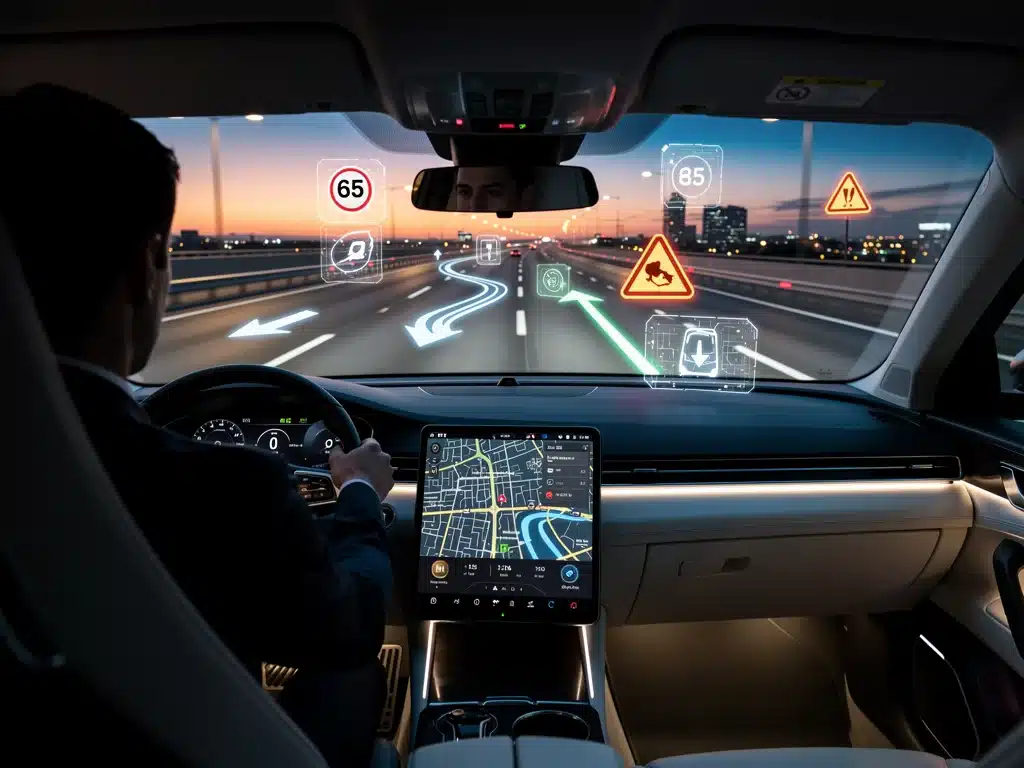
Augmented Reality Head-Up Displays (AR-HUDs) are revolutionizing the driving experience by seamlessly integrating digital information onto the real-world view, enhancing safety, navigation, and driver awareness for 2026 and beyond.
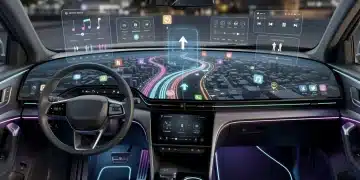
Imagine a world where your car’s windshield transforms into an interactive canvas, guiding you with dynamic arrows, highlighting potential hazards, and keeping you connected without ever taking your eyes off the road. This isn’t science fiction; this is the reality of Augmented Reality Head-Up Displays (AR-HUDs): A 2026 Guide to Enhanced Driving Experience, poised to redefine how we interact with our vehicles and the world around us.
Advertisements
The Dawn of AR-HUDs: A New Era in Automotive Technology
The automotive landscape is constantly evolving, with innovation pushing the boundaries of what’s possible inside a vehicle. Among these advancements, Augmented Reality Head-Up Displays (AR-HUDs) stand out as a transformative technology, set to become a standard feature in many vehicles by 2026. These systems project digital information directly onto the driver’s field of view, creating an immersive and intuitive experience.
Unlike traditional HUDs that display static data, AR-HUDs dynamically integrate virtual objects with the real environment. This means navigation instructions appear to float on the road ahead, speed limits are highlighted on actual signs, and potential dangers are visually emphasized in real-time. This blend of the digital and physical worlds promises a significant leap in driver assistance and overall vehicle intelligence.
From Concept to Reality: The Evolution of HUDs
Head-Up Displays have been around for decades, initially in aviation and later making their way into luxury vehicles. Early versions were somewhat rudimentary, offering basic speed and turn-by-turn directions. However, the integration of augmented reality has propelled this technology into a new dimension, moving beyond simple data projection to contextual, real-time information overlay.
- Early HUDs: Limited to static data like speed and basic navigation.
- Modern HUDs: Improved clarity, color displays, and more information.
- AR-HUDs: Dynamic, real-time overlay of virtual information onto the physical world.
The development journey of AR-HUDs has been marked by significant breakthroughs in optics, sensor fusion, and processing power. These advancements have allowed for the complex algorithms necessary to accurately track the real world and seamlessly project digital information without distortion or latency. The result is a system that feels natural and enhances, rather than distracts from, the driving task.
As we approach 2026, the technology is maturing rapidly, with major automotive manufacturers and tech companies investing heavily in its refinement. The goal is to create AR-HUD systems that are not only functional but also intuitive, reliable, and accessible to a broader market, fundamentally changing how drivers perceive and interact with their surroundings.
Revolutionizing Safety: How AR-HUDs Protect Drivers
One of the most compelling aspects of AR-HUDs is their potential to dramatically enhance road safety. By presenting critical information directly in the driver’s line of sight, these systems minimize the need for drivers to look down at instrument clusters or infotainment screens, reducing distraction and keeping their focus on the road ahead. This immediate accessibility of data can shave off crucial milliseconds in reaction time, making a significant difference in preventing accidents.
AR-HUDs can actively highlight potential hazards, making them visible even before the driver consciously registers them. This proactive approach to safety is a game-changer, moving beyond passive warnings to integrated, contextual alerts that guide driver attention effectively. The system’s ability to process and display complex environmental data in an understandable format is key to its safety benefits.
Advanced Hazard Detection and Warning Systems
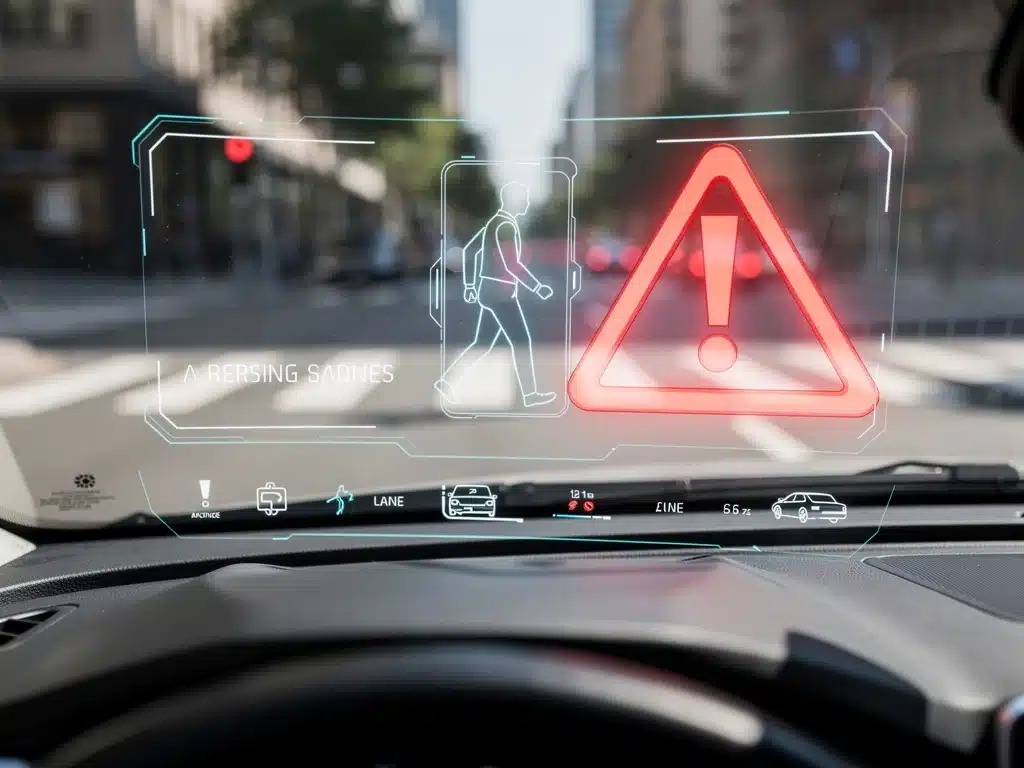
Modern AR-HUDs integrate seamlessly with a vehicle’s advanced driver-assistance systems (ADAS), such as lane-keeping assist, adaptive cruise control, and collision avoidance. When these systems detect a potential threat, the AR-HUD can visually emphasize it, for instance, by highlighting a vehicle in a blind spot or outlining a pedestrian crossing the road.
- Lane Departure Warnings: Virtual lines appear to guide the car back into its lane.
- Forward Collision Alerts: Warnings are projected directly onto the vehicle ahead, indicating danger.
- Blind Spot Monitoring: Objects in blind spots are highlighted on the side mirrors’ projected view.
- Pedestrian Detection: Pedestrians and cyclists are outlined, especially in low-light conditions.
These visual cues are often accompanied by auditory alerts, creating a multi-sensory warning system that is designed to be highly effective without being overly intrusive. The precise placement of these warnings within the driver’s natural field of view helps to ensure that critical information is processed quickly and efficiently, leading to faster and more appropriate responses.
Furthermore, AR-HUDs can adapt their display based on driving conditions, prioritizing safety information during adverse weather or high-traffic situations. This intelligent prioritization ensures that drivers receive the most relevant data when they need it most, contributing to a safer and more confident driving experience for everyone on the road.
Seamless Navigation: AR-HUDs as Your Co-Pilot
Navigation has long been a core function of in-car technology, but AR-HUDs elevate it to an entirely new level. Gone are the days of glancing at a separate screen or listening to abstract voice commands. With AR-HUDs, navigation instructions are integrated directly into the road ahead, making it virtually impossible to miss a turn or get disoriented.
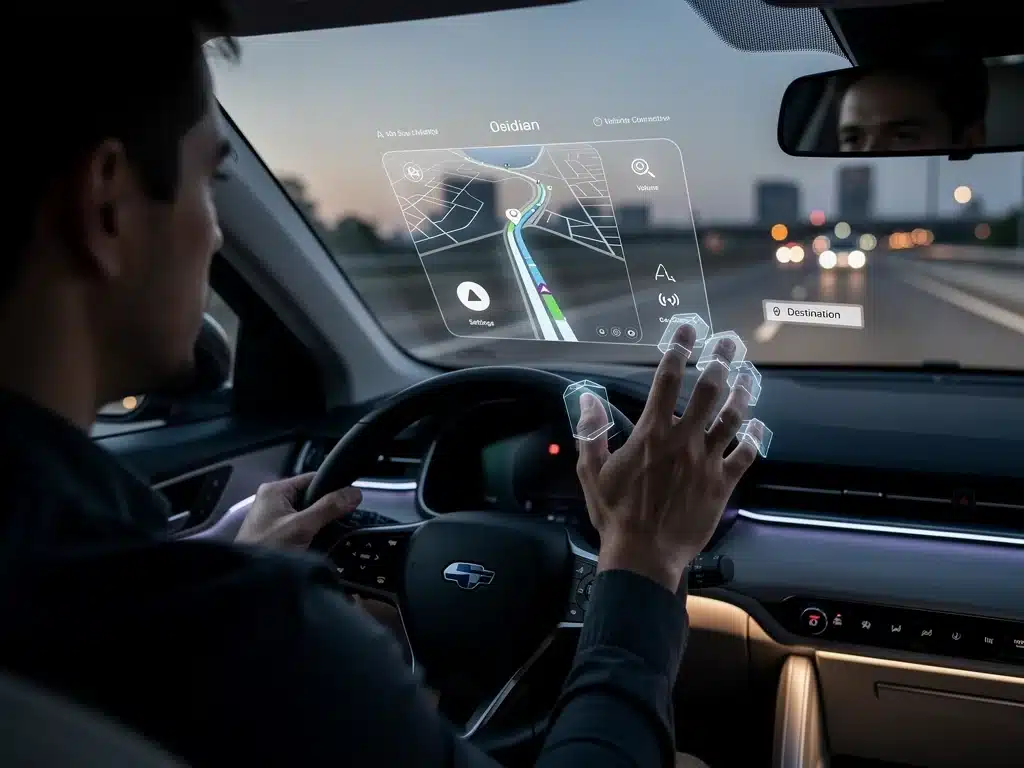
Imagine seeing dynamic arrows appear on the actual street you need to turn onto, or a glowing path guiding you through a complex intersection. This intuitive visual guidance significantly reduces cognitive load, allowing drivers to focus more on the act of driving and less on interpreting directions. The result is a smoother, less stressful journey, especially in unfamiliar territories.
Dynamic Wayfinding and Point-of-Interest Highlighting
AR-HUDs don’t just tell you where to go; they show you. As you approach a turn, an animated arrow will appear to ‘paint’ itself onto the road surface, indicating the precise lane or exit you need to take. This contextual information is incredibly powerful, eliminating guesswork and ensuring confidence in your route.
- Lane Guidance: Arrows and outlines directly on the road indicate the correct lane for turns and exits.
- Distance Markers: Virtual markers show the exact distance to upcoming turns or points of interest.
- POI Highlighting: Restaurants, gas stations, and other points of interest are highlighted as you approach them.
- Parking Assistance: Guides drivers to available parking spaces and assists with tricky maneuvers.
Beyond simple turn-by-turn directions, AR-HUDs can also highlight points of interest (POIs) in your vicinity, such as gas stations, restaurants, or historical landmarks. This feature transforms the drive into a more engaging experience, allowing for spontaneous discoveries and informed decisions on the go. The system can even project real-time information about these POIs, like opening hours or special offers.
The integration of GPS data with high-definition mapping and real-time sensor information allows AR-HUDs to provide exceptionally accurate and responsive navigation. This means the display adapts instantly to changes in your environment, whether it’s a sudden lane closure or a reroute due to traffic, ensuring you always have the most up-to-date guidance at your fingertips.
Beyond Navigation: Entertainment and Connectivity Features
While safety and navigation are primary drivers for AR-HUD development, the technology also opens up exciting possibilities for in-car entertainment and connectivity. By integrating augmented reality into the driving experience, manufacturers can offer a richer, more engaging environment for both drivers and passengers, though the focus remains primarily on driver-centric enhancements for safety.
Imagine passengers being able to access augmented reality games or interactive educational content projected onto their side of the windshield, transforming long journeys into engaging adventures. While such features might be secondary to driving tasks, they showcase the versatility and future potential of AR-HUD technology.
Interactive Displays and Information Overlays
For the driver, entertainment and connectivity features are carefully designed to minimize distraction while maximizing utility. This could include displaying incoming call notifications, music playback information, or real-time weather updates directly in the line of sight, but in a subtle and non-intrusive manner.
- Music Controls: Glanceable display of current track and simple skip/pause controls.
- Call Notifications: Display caller ID without needing to look at the phone.
- Weather Updates: Real-time local weather conditions projected when relevant.
- Vehicle Diagnostics: Critical vehicle health information displayed proactively.
The beauty of AR-HUDs lies in their contextual intelligence. They can prioritize information based on the driving situation, ensuring that entertainment features fade into the background when safety alerts are paramount. This intelligent management of data flow is crucial for maintaining driver focus and preventing cognitive overload, ensuring that the enhanced driving experience remains safe and enjoyable.
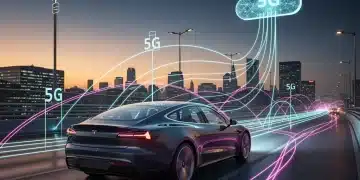
Connectivity features also extend to vehicle-to-everything (V2X) communication, where AR-HUDs can display information received from other vehicles or infrastructure. This could include warnings about upcoming roadwork, traffic congestion ahead, or even emergency vehicle approaches, all seamlessly integrated into the driver’s view for a truly connected and informed journey.
The Technology Behind the Magic: How AR-HUDs Work
The seamless integration of digital information onto the real world is not a simple feat; it relies on a sophisticated interplay of advanced technologies. At its core, an AR-HUD system comprises several key components working in unison: a powerful projection unit, a robust sensor suite, and advanced processing software. Understanding these components helps appreciate the complexity and ingenuity involved.
The projection unit is often located within the dashboard and projects images onto a specialized film embedded in the windshield or directly onto the glass itself. This image is then perceived by the driver as being overlaid on the road ahead. The precision required for this projection, especially for dynamic content, is immense, demanding high-resolution optics and rapid refresh rates.
Key Components and Operational Principles
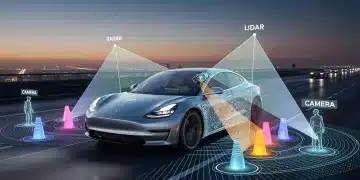
The sensor suite is the eyes and ears of the AR-HUD, constantly feeding data about the vehicle’s surroundings. This includes cameras, radar, lidar, and GPS, all working together to create a detailed, real-time understanding of the environment. This data is then fed into the processing unit, which is the brain of the system.
- Projection Unit: High-resolution projectors create the augmented reality overlay.
- Optical System: Lenses and mirrors ensure the image is clear, undistorted, and focused at a virtual distance.
- Sensor Suite: Cameras, radar, lidar, and GPS gather real-time environmental data.
- Processing Unit: Powerful computers analyze sensor data and generate AR content.
- Software Algorithms: Complex algorithms combine real-world data with digital information for seamless overlay.
The processing unit runs complex algorithms to interpret the sensor data, identify objects, track their movement, and then generate the appropriate augmented reality graphics. These graphics must be precisely aligned with the real-world objects they represent, taking into account the driver’s head position and eye movements. This requires a high degree of calibration and real-time adjustment to maintain the illusion of seamless integration.
Furthermore, the virtual image is typically projected at a distance that mimics the road ahead, usually several meters in front of the vehicle. This optical trick helps the driver’s eyes remain focused on the road, reducing eye strain and allowing for a more natural perception of the augmented information. The intricate dance between hardware and software is what truly brings the AR-HUD experience to life.
Challenges and Future Outlook for AR-HUDs by 2026
While the promise of AR-HUDs is immense, the journey to widespread adoption by 2026 is not without its challenges. Technical hurdles, cost considerations, and regulatory frameworks all play a crucial role in shaping the future of this technology. However, the rapid pace of innovation suggests that many of these obstacles will be overcome, leading to a more integrated and affordable solution.
One of the primary technical challenges lies in perfecting the display’s field of view and brightness, ensuring optimal visibility under varying light conditions without causing visual fatigue. Achieving a wide field of view that encompasses a significant portion of the driver’s perception is critical for truly immersive augmented reality, and this requires advanced optical designs.
Overcoming Technical Hurdles and Cost Barriers
The cost of implementing sophisticated AR-HUD systems is currently a significant factor limiting their availability to premium vehicles. The high-precision components, advanced sensors, and powerful processing units all contribute to a higher manufacturing cost. However, as production scales and technology matures, these costs are expected to decrease significantly.
- Field of View: Expanding the projected area for a more immersive experience.
- Brightness and Contrast: Ensuring optimal visibility in all lighting conditions.
- Eye Tracking: Adapting content based on the driver’s gaze for personalized information.
- Standardization: Developing common protocols for data exchange and display.
- Cost Reduction: Making AR-HUDs accessible to a broader range of vehicles.
Another area of continuous development is eye-tracking technology, which allows AR-HUDs to adapt the display based on where the driver is looking. This personalized approach can further enhance safety and reduce distraction by only presenting relevant information when and where it’s needed. The accuracy and responsiveness of these eye-tracking systems are constantly being refined.
Looking towards 2026, we can anticipate a significant increase in the adoption of AR-HUDs, moving from niche luxury features to more mainstream offerings. The continued investment in research and development, coupled with growing consumer demand for advanced safety and convenience features, will drive this expansion. The future of driving will undoubtedly feature a more intelligent and interactive windshield.
Integrating AR-HUDs into the Smart City Ecosystem
The potential of AR-HUDs extends beyond the individual vehicle, playing a crucial role in the broader smart city ecosystem. As cities become more connected and intelligent, AR-HUDs can serve as a vital interface, delivering real-time information about urban infrastructure, traffic flow, and public services directly to the driver. This integration promises a more efficient and harmonious urban driving experience.
Imagine an AR-HUD guiding you to an available parking spot, highlighting charging stations for electric vehicles, or providing alerts about upcoming public transport delays. These capabilities will transform how drivers navigate and interact with urban environments, making city driving less stressful and more productive.
Connecting Vehicles with Infrastructure and Services
The key to this integration lies in Vehicle-to-Infrastructure (V2I) and Vehicle-to-Everything (V2X) communication technologies. As smart city infrastructure develops, it will transmit data that AR-HUDs can interpret and display in a visually intuitive manner. This creates a powerful feedback loop, where vehicles contribute to and benefit from the collective intelligence of the city.
- Traffic Optimization: Real-time re-routing suggestions based on city-wide traffic data.
- Smart Parking: Directing drivers to vacant parking spaces and payment options.
- Public Transport Integration: Alerts for nearby public transport options and schedules.
- Environmental Data: Displaying air quality or noise levels in different city zones.
Furthermore, AR-HUDs can facilitate a safer environment for vulnerable road users, such as pedestrians and cyclists. By receiving data from smart crosswalks or connected bicycles, the AR-HUD can alert drivers to their presence, even when they are obscured from direct view. This proactive safety measure is vital for reducing accidents in busy urban areas.
By 2026, the synergy between AR-HUDs and smart city infrastructure will be more pronounced, creating a driving experience that is not only safer and more convenient but also more environmentally conscious. The ability to visualize complex urban data in an easily digestible format will empower drivers to make better decisions, contributing to the overall efficiency and sustainability of urban mobility.
| Key Aspect | Brief Description |
|---|---|
| Enhanced Safety | Minimizes distraction with real-time hazard warnings and ADAS integration. |
| Intuitive Navigation | Projects dynamic turn-by-turn directions directly onto the road. |
| Connectivity & Infotainment | Integrates subtle calls, music, and vehicle diagnostics without distraction. |
| Smart City Integration | Connects vehicles with urban infrastructure for optimized driving. |
Frequently Asked Questions About AR-HUDs
An AR-HUD is an advanced display system that projects digital information, like navigation arrows or hazard warnings, directly onto the driver’s view of the real world. Unlike traditional HUDs, AR-HUDs dynamically integrate virtual objects with the physical environment, enhancing perception and reducing driver distraction.
AR-HUDs significantly boost safety by keeping critical information within the driver’s line of sight, minimizing the need to look away from the road. They provide real-time hazard detection, lane keeping assistance, and collision warnings directly overlaid on the environment, reducing reaction times and preventing accidents.
While still primarily featured in premium vehicles, AR-HUD technology is rapidly advancing. By 2026, it’s anticipated that AR-HUDs will become more widespread, transitioning into mid-range vehicles as manufacturing costs decrease and consumer demand for advanced driving assistance grows.
AR-HUDs are designed to enhance focus, not distract. By presenting contextual information directly in the driver’s field of view, they reduce the need to shift gaze. Advanced systems prioritize critical safety alerts and intelligently manage information flow to prevent cognitive overload, ensuring a safer experience.
AR-HUDs are crucial for smart city integration, displaying real-time data from urban infrastructure. They can guide drivers to available parking, alert them to public transport delays, and provide environmental information, optimizing urban mobility and making city driving more efficient and less stressful for everyone.
Conclusion: Driving Towards an Augmented Future
The journey into 2026 reveals a compelling vision for automotive technology, with Augmented Reality Head-Up Displays (AR-HUDs) at the forefront of innovation. These sophisticated systems are not merely a fancy gadget but a fundamental shift in how we perceive and interact with our vehicles and the road. By seamlessly blending digital information with the real world, AR-HUDs promise a driving experience that is safer, more intuitive, and significantly more engaging. From preventing accidents through advanced hazard detection to transforming navigation into a dynamic visual guide, their impact is profound. As technology continues to evolve and costs become more accessible, AR-HUDs are poised to redefine the standard for in-car displays, making every journey an enhanced and informed adventure. The future of driving is augmented, and it’s arriving sooner than you think.