Automotive Biometrics: 3 Security Features for Cars in 2026
Advertisements
The Rise of Automotive Biometrics: 3 Security Features Coming to Cars in 2026 will fundamentally transform vehicle security and driver interaction, leveraging advanced technologies like facial recognition, fingerprint scanning, and voice authentication to provide unprecedented levels of protection and personalized experiences.
Imagine a world where your car recognizes you instantly, not just as an owner, but as an individual with unique preferences and access rights. This is the promise of the rise of automotive biometrics: 3 security features coming to cars in 2026, a technological leap set to redefine our relationship with vehicles. The era of fumbling for keys or remembering complex passcodes is rapidly drawing to a close, replaced by an intuitive, seamless, and significantly more secure interaction. As automotive technology continues its relentless march forward, biometrics are emerging as a cornerstone of next-generation vehicle security and personalized driving experiences. This shift isn’t merely about convenience; it’s about addressing the evolving landscape of vehicle theft and unauthorized access with intelligent, human-centric solutions.
Advertisements
The evolving landscape of automotive security
Automotive security has historically relied on physical keys, alarms, and immobilizers. While these methods have served their purpose, the increasing sophistication of vehicle theft and the demand for more integrated, user-friendly systems have pushed manufacturers to explore advanced solutions. The digital age calls for digital defenses, and biometrics offer a robust answer to this challenge.
The journey towards biometric integration in vehicles is driven by several factors, including the desire for enhanced convenience, personalized driving experiences, and, crucially, a significant bolster in security against increasingly clever criminals. Traditional security measures, though still relevant, are often reactive. Biometric systems, however, provide a proactive layer of defense, making unauthorized access far more challenging. This evolution reflects a broader trend across industries: moving from ‘what you have’ (a key) or ‘what you know’ (a password) to ‘who you are’ for authentication.
Furthermore, the convergence of automotive technology with smart home systems and personal devices means that drivers expect a cohesive, intelligent experience. Biometrics play a pivotal role in delivering this by creating a personalized and secure ecosystem around the vehicle. The advancements in sensor technology and artificial intelligence have made these once-futuristic concepts a tangible reality for mass production within a few short years.
Facial recognition: your face as the key
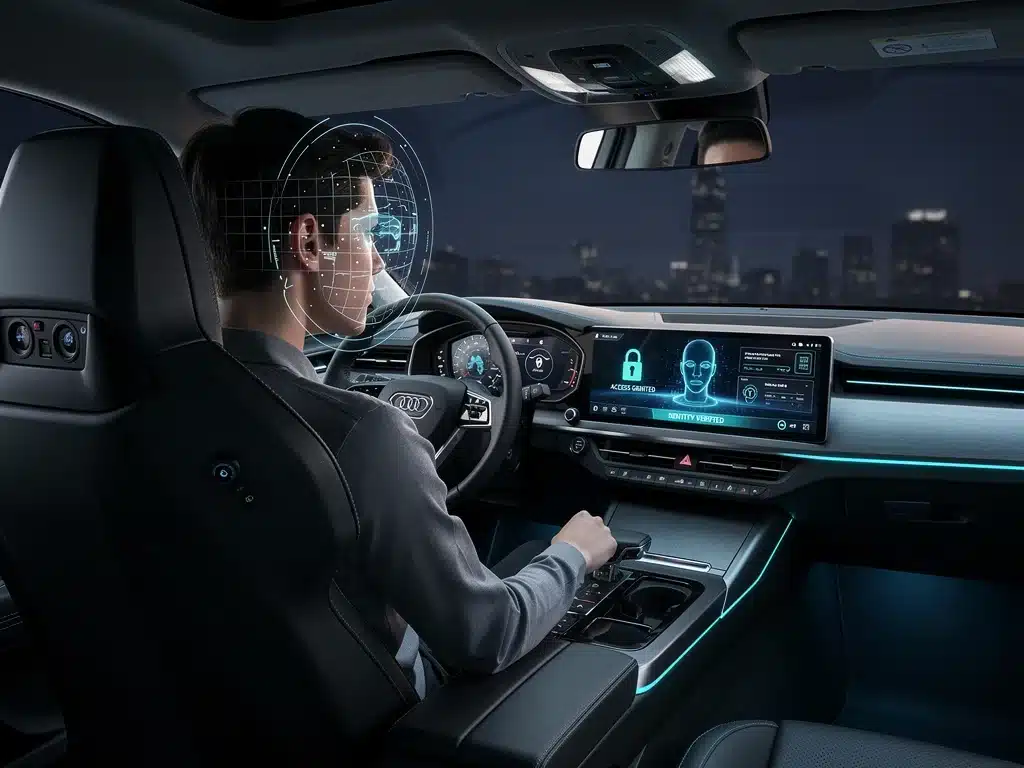
One of the most anticipated biometric security features arriving in cars by 2026 is advanced facial recognition. This technology moves beyond simple photo matching, utilizing 3D mapping and infrared sensors to accurately identify authorized drivers, even in varying light conditions or with minor changes in appearance. It promises a seamless entry and personalized experience from the moment you approach your vehicle.
Imagine walking up to your car, and as you get within a certain proximity, the vehicle’s embedded cameras scan your face. If recognized, the doors unlock, the engine prepares to start, and your personalized settings—seat position, mirror angles, climate control, and infotainment preferences—are automatically adjusted. This level of integration not only enhances convenience but also significantly deters theft, as a conventional key or hotwiring becomes virtually useless.
How facial recognition enhances vehicle access
- Keyless entry and ignition: Eliminates the need for physical keys, reducing the risk of loss or theft.
- Personalized settings: Automatically adjusts vehicle preferences based on the recognized driver, enhancing comfort and convenience.
- Anti-theft deterrent: Makes it incredibly difficult for unauthorized individuals to start or even enter the car.
- Driver monitoring: Can detect driver fatigue or distraction, adding an extra layer of safety.
The technology is also being developed to differentiate between identical twins or recognize faces under various conditions, such as wearing glasses or a hat, ensuring high accuracy and reliability. Privacy concerns are being addressed through secure data encryption and on-board processing, minimizing the need for data to leave the vehicle. This ensures that personal biometric data remains protected, a critical factor for widespread adoption.
The implementation of facial recognition extends beyond just unlocking doors. It could also verify identity for in-car payments, activate specific driving modes, or even control access to certain vehicle features, creating a truly integrated and secure automotive ecosystem. The sophistication of these systems means they are continually learning and adapting, improving their accuracy over time.
Fingerprint scanning: secure touch access
Another powerful biometric feature rapidly gaining traction is fingerprint scanning. While not entirely new to the automotive world, the next generation of in-car fingerprint sensors will be significantly more advanced, offering greater accuracy, speed, and integration. By 2026, we can expect these systems to be commonplace, providing a robust layer of security and personalized access.
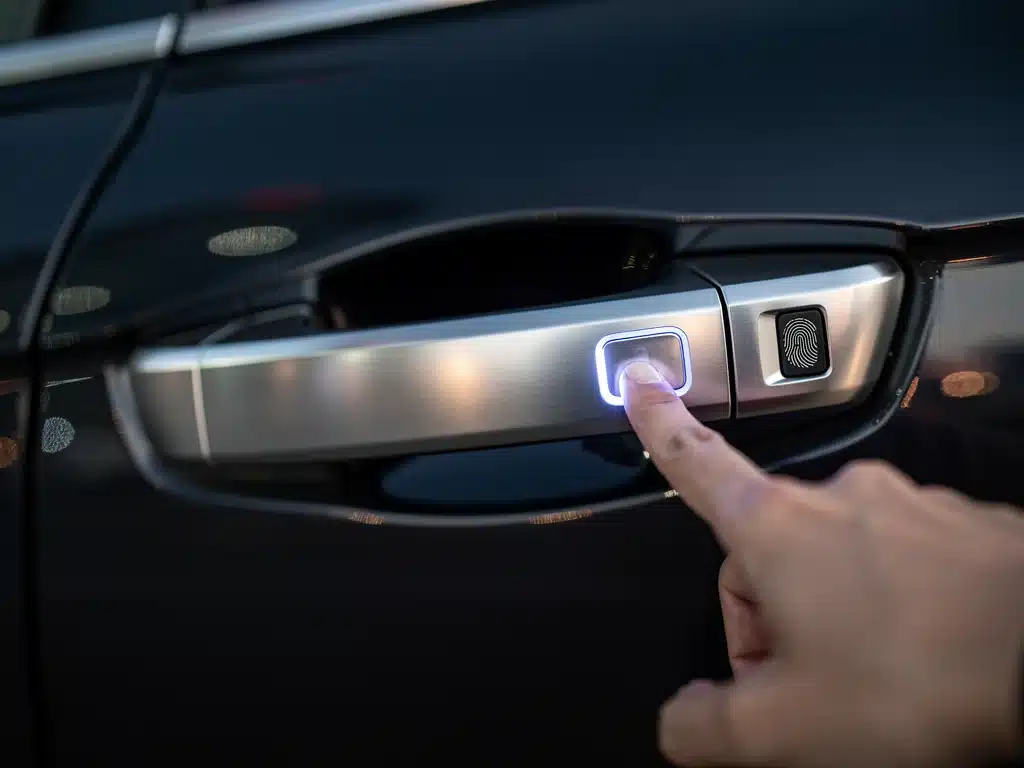
Modern fingerprint scanners leverage capacitive or optical technology to create detailed maps of a user’s unique fingerprint patterns. These aren’t just simple scans; they often involve multiple layers of authentication, including sub-dermal scanning, to prevent spoofing attempts using fake fingerprints. The integration points for these scanners are diverse, ranging from door handles and steering wheels to the ignition button or central console.
The primary advantage of fingerprint scanning is its seamless integration into daily routines. A simple touch can unlock the car, start the engine, or authorize access to sensitive vehicle functions. This method combines high security with exceptional convenience, making it a natural fit for the fast-paced lives of modern drivers. Furthermore, unlike facial recognition, fingerprint scanning is less susceptible to issues like poor lighting conditions or obstructions.
Applications of advanced fingerprint technology
- Engine start/stop: Replaces traditional ignition buttons with a secure biometric scan.
- Personalized driver profiles: Recalls individual seat, mirror, and climate settings upon recognition.
- Secure glove compartment/trunk access: Restricts access to sensitive areas within the vehicle.
- In-car payment authorization: Approves transactions for fuel, tolls, or digital services with a touch.
The evolution of fingerprint technology in cars also includes multi-user profiles, allowing different family members or authorized drivers to have their own secure access and personalized settings. This not only adds to convenience but also simplifies vehicle sharing, ensuring that each driver experiences the car exactly as they prefer, while maintaining stringent security protocols. The system can even restrict access to certain performance modes or geographical areas for specific users, such as younger drivers.
Manufacturers are focusing on embedding these sensors discreetly and ergonomically, ensuring they blend seamlessly with the car’s interior and exterior design. The robustness of these systems against wear and tear, as well as environmental factors like dirt or moisture, is also a key development area, ensuring long-term reliability and performance.
Voice authentication: speaking to your car
Voice authentication is rapidly advancing beyond simple voice commands to become a robust security feature in vehicles. By 2026, cars will be able to recognize not just what you say, but who is saying it, adding a powerful layer of biometric security. This technology uses unique vocal patterns, pitch, and intonation to verify a driver’s identity, offering a hands-free and highly secure method of interaction.
The sophistication of modern voice authentication systems relies on advanced algorithms and machine learning to analyze numerous vocal characteristics. These systems can distinguish between different individuals, even those with similar voices, and are becoming increasingly resistant to mimicry or recorded voice playback. This makes voice a surprisingly strong biometric identifier, especially when combined with other security layers.
Imagine entering your car and simply speaking a phrase like, “Start engine,” or “Unlock my profile.” The car’s system processes your unique vocal signature, verifies your identity, and then executes the command. This seamless interaction enhances both convenience and safety, allowing drivers to keep their hands on the wheel and eyes on the road. It’s particularly useful for activating sensitive functions or authorizing transactions without physical contact.
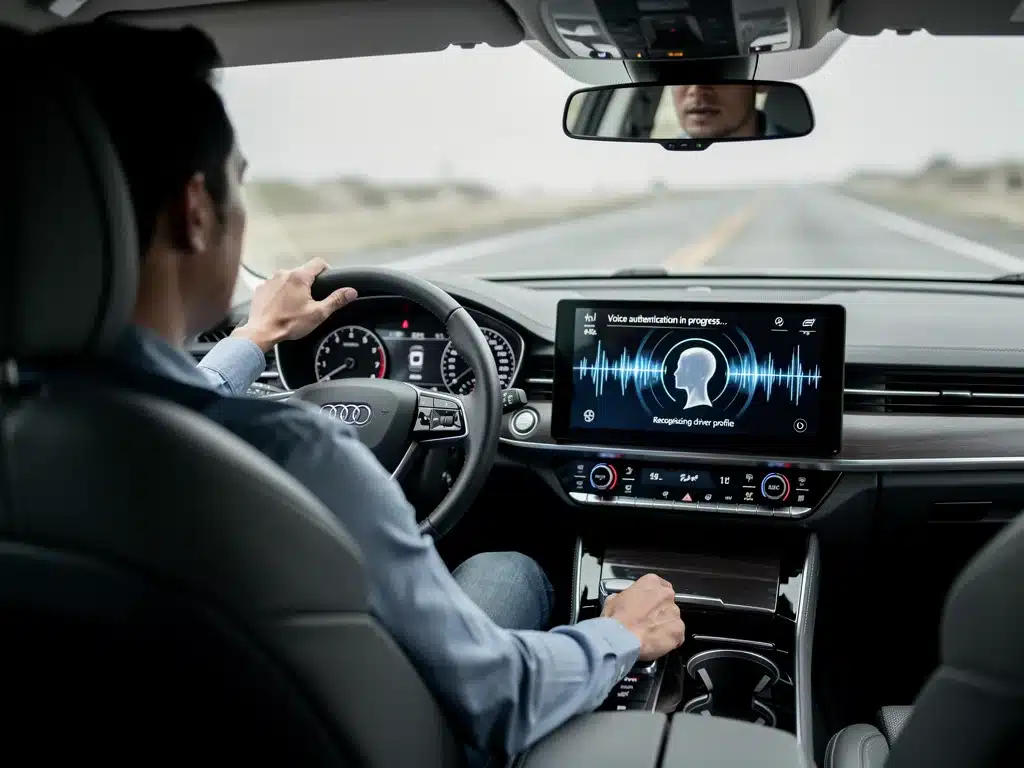
Benefits of integrated voice authentication
- Hands-free convenience: Allows for secure interactions without diverting attention from driving.
- Multi-factor authentication: Can be combined with facial recognition or fingerprint scanning for enhanced security.
- Personalized cabin experience: Activates individual driver profiles and preferences automatically.
- Secure feature access: Authorizes access to specific vehicle functions or settings remotely or while driving.
The development of voice authentication also includes robust noise cancellation and environmental adaptability, ensuring that the system works effectively even in noisy cabin environments or with varying background sounds. This reliability is crucial for its widespread adoption as a primary security feature. Furthermore, the ability to integrate with smart assistants means a more intuitive and conversational interaction with the vehicle’s systems.
As cars become more connected and offer a wider range of services, from in-car shopping to remote vehicle control, the need for secure, yet effortless, authentication grows. Voice biometrics perfectly address this need, providing a natural and intuitive way for drivers to interact securely with their vehicles and the broader digital ecosystem they are connected to. It moves beyond simple command recognition to actual identity verification.
Integration challenges and privacy concerns
While the benefits of automotive biometrics are clear, their widespread adoption by 2026 is not without challenges. Integrating these sophisticated systems seamlessly into vehicle architecture requires significant engineering effort, ensuring reliability, responsiveness, and consistent performance across diverse operating conditions. Furthermore, the ethical implications and privacy concerns surrounding biometric data are paramount.
One of the primary technical challenges lies in creating systems that are robust against environmental factors. Facial recognition needs to work in varying light, from bright sunlight to complete darkness, and adapt to changes in a person’s appearance. Fingerprint scanners must function reliably even with dirty or wet fingers. Voice authentication needs to filter out background noise and distinguish between authorized users and potential impersonators. These require advanced sensor technology and sophisticated AI algorithms that are constantly learning and improving.
Addressing key integration and privacy issues
- Data security: Implementing strong encryption and on-board processing to keep biometric data secure and private.
- Regulatory compliance: Navigating diverse global privacy laws (e.g., GDPR, CCPA) that govern biometric data collection and storage.
- User acceptance: Educating consumers about the benefits and security of biometric systems to build trust.
- System reliability: Ensuring consistent performance in all conditions and resistance to spoofing attempts.
Privacy is arguably the most significant hurdle. Biometric data is inherently personal and immutable, making its protection critical. Manufacturers are developing rigorous protocols for data encryption, ensuring that biometric templates are stored securely and never transmitted or shared without explicit consent. The focus is on edge computing, where data processing happens directly on the device, minimizing exposure.
Another aspect is user acceptance. Some individuals may be hesitant to adopt biometric systems due to concerns about surveillance or data breaches. Clear communication from manufacturers about how data is collected, stored, and used, along with strong privacy policies, will be essential to foster trust. The industry is actively working on standards and best practices to ensure that these technologies are implemented responsibly and ethically, putting user control at the forefront.
The impact on vehicle theft and insurance
The introduction of advanced automotive biometrics is poised to have a transformative impact on vehicle theft rates and, consequently, on the automotive insurance industry. By making vehicles significantly harder to steal, these technologies offer a promising solution to a persistent and costly problem. The enhanced security layers provided by facial recognition, fingerprint scanning, and voice authentication create formidable barriers for even the most determined thieves.
Current theft methods, often involving key cloning or sophisticated electronic hacks, will become far less effective against biometric authentication. If a car requires a verified fingerprint or face scan to start, a cloned key alone will be insufficient. This shift moves the security paradigm from protecting a physical object (the key) to verifying the identity of the user, a much more robust approach. The very nature of biometric data makes it incredibly difficult to replicate or bypass, offering a level of security previously unattainable.
For the insurance industry, this represents a significant opportunity. Lower theft rates mean fewer claims, which could translate into reduced insurance premiums for vehicles equipped with these advanced biometric systems. Insurers are likely to incentivize the adoption of such features, recognizing their potential to mitigate risk. Furthermore, the ability of biometrics to identify authorized users could also play a role in resolving disputes related to vehicle usage or accidents, providing clearer accountability.
Potential benefits for owners and insurers
- Reduced theft risk: Significantly harder for unauthorized individuals to steal vehicles.
- Lower insurance premiums: Insurers may offer discounts for cars with advanced biometric security.
- Enhanced recovery rates: Biometric data could assist in identifying stolen vehicles or perpetrators.
- Improved peace of mind: Owners can be more confident in their vehicle’s security.
Beyond theft prevention, biometrics could also influence other aspects of insurance. For instance, if a car can verify the identity of the driver at all times, it might open doors for more personalized insurance policies based on individual driving habits and authorized usage. This data, when handled responsibly and with consent, could lead to more accurate risk assessments and tailored insurance products that reward responsible driving and advanced security features.
However, insurers will also need to adapt to the new risks associated with biometric systems, such as potential cyber vulnerabilities or data breaches. The industry will need to work closely with automotive manufacturers to understand these technologies fully and develop appropriate risk models and policy frameworks. The overarching trend, however, points towards a future where biometric security makes cars safer and potentially more affordable to insure.
The future of personalized driving experiences
Beyond security, automotive biometrics are poised to revolutionize the personalized driving experience, transforming vehicles from mere modes of transport into highly individualized spaces. By 2026, the integration of facial recognition, fingerprint scanning, and voice authentication will enable cars to anticipate and cater to individual driver and passenger needs with unprecedented precision and fluidity. This level of personalization extends far beyond current memory seat functions, creating a truly bespoke environment for everyone.
Imagine a scenario where the car not only recognizes you but also understands your mood, adjusting ambient lighting, music playlists, and even suspension settings to match. Biometric data, combined with AI, can learn your habits, preferred routes, and even your typical driving style, making every journey smoother and more enjoyable. This goes beyond simple profile selection; it’s about the vehicle intelligently adapting to the nuance of the human inside.
For multi-driver households, this means an end to constant readjustments. Each authorized user’s profile, linked to their unique biometrics, will instantly configure the car to their exact specifications upon entry. This includes not just physical settings like seat and mirror positions, but also digital preferences such as navigation home addresses, favorite radio stations, climate control zones, and even personalized news feeds on the infotainment display. The car becomes an extension of the driver’s digital life and physical comfort.
Key aspects of biometric-driven personalization
- Automatic profile loading: Instant recall of all driver preferences upon biometric recognition.
- Contextual adaptations: Vehicle settings adjust based on driver’s current state (e.g., fatigue detection).
- Seamless digital integration: Connects personal devices and accounts securely to the car’s ecosystem.
- Enhanced passenger experience: Future systems could even recognize passengers to adjust their comfort settings.
The implications for ride-sharing and autonomous vehicles are also significant. In shared vehicle scenarios, biometrics can ensure that only authorized individuals can access and operate the car, and that their personalized settings are loaded for the duration of their trip. For autonomous vehicles, biometric authentication could be essential for verifying the passenger’s identity for billing, destination confirmation, and personalized entertainment options. It ensures a secure and tailored experience without traditional keys or personal interaction.
Ultimately, the future of automotive biometrics isn’t just about locking down vehicles; it’s about unlocking a more intuitive, comfortable, and deeply personal connection between humans and their machines. The car of 2026 will be more than just a mode of transport; it will be a dynamic, adaptive, and highly intelligent personal assistant, tailored precisely to your unique identity and preferences, all thanks to the power of biometric authentication.
| Key Biometric Feature | Brief Description |
|---|---|
| Facial Recognition | Uses 3D mapping and infrared to identify drivers for keyless entry and personalized settings. |
| Fingerprint Scanning | Advanced sensors for secure engine start, access control, and in-car payments. |
| Voice Authentication | Identifies drivers by unique vocal patterns for hands-free security and command execution. |
| Enhanced Security | Biometrics significantly deter theft, potentially leading to lower insurance premiums. |
Frequently Asked Questions about Automotive Biometrics
Automotive biometrics offer enhanced security by making vehicles harder to steal, increased convenience through keyless access and personalized settings, and improved safety features like driver monitoring. They aim to create a seamless and secure interaction between the driver and the vehicle, adapting to individual needs.
Modern automotive facial recognition systems use advanced technologies such as 3D mapping, infrared sensors, and AI algorithms to detect depth and liveness, making them highly resistant to spoofing attempts with photos or videos. Continuous development aims to further enhance their robustness against sophisticated attacks.
Manufacturers are committed to protecting biometric data through robust encryption, on-board processing (edge computing), and adherence to global privacy regulations. The goal is to minimize data transmission outside the vehicle and ensure that personal biometric templates are stored securely, giving users control over their information.
Yes, biometric systems are designed to support multiple user profiles. Each authorized driver can register their unique biometrics (face, fingerprint, voice), and the car will automatically load their personalized settings and access rights upon recognition, making vehicle sharing more convenient and secure for families or fleets.
By significantly reducing the risk of vehicle theft and unauthorized access, automotive biometrics are expected to lead to lower insurance claims. This could result in reduced insurance premiums for vehicles equipped with these advanced security features, as insurers recognize the decreased risk profile of such cars.
Conclusion
The year 2026 stands as a pivotal moment for automotive technology, ushering in an era where the rise of automotive biometrics: 3 security features coming to cars in 2026 will fundamentally redefine vehicle security, access, and personalization. Facial recognition, fingerprint scanning, and voice authentication are not merely futuristic concepts but tangible innovations poised to make our cars safer, smarter, and more attuned to our individual needs. While challenges related to integration and privacy remain, the automotive industry is actively addressing these concerns, paving the way for a seamless and secure driving experience. These biometric advancements promise not only to deter theft more effectively but also to transform every interaction with our vehicles into a personalized and intuitive journey, symbolizing a profound evolution in how we perceive and utilize personal transportation.