Solid-State Batteries: EV Revolution by Mid-2026 with 30% Faster Charging?
Advertisements
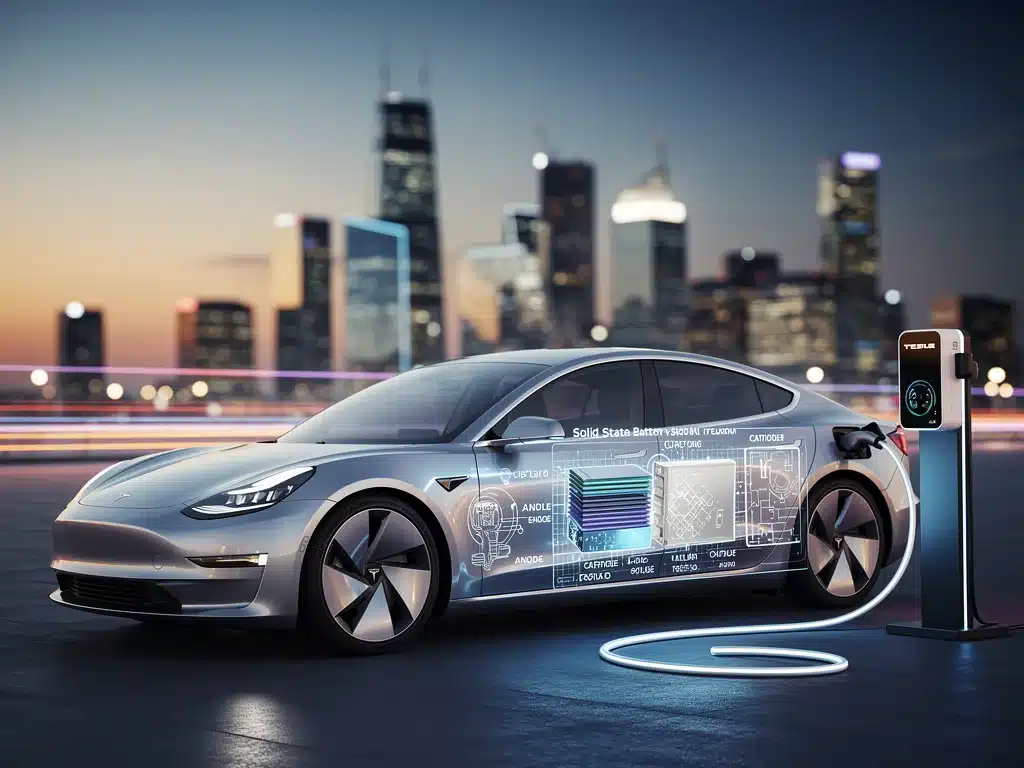
Solid-state batteries are poised to revolutionize electric vehicles by mid-2026, promising up to 30% faster charging, increased range, and improved safety, marking a significant leap in automotive technology.
The automotive world is abuzz with anticipation, as the promise of solid-state battery EVs looms large. Experts and enthusiasts alike are questioning if this groundbreaking technology will truly revolutionize electric vehicles by mid-2026, particularly with the tantalizing prospect of 30% faster charging. This article delves into the potential, the challenges, and the realistic timeline for solid-state batteries to transform the EV landscape.
Advertisements
the promise of solid-state batteries for electric vehicles
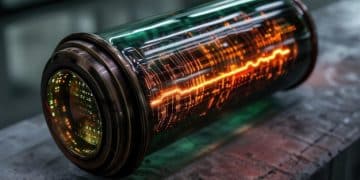
Solid-state batteries represent a paradigm shift from conventional lithium-ion batteries, replacing the liquid or gel electrolyte with a solid conductive material. This fundamental change promises a host of benefits that could address many of the current limitations holding back widespread EV adoption. The implications for electric vehicle performance, safety, and overall user experience are profound, capturing the attention of major automotive manufacturers and tech giants globally.
One of the most exciting prospects is the potential for significantly higher energy density. This means solid-state batteries could store more energy in a smaller, lighter package, directly translating to increased driving range for electric vehicles. Imagine an EV that can travel hundreds of miles further on a single charge without requiring a larger, heavier battery pack. This advancement would alleviate range anxiety, a significant barrier for many potential EV buyers.
enhanced safety and reduced fire risk
- Elimination of Flammable Electrolytes: Traditional lithium-ion batteries use liquid electrolytes that are flammable and can lead to thermal runaway and fires under certain conditions. Solid-state batteries, by contrast, utilize non-flammable solid electrolytes.
- Improved Thermal Stability: The solid nature of the electrolyte provides greater thermal stability, reducing the risk of overheating and short circuits, which are common causes of battery failure in liquid-electrolyte systems.
- Safer Operation: This inherent safety feature is not only crucial for consumer confidence but also simplifies battery management systems, potentially leading to more robust and reliable EV designs.
Beyond range and safety, the mechanical strength of solid electrolytes can also contribute to a more durable battery. This resilience could extend the lifespan of EV batteries, reducing the need for early replacement and contributing to the sustainability of electric transportation. The collective impact of these improvements paints a compelling picture for the future of electric vehicles.
The promise of solid-state batteries extends beyond individual vehicle performance to the broader ecosystem of electric mobility. A safer, more efficient battery could accelerate the development of autonomous vehicles, urban air mobility, and other advanced transportation solutions. The foundational technology offers a versatile platform for innovation across various sectors, making its development a critical focus for numerous industries.
unveiling the 30% faster charging claim: reality or aspiration?
The claim of 30% faster charging is a significant draw for solid-state batteries, addressing one of the primary inconveniences associated with current EVs. While impressive, it is crucial to understand the scientific basis and the current hurdles in achieving this in real-world applications. The ability to significantly reduce charging times would make EVs far more competitive with gasoline-powered vehicles, especially for long-distance travel.
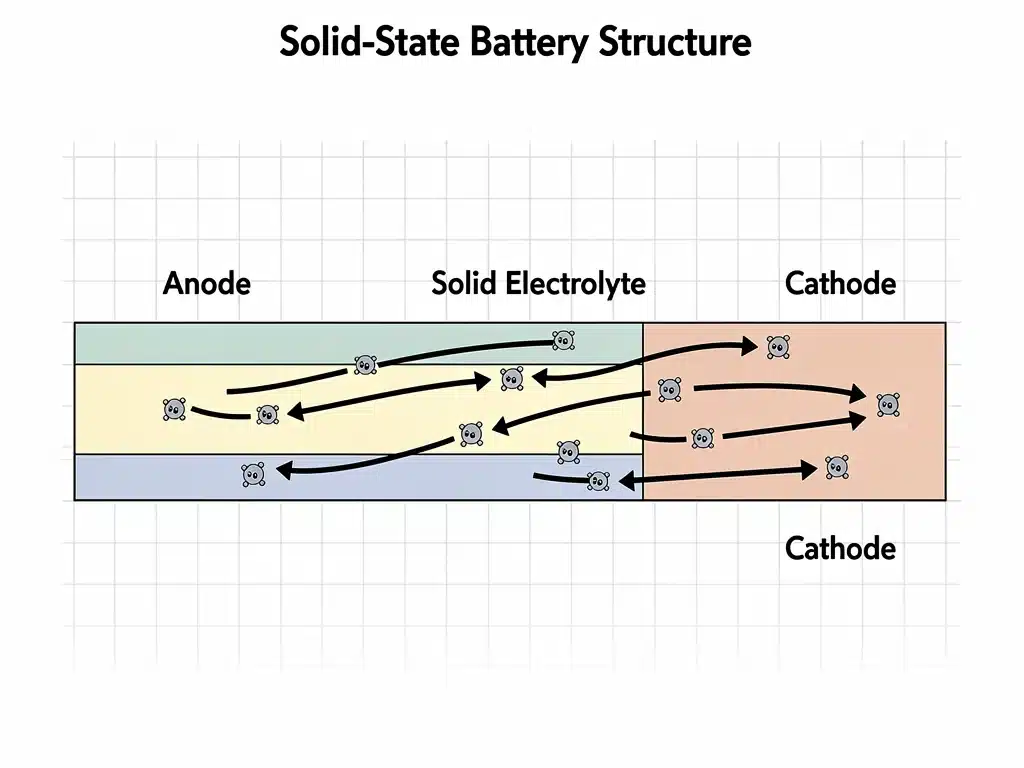
Faster charging in solid-state batteries is primarily attributed to the unique properties of their solid electrolytes. Unlike liquid electrolytes, which can experience dendrite formation and other issues that limit charging speeds, solid electrolytes can potentially handle higher current densities without degradation. This allows for a more rapid transfer of ions between the anode and cathode.
mechanisms behind faster charging
- Higher Ionic Conductivity: Certain solid electrolytes can exhibit ionic conductivity comparable to, or even exceeding, that of liquid electrolytes, facilitating quicker charge and discharge cycles.
- Suppression of Dendrites: Solid electrolytes are more effective at suppressing lithium dendrite growth, which can cause short circuits and reduce battery life in traditional lithium-ion batteries, especially during fast charging.
- Improved Interface Stability: The solid-solid interface between the electrode and electrolyte can be engineered for better stability, allowing for more efficient and rapid ion movement without compromising battery integrity.
However, achieving this 30% faster charging consistently and safely on a commercial scale presents considerable engineering challenges. The interface between the solid electrolyte and electrodes must be perfectly optimized to ensure efficient ion transfer. Any imperfections can lead to increased internal resistance, reducing charging speed and potentially damaging the battery. Researchers are actively exploring various material compositions and manufacturing techniques to overcome these interface issues.
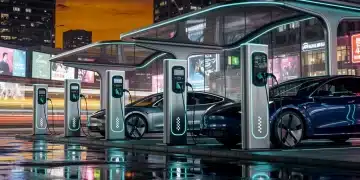
Furthermore, the infrastructure required to support ultra-fast charging also needs to evolve. While solid-state batteries may be capable of higher charging rates, the charging stations themselves must be able to deliver the necessary power. This involves upgrades to grid infrastructure and the deployment of more powerful charging units, which are substantial undertakings. The synergy between battery technology and charging infrastructure will be key to realizing the full potential of faster charging.
current state of solid-state battery development and key players
The race to commercialize solid-state batteries is intense, with numerous companies and research institutions pouring billions into development. While the technology holds immense promise, it is still largely in the laboratory or pilot production phase. Several key players have emerged as frontrunners, each bringing unique approaches and patented technologies to the table.
Major automotive manufacturers are heavily invested, often partnering with battery specialists or establishing their own R&D divisions. Companies like Toyota, Volkswagen, and Hyundai have publicly announced ambitious timelines for integrating solid-state batteries into their EV lineups. Toyota, for instance, has been a long-time pioneer in the field, holding numerous patents related to solid-state technology and aiming for initial deployment by the mid-2020s.
leading companies and their advancements
- QuantumScape: A U.S.-based startup backed by Volkswagen, QuantumScape has demonstrated promising results in lab tests, achieving high energy density and fast charging capabilities with their ceramic solid electrolyte.
- Solid Power: Partnered with Ford and BMW, Solid Power is focusing on sulfide-based solid electrolytes and has already begun pilot production of its battery cells, aiming for automotive qualification in the near future.
- Factorial Energy: This company is developing a solid-state battery with a proprietary solid electrolyte material, attracting investments from Mercedes-Benz and Stellantis, with goals for mass production within the next few years.
Beyond these well-known names, many smaller startups and university research groups are contributing to the rapid advancement of the field. The diversity of approaches, from different solid electrolyte materials (polymers, sulfides, oxides) to novel manufacturing processes, suggests that a single “winner” may not emerge, but rather a range of specialized solutions tailored to different applications. This competitive landscape is driving innovation at an unprecedented pace.
Despite the progress, scaling up production remains a significant hurdle. Manufacturing solid-state batteries requires entirely new processes and facilities, which are complex and expensive to establish. The purity of materials, the precision of layering, and the control of interfaces are all critical factors that need to be perfected for mass production. Overcoming these manufacturing challenges will be vital for solid-state batteries to move from niche applications to widespread adoption in EVs.
challenges on the road to mid-2026 commercialization
While the enthusiasm for solid-state batteries is palpable, the path to widespread commercialization by mid-2026 is fraught with significant challenges. The transition from laboratory prototypes to mass-produced, cost-effective batteries for millions of EVs is a monumental undertaking, demanding breakthroughs in materials science, engineering, and manufacturing.
One of the primary obstacles is the cost of manufacturing. Current solid-state battery production methods are far more expensive than those for lithium-ion batteries. The specialized materials, precise manufacturing processes, and stringent quality control required contribute to higher unit costs. For solid-state batteries to be viable for the consumer EV market, these costs must come down significantly, requiring innovations in large-scale production techniques.
technical and material hurdles
- Interfacial Resistance: Ensuring good contact and low resistance between the solid electrolyte and electrodes is crucial. Poor contact can lead to reduced performance and premature degradation.
- Material Stability: Identifying solid electrolyte materials that are stable across a wide range of temperatures and operating conditions, and are compatible with high-energy electrode materials, is a complex materials science problem.
- Manufacturing Scalability: Developing manufacturing processes that can produce high-quality solid-state battery cells at the scale required for the automotive industry is extremely challenging, often involving entirely new machinery and techniques.
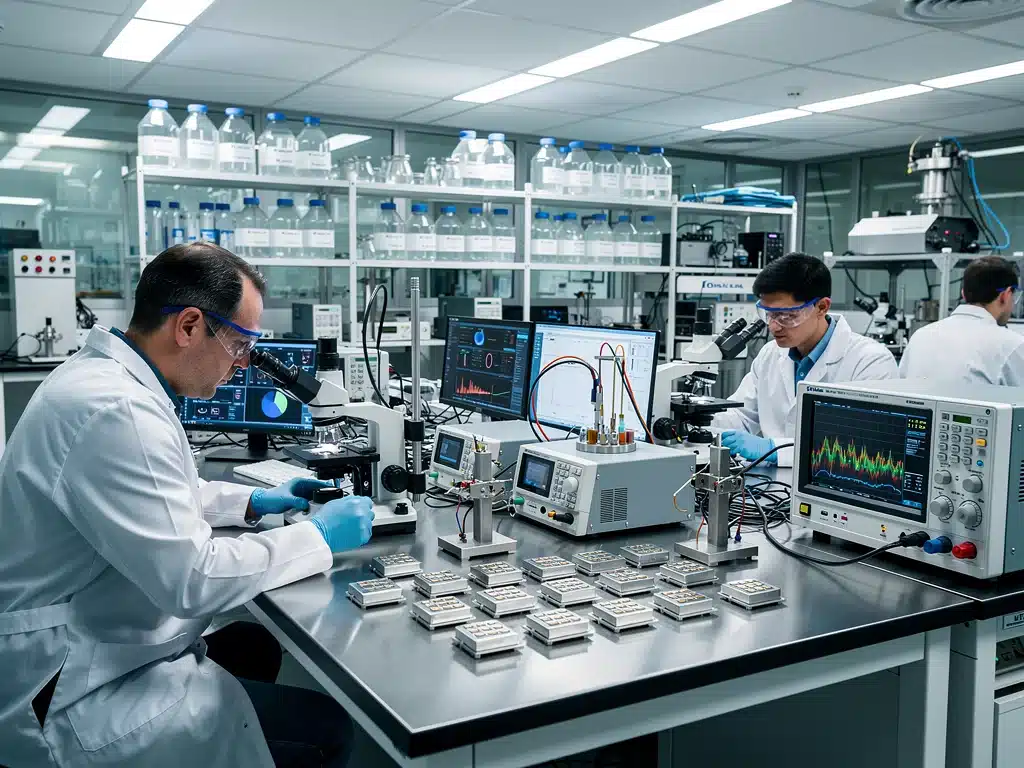
Another significant challenge lies in the long-term reliability and cycle life of solid-state batteries. While lab tests show promising results, real-world conditions, including extreme temperatures, vibrations, and repeated fast charging cycles, can stress battery components. Ensuring that solid-state batteries can maintain their performance over hundreds of thousands of miles and many years of use is critical for automotive applications.
Furthermore, the supply chain for solid-state battery components is still in its nascent stages. Unlike the established lithium-ion battery supply chain, sourcing and processing the unique materials required for solid-state electrolytes and electrodes at scale presents a new set of logistical and economic challenges. Building a robust and sustainable supply chain will be essential for meeting future demand and ensuring cost-effectiveness. These hurdles collectively suggest that while mid-2026 might see initial deployments, widespread revolution could take a little longer.
impact on EV range, performance, and infrastructure
The successful integration of solid-state batteries into electric vehicles would have a transformative impact across several key areas, fundamentally altering the user experience and the broader automotive landscape. Beyond the headline-grabbing faster charging times, the ripple effects would extend to vehicle design, infrastructure development, and overall market dynamics.
One of the most immediate and significant impacts would be on EV range. With higher energy density, solid-state batteries could allow for smaller battery packs that deliver equivalent or even superior range compared to current lithium-ion batteries. This reduction in battery size and weight would improve vehicle efficiency, handling, and potentially open up more design possibilities for manufacturers. Lighter vehicles generally consume less energy, leading to even greater range or allowing for smaller, more affordable battery packs.
broader implications for the EV ecosystem
- Enhanced Performance: Lighter battery packs contribute to better vehicle dynamics, acceleration, and braking, enhancing the overall driving experience.
- Infrastructure Evolution: The need for ultra-fast charging capabilities will necessitate upgrades to charging infrastructure, including higher power outputs at public charging stations and potentially faster home charging solutions.
- Grid Stability: Widespread adoption of faster-charging EVs will require careful management of the electrical grid to prevent overloads during peak charging times, potentially spurring innovations in smart grid technology and energy storage.
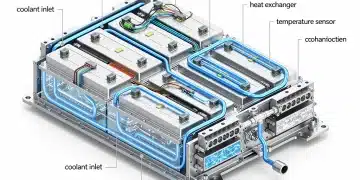
The improved safety profile of solid-state batteries could also lead to more flexible battery placement within vehicles, potentially freeing up cabin space or allowing for different vehicle architectures. This could accelerate the development of purpose-built EVs that are not constrained by the bulky requirements of traditional battery packs, leading to more innovative and efficient designs. The safety aspect also reduces the complexity and cost associated with advanced thermal management systems currently employed in lithium-ion batteries.
From an infrastructure perspective, the shift to faster-charging solid-state batteries would accelerate the demand for higher-power charging stations. This would require substantial investment in grid upgrades and the deployment of advanced charging technology capable of delivering the necessary power without compromising grid stability. Moreover, the long-term potential for vehicle-to-grid (V2G) technology could be enhanced, where EVs not only draw power but also feed excess energy back into the grid, contributing to energy resilience. The overall transformation promises a more seamless and efficient EV ecosystem.
the regulatory landscape and consumer adoption hurdles
Even with technological breakthroughs, the widespread adoption of solid-state battery EVs by mid-2026 will heavily depend on navigating complex regulatory landscapes and overcoming consumer adoption hurdles. Regulations play a critical role in setting standards for safety, performance, and environmental impact, while consumer perception and trust are paramount for market penetration.
Government incentives and policies will be crucial in accelerating the transition. This includes subsidies for EV purchases, investments in charging infrastructure, and regulations that favor zero-emission vehicles. Different regions and countries have varying approaches to EV policy, which will influence the pace of solid-state battery adoption globally. Harmonizing these regulations could streamline market entry for new battery technologies.
factors influencing widespread adoption
- Consumer Trust: Building consumer confidence in the safety, reliability, and longevity of a new battery technology is essential. Early positive experiences and transparent communication will be key.
- Cost Parity: For solid-state EVs to compete effectively with internal combustion engine (ICE) vehicles and current lithium-ion EVs, their overall cost, including purchase price and operating expenses, must be competitive.
- Charging Network: The availability of a robust, reliable, and fast-charging infrastructure is critical for alleviating range anxiety and making EVs a practical choice for all drivers.
Public perception and education will also be vital. Many consumers are still unfamiliar with the nuances of battery technology and may have concerns about new innovations. Clear communication from manufacturers and regulatory bodies about the benefits and safety of solid-state batteries will be necessary to foster trust and encourage adoption. Addressing misconceptions and providing accurate information will be a continuous effort.
Furthermore, the environmental impact of solid-state battery manufacturing and recycling must be carefully considered. While they promise a greener future for transportation, the extraction of raw materials and the end-of-life management of these batteries need to be sustainable. Regulations governing these aspects will shape the industry’s practices and ensure that the transition to solid-state batteries truly contributes to a more sustainable future. The interplay of these factors will define the speed and scale of solid-state battery integration into the mainstream EV market.
projecting the future: beyond mid-2026
While the mid-2026 timeframe for a significant impact from solid-state batteries is ambitious, the long-term outlook beyond this period is even more promising. The continuous advancements in materials science and manufacturing processes suggest that solid-state technology will not only meet but potentially exceed current expectations, leading to a truly revolutionary era for electric mobility.
Beyond just faster charging and increased range, future generations of solid-state batteries could offer even greater energy densities, enabling smaller, lighter, and more efficient vehicles. This could pave the way for entirely new categories of electric transportation, including more efficient urban air mobility solutions and long-range electric aircraft. The fundamental improvements in battery chemistry provide a versatile platform for innovation across various high-power applications.
potential future advancements
- Ultra-High Energy Density: Research into advanced solid electrolyte materials and novel electrode chemistries could lead to batteries with energy densities far surpassing current projections, further extending EV range and reducing battery size.
- Extreme Fast Charging: As interface issues are resolved and materials improved, charging times could potentially drop to minutes, making refueling an EV as fast as, or even faster than, filling a gasoline tank.
- Enhanced Durability and Lifespan: Continued development will likely lead to batteries with even longer cycle lives and greater resilience to extreme conditions, reducing the total cost of ownership for EVs.
The development of solid-state batteries is also likely to drive innovation in related fields, such as smart charging systems and energy management. As batteries become more sophisticated, so too will the systems that manage their charging and discharge cycles, optimizing performance and extending lifespan. This holistic approach to energy storage will benefit not only EVs but also grid-scale energy storage and portable electronics.
Furthermore, the recycling of solid-state batteries will become an increasingly important area of focus. As the technology matures and reaches end-of-life, efficient and sustainable recycling processes will be essential to recover valuable materials and minimize environmental impact. This will involve developing new recycling techniques tailored to the specific components of solid-state batteries, ensuring a circular economy for these advanced energy storage devices. The long-term trajectory points towards a future where solid-state batteries are not just an alternative but the definitive standard for electric power.
| Key Aspect | Description |
|---|---|
| Faster Charging | Solid-state batteries promise up to 30% faster charging rates due to solid electrolytes allowing higher current densities. |
| Increased Range | Higher energy density enables more power in a smaller, lighter battery, extending EV driving range significantly. |
| Enhanced Safety | Elimination of flammable liquid electrolytes drastically reduces fire risk and improves thermal stability. |
| Commercialization Challenges | High manufacturing costs, scalability issues, and long-term reliability are key hurdles to overcome for mass adoption. |
frequently asked questions about solid-state batteries
Solid-state batteries replace the flammable liquid electrolyte with a non-flammable solid material. This eliminates the risk of thermal runaway and fires that can occur with conventional lithium-ion batteries, significantly enhancing overall safety and reducing concerns about battery-related incidents.
Many projections indicate solid-state batteries could enable up to 30% faster charging rates. This is primarily due to the solid electrolyte’s ability to handle higher current densities without degradation, facilitating a more rapid transfer of ions and quicker charging cycles for electric vehicles.
Yes, solid-state batteries are expected to offer higher energy density than current lithium-ion batteries. This means they can store more energy in a smaller, lighter package, directly translating to an increased driving range for electric vehicles and alleviating current range anxieties.
Key challenges include high manufacturing costs, difficulty in scaling up production to automotive volumes, and ensuring long-term reliability and performance under real-world operating conditions. Overcoming these hurdles is crucial for widespread commercialization within the projected timeframe.
Several major players are at the forefront, including Toyota, QuantumScape (backed by Volkswagen), Solid Power (partnered with Ford and BMW), and Factorial Energy (with investments from Mercedes-Benz and Stellantis). Many other startups and research institutions are also making significant contributions.
conclusion
The journey of solid-state batteries from experimental concept to commercial reality is a testament to relentless innovation in the automotive tech sector. While the vision of a complete revolution in EVs by mid-2026, spearheaded by 30% faster charging, is ambitious, the foundational progress made by numerous companies and research institutions is undeniable. The promise of enhanced safety, increased range, and significantly faster charging addresses critical limitations of current electric vehicles, making the technology a pivotal component in the future of sustainable transportation. The path ahead involves overcoming significant manufacturing and cost challenges, but the long-term trajectory points towards a future where solid-state batteries are not just an alternative but the definitive standard for electric power, fundamentally transforming how we drive and interact with our vehicles.