Outdoor Gear 2026: 5 Must-Have Apparel Technologies

Advertisements
The evolution of outdoor gear for 2026 US adventurers is significantly shaped by five must-have apparel technologies focusing on intelligent design, sustainability, and enhanced performance, transforming how we interact with nature.
The world of outdoor adventure is constantly evolving, and with it, the gear we rely on. For US adventurers looking ahead to 2026, understanding the evolution of outdoor gear: 5 must-have apparel technologies for 2026 US adventurers is crucial. These innovations promise to redefine comfort, protection, and performance, making every expedition safer and more enjoyable. From intelligent fabrics to sustainable solutions, the future of outdoor apparel is here, pushing the boundaries of what’s possible in the wild.
Advertisements
Adaptive Climate-Control Fabrics: The Next Generation of Comfort
Adaptive climate-control fabrics represent a significant leap forward in outdoor apparel. These intelligent textiles are designed to dynamically respond to changes in body temperature and external environmental conditions, ensuring optimal comfort without manual adjustments. Imagine a jacket that breathes more as you exert yourself or insulates further as the temperature drops, all seamlessly and automatically.
This technology moves beyond traditional wicking and insulation by integrating phase-change materials (PCMs) and advanced fiber structures directly into the fabric. PCMs absorb and release heat as needed, while specialized weaves can expand or contract to regulate airflow. The goal is to eliminate the need for constant layering and delayering, allowing adventurers to focus entirely on their journey.
How adaptive fabrics work
At their core, adaptive fabrics utilize a combination of material science and clever engineering. Micro-capsules containing PCMs are embedded within the fibers. When your body temperature rises, these capsules absorb excess heat, preventing overheating. Conversely, when temperatures drop, the stored heat is released, providing a warming effect. This continuous thermal regulation creates a microclimate around the wearer that remains consistently comfortable.
- Phase-Change Materials (PCMs): Micro-encapsulated compounds that absorb, store, and release latent heat.
- Smart Polymers: Fibers that change structure in response to temperature or moisture, altering breathability.
- Advanced Weaves: Designs that optimize airflow and insulation properties based on activity levels.
Benefits for US adventurers
For adventurers in the diverse climates of the US, adaptive climate-control fabrics offer unparalleled versatility. From the humid trails of the Appalachian Mountains to the arid deserts of the Southwest, these garments provide consistent performance. They reduce the overall weight of gear needed, as fewer layers are required, and minimize discomfort caused by rapid weather changes. This leads to increased endurance and enjoyment during long expeditions.
The ability to maintain a stable body temperature is not just about comfort; it’s also about safety. Preventing both overheating and hypothermia is critical in challenging environments. Adaptive fabrics contribute significantly to this by reducing the physiological stress on the body, allowing adventurers to push their limits with greater confidence. This technology is quickly becoming a cornerstone for high-performance outdoor apparel.
Integrated Biometric Monitoring: Your Body’s Personal Dashboard
The integration of biometric monitoring into outdoor apparel is transforming how adventurers understand and respond to their bodies in real-time. Gone are the days of bulky smartwatches or chest straps; 2026 brings us garments with seamlessly embedded sensors that track vital signs, activity levels, and even environmental data. This provides a comprehensive overview of an adventurer’s physical state directly from their clothing.
These smart garments can monitor heart rate, respiration, skin temperature, and even hydration levels, transmitting data wirelessly to a smartphone or wearable device. For serious adventurers, this means immediate feedback on performance, early detection of potential issues like fatigue or dehydration, and optimized training regimens. It’s like having a personal health coach woven into your jacket.

Real-time performance insights
The primary advantage of integrated biometric monitoring is the real-time data it provides. During a strenuous climb or a long-distance hike, knowing your exact heart rate zone or core body temperature can inform critical decisions. Are you pushing too hard? Do you need to slow down and rehydrate? The apparel itself offers these insights, enabling safer and more efficient activity.
- Heart Rate Tracking: Continuous monitoring for optimal exertion and recovery.
- Respiration Rate: Indicators of fatigue and respiratory efficiency.
- Skin Temperature: Early warning signs of overheating or hypothermia.
- GPS and Altimeter: Precise location and elevation data integrated into the garment.
Enhanced safety and prevention
Beyond performance, the safety implications of integrated biometric monitoring are profound. In remote areas, where medical assistance is hours away, early detection of health issues can be life-saving. Some advanced systems can even alert emergency contacts or search and rescue teams if vital signs drop to critical levels or if a sudden fall is detected. This adds an invaluable layer of security for solo adventurers or those tackling extreme environments.
The data collected over time can also be used to personalize gear recommendations and training plans. Understanding how your body reacts to different conditions allows for a more tailored approach to preparation and equipment selection, further enhancing the overall outdoor experience. This technology is set to become indispensable for anyone serious about their adventures.
Self-Healing and Repairable Materials: Durability Redefined
The challenge of maintaining gear in rugged environments often leads to premature wear and tear. However, 2026 introduces self-healing and repairable materials into outdoor apparel, promising to revolutionize durability and extend the lifespan of garments. Imagine a tear in your jacket magically sealing itself or a small puncture repairing itself with minimal intervention.
These materials incorporate microscopic capsules filled with healing agents that are released upon damage, initiating a repair process. Other innovations include fabrics with interwoven shape-memory polymers that can be heat-activated to reform their structure, effectively mending minor abrasions. This technology significantly reduces waste and the need for frequent replacements, aligning with sustainable practices.
Mechanisms of self-healing
Self-healing textiles employ various sophisticated mechanisms. One common method involves embedding micro-capsules containing a polymer resin and a catalyst within the fabric fibers. When a tear or puncture occurs, these capsules rupture, releasing the healing agent into the damaged area. The resin then polymerizes, effectively bonding the torn edges back together. Another approach uses reversible cross-linking polymers that can reform their bonds when exposed to specific stimuli, such as heat or light.
- Micro-capsule Technology: Embedded capsules release healing agents upon damage.
- Shape-Memory Polymers: Materials that revert to their original form when stimulated.
- Reversible Bonding: Polymers capable of re-establishing molecular connections after disruption.
Practical applications for adventurers
For US adventurers, the benefits of self-healing and repairable materials are immense. A small snag from a branch or a minor abrasion against a rock no longer necessitates an immediate patch job or replacement. This not only saves time and money but also provides peace of mind, knowing your gear can withstand the rigors of the trail. It also contributes to a more sustainable outdoor lifestyle by reducing consumption.
Beyond spontaneous self-repair, some materials are designed for easy, on-the-go repair by the user. A quick application of heat or a specific solvent can activate the healing properties, making minor damage a non-issue. This enhanced durability ensures that critical protective layers remain intact for longer, offering consistent performance throughout an adventure. The future of outdoor apparel is built to last.
Sustainable and Circular Design: Eco-Conscious Adventure
As environmental awareness grows, the demand for sustainable outdoor apparel has surged. By 2026, sustainable and circular design principles are not just a niche; they are a fundamental aspect of must-have outdoor gear. This involves using recycled, regenerative, and biodegradable materials, coupled with design processes that minimize waste and maximize product lifespan. It’s about enjoying nature without harming it.
Brands are increasingly focusing on closed-loop systems, where old garments can be returned, processed, and transformed into new ones. This eliminates textile waste and reduces reliance on virgin resources. From plant-based fabrics to recycled plastics and innovative dyeing techniques, the emphasis is on reducing environmental impact at every stage of a garment’s lifecycle.
Innovations in eco-friendly materials
The materials driving this sustainable revolution are diverse and highly innovative. Recycled polyester and nylon, often sourced from plastic bottles and fishing nets, are becoming standard. New bio-based materials, derived from sources like algae, corn, or even agricultural waste, offer alternatives to traditional petroleum-based synthetics. Furthermore, responsibly sourced natural fibers like organic cotton and merino wool continue to be refined for performance.
- Recycled Synthetics: Polyester and nylon from post-consumer waste.
- Bio-Based Fabrics: Materials derived from renewable plant sources.
- Biodegradable Options: Garments designed to break down naturally at end-of-life.
- Low-Impact Dyeing: Techniques that significantly reduce water and chemical use.
The circular economy in action
Circular design goes beyond just using eco-friendly materials; it encompasses the entire product lifecycle. This means designing garments for durability, repairability, and ultimately, recyclability. Many brands are implementing take-back programs, allowing consumers to return worn-out gear for recycling or upcycling. This creates a continuous loop, minimizing the environmental footprint of outdoor apparel.
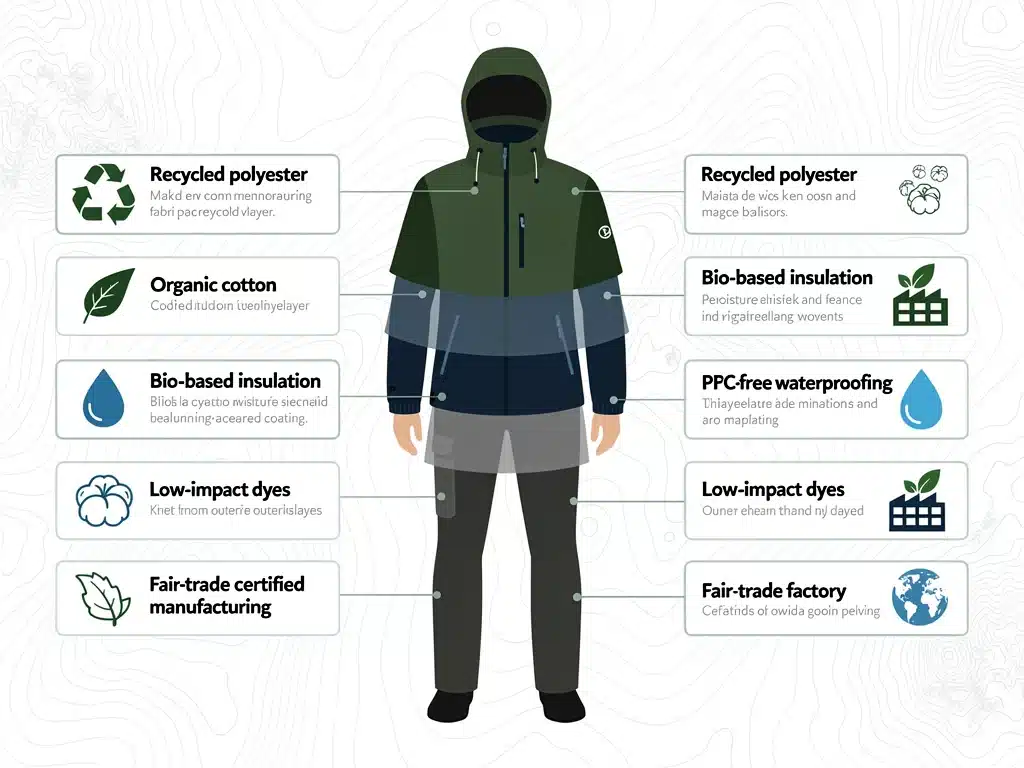
For the environmentally conscious US adventurer, choosing gear with sustainable and circular design is a powerful statement. It reflects a commitment to protecting the wild spaces they explore. These advancements ensure that high performance doesn’t come at the expense of the planet, making eco-conscious adventure a reality for 2026 and beyond.
Lightweight and Packable Hyper-Performance Shells: Unrestricted Movement
The quest for lighter, more packable gear without compromising performance has led to the development of hyper-performance shells. By 2026, these outer layers are essential for US adventurers who demand maximum protection with minimal bulk. These shells utilize advanced membrane technologies and ultra-lightweight fabrics to offer superior waterproofing, breathability, and wind resistance, all while packing down to an incredibly small size.
The focus is on reducing weight and volume to enhance mobility and comfort during high-intensity activities. Innovations in fabric construction, such as electrospun membranes and seamless bonding techniques, contribute to shells that feel almost imperceptible yet offer robust protection against the harshest elements. This technology is critical for fast-and-light expeditions and multi-day treks where every ounce counts.
Innovations in membrane technology
At the heart of hyper-performance shells are revolutionary membrane technologies. These ultra-thin layers are engineered with microscopic pores that are small enough to block liquid water molecules but large enough to allow water vapor (perspiration) to escape. Newer membranes boast even higher breathability ratings without sacrificing waterproofing, achieved through novel polymer structures and enhanced surface treatments. This balance is crucial for preventing clamminess and maintaining comfort during vigorous activity.
- Electrospun Nanofibers: Ultra-fine fibers creating highly breathable and waterproof membranes.
- Pore-Free Hydrophilic Membranes: Non-porous membranes that transport moisture through molecular diffusion.
- Perforated Fabrics: Strategically placed micro-perforations for enhanced ventilation without compromising integrity.
Benefits for fast-and-light adventurers
For climbers, trail runners, and backpackers who prioritize speed and efficiency, lightweight and packable hyper-performance shells are game-changers. The reduced weight lessens fatigue, allowing for greater distances and faster ascents. Their minimal packed size means they can be easily stowed in a small pack, ready for deployment at the first sign of inclement weather. This adaptability ensures adventurers are always prepared without being weighed down.
Furthermore, the enhanced freedom of movement provided by these shells contributes to better performance and reduced risk of injury. Unrestricted articulation in crucial areas allows for dynamic motion, whether scrambling over rocks or executing precise movements. This combination of protection, lightness, and flexibility makes these shells indispensable for the modern US adventurer seeking to push their boundaries.
Wearable Energy Harvesting: Power on the Go
Imagine your jacket charging your phone or headlamp as you hike. Wearable energy harvesting is moving from concept to reality, becoming a must-have apparel technology for 2026 US adventurers. This innovation integrates flexible solar cells, thermoelectric generators, and even kinetic energy harvesters directly into clothing, providing a continuous, sustainable power source for electronic devices.
This technology liberates adventurers from reliance on bulky power banks or limited battery life, especially during extended trips in remote areas. It represents a significant step towards self-sufficiency in the outdoors, ensuring that essential communication, navigation, and lighting devices remain operational when they are needed most. The future of outdoor apparel isn’t just about protection; it’s about empowerment.
How energy harvesting works in apparel
Wearable energy harvesting utilizes several principles. Flexible photovoltaic (solar) cells are integrated into the fabric, converting sunlight into electricity. Thermoelectric generators capitalize on temperature differences between the body and the environment to produce power. Kinetic energy harvesters, often embedded in moving parts of garments like sleeves or pant legs, convert the motion of walking or running into electrical energy. These disparate sources can be combined to create a robust, multi-modal power system.
- Flexible Solar Cells: Thin, bendable panels that convert sunlight into electricity.
- Thermoelectric Generators: Utilize temperature gradients to produce power.
- Kinetic Energy Harvesters: Convert body movement into usable electrical energy.
Empowering the modern adventurer
For the US adventurer of 2026, wearable energy harvesting provides an unprecedented level of independence. Navigating with GPS, capturing memories with a camera, or communicating in emergencies all require power. With this technology, devices can be continuously topped up, eliminating the anxiety of a dead battery in critical situations. It also reduces the need to carry external power solutions, lightening the overall load.
This innovation is particularly valuable for those undertaking multi-day treks, thru-hikes, or expeditions into areas without access to charging infrastructure. It ensures that safety devices, communication tools, and essential electronics remain functional, enhancing both convenience and security. Wearable energy harvesting is set to become a standard feature, making outdoor apparel not just protective, but also a vital part of an adventurer’s power ecosystem.
Advanced Odor and Microbial Control: Freshness on the Trail
For multi-day adventures, managing odor and microbial growth in clothing has always been a challenge. By 2026, advanced odor and microbial control technologies are a must-have, ensuring garments stay fresh and hygienic for longer periods. These innovations go beyond simple antimicrobial treatments, integrating smart solutions that actively neutralize odors and inhibit the growth of bacteria and fungi.
This means fewer garments needed for extended trips, reduced laundry cycles, and enhanced comfort and skin health. Technologies range from silver-ion treatments and zinc compounds to natural botanicals and even fiber-level modifications that prevent microbial adhesion. The result is apparel that remains clean-smelling and effective, even after days of strenuous activity.
Mechanisms of odor and microbial control
Modern odor and microbial control systems employ a variety of sophisticated methods. Silver ions are widely used for their broad-spectrum antimicrobial properties, disrupting bacterial cell functions. Zinc pyrithione offers similar benefits, effectively inhibiting fungal and bacterial growth. Newer approaches include incorporating activated carbon into fabrics to absorb odor molecules, and even biomimetic surfaces that prevent microbial attachment. Some technologies use natural extracts, like peppermint or tea tree oil, micro-encapsulated into the fibers for a sustained release of antimicrobial agents.
- Silver-Ion Technology: Disrupts bacterial growth and neutralizes odors.
- Zinc Compounds: Effective against a wide range of microbes and fungi.
- Activated Carbon Infusion: Absorbs and traps odor-causing molecules.
- Botanical Extracts: Natural antimicrobial properties for sustained freshness.
Benefits for extended expeditions
For US adventurers embarking on extended backcountry trips, the benefits of advanced odor and microbial control are clear. The ability to wear garments for multiple days without significant odor accumulation or hygienic concerns means less clothing packed, reducing pack weight and volume. This is especially crucial for minimalist trekkers and thru-hikers who rely on a compact gear list.
Beyond convenience, these technologies contribute to better skin health by minimizing the proliferation of bacteria that can cause irritation or infection in damp, enclosed environments. Maintaining a sense of freshness also boosts morale, which can be surprisingly important on challenging, long-duration adventures. These innovations make extended stays in the wilderness more comfortable and enjoyable, truly enhancing the overall outdoor experience.
| Key Technology | Brief Description |
|---|---|
| Adaptive Climate-Control | Fabrics that automatically regulate body temperature in changing conditions. |
| Integrated Biometric Monitoring | Garments with embedded sensors for real-time health and performance tracking. |
| Self-Healing Materials | Fabrics that automatically repair minor tears and abrasions, increasing durability. |
| Wearable Energy Harvesting | Apparel that generates power from movement, sun, or temperature for devices. |
Frequently Asked Questions About 2026 Outdoor Apparel
Adaptive climate-control fabrics are intelligent textiles that automatically adjust to changes in body temperature and external conditions. They use materials like phase-change capsules to absorb or release heat, providing consistent comfort and reducing the need for constant layering during outdoor activities.
Integrated biometric monitoring in apparel enhances safety by providing real-time data on vital signs like heart rate and respiration. This allows adventurers to monitor their physical state, detect early signs of fatigue or dehydration, and even alert emergency services in critical situations, especially in remote areas.
Yes, self-healing materials are becoming increasingly effective for outdoor gear. They use micro-capsules with healing agents or shape-memory polymers that mend minor tears and abrasions. This technology significantly extends the lifespan of garments, reduces waste, and maintains protective integrity during rugged adventures.
Circular design for outdoor apparel refers to a holistic approach where products are made from recycled or renewable resources, designed for durability and repair, and ultimately intended to be recycled into new products. This closed-loop system minimizes waste and environmental impact throughout the garment’s entire lifecycle.
Wearable energy harvesting benefits adventurers by providing a continuous, sustainable power source directly from their clothing. Flexible solar cells, thermoelectric generators, and kinetic harvesters charge devices like phones and GPS units, reducing reliance on external power banks and ensuring critical electronics remain operational in remote areas.
Conclusion
The landscape of outdoor adventure is continually shaped by innovation, and for 2026 US adventurers, the apparel technologies discussed represent a paradigm shift. From adaptive climate-control fabrics that offer unparalleled comfort to integrated biometric monitoring for enhanced safety, and from self-healing materials that redefine durability to sustainable designs that protect our planet, the future of outdoor gear is smarter, more resilient, and more responsible. These advancements, coupled with wearable energy harvesting and advanced odor control, promise to make every journey into the wild more efficient, enjoyable, and sustainable. Embracing these technologies will not only elevate the individual adventure experience but also contribute to a more harmonious relationship with the natural world.