Next-Gen EV Battery Technology: 2026’s 25% Longer Range Forecast
Advertisements
By 2026, next-gen EV battery technology is poised to deliver a game-changing 25% increase in vehicle range, alongside rapid charging capabilities and enhanced safety, fundamentally transforming the electric vehicle landscape.
The automotive world is on the cusp of a revolutionary shift, and at its heart lies the evolution of battery technology. For consumers in the United States and beyond, the promise of a 25% longer range by 2026, driven by advancements in next-gen EV battery technology, is not just an incremental improvement but a fundamental redefinition of electric vehicle capabilities and practicality.
Advertisements
The Drive for Enhanced Range: Why It Matters
Electric vehicle adoption has seen remarkable growth, yet range anxiety remains a significant barrier for many potential buyers. The ability to travel further on a single charge directly impacts convenience, reduces the need for frequent charging stops, and opens up longer-distance travel as a viable option for EV owners.
Automakers and battery manufacturers are investing heavily in research and development to push the boundaries of what’s possible. A 25% increase in range, for example, could turn a 250-mile EV into one that travels over 300 miles, making cross-country trips more feasible and everyday commuting even more effortless. This leap isn’t just about raw numbers; it’s about expanding the utility and appeal of electric vehicles to a broader audience.
Overcoming Range Anxiety
Range anxiety, the fear of running out of power before reaching a charging station, is a psychological hurdle that often outweighs practical concerns. Addressing this through substantial range improvements is crucial for mass market acceptance. By 2026, the expected enhancements will provide a confidence boost, making EVs a more compelling alternative to traditional gasoline-powered cars.
- Greater travel flexibility for longer journeys.
- Reduced frequency of charging stops.
- Increased confidence for drivers in diverse environments.
- Broader appeal to hesitant consumers.
In essence, the pursuit of enhanced range is not merely a technical challenge but a strategic imperative for the entire electric vehicle ecosystem. It directly influences consumer perception, infrastructure development, and ultimately, the pace of global decarbonization.
Solid-State Batteries: The Holy Grail of EV Power
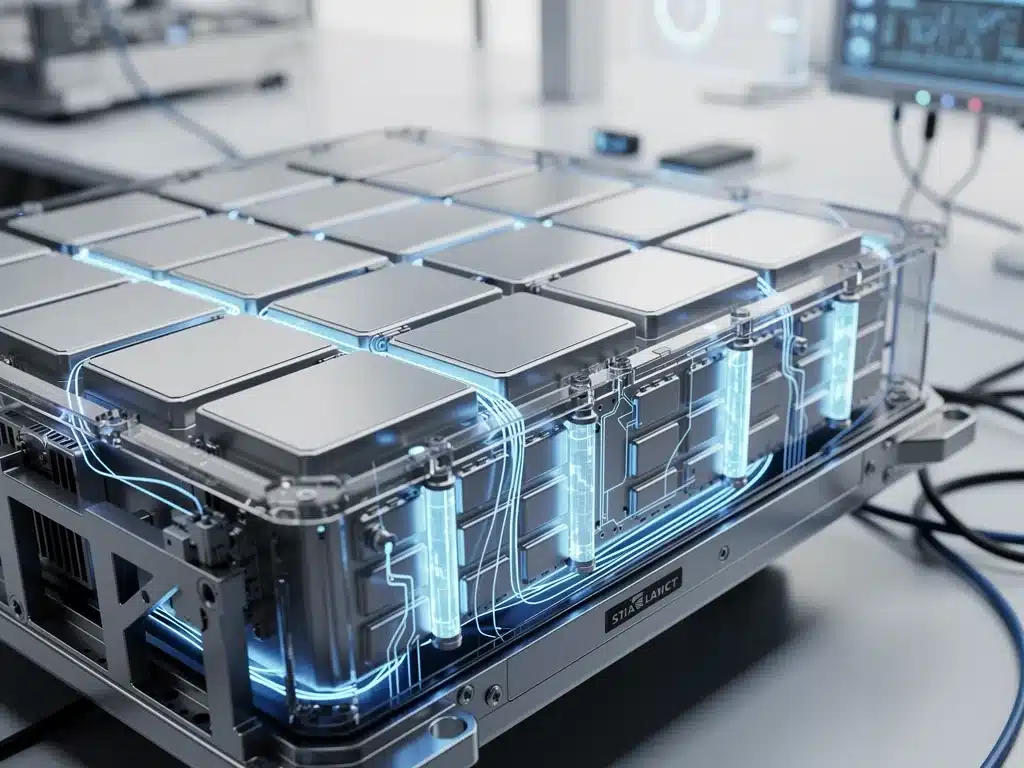
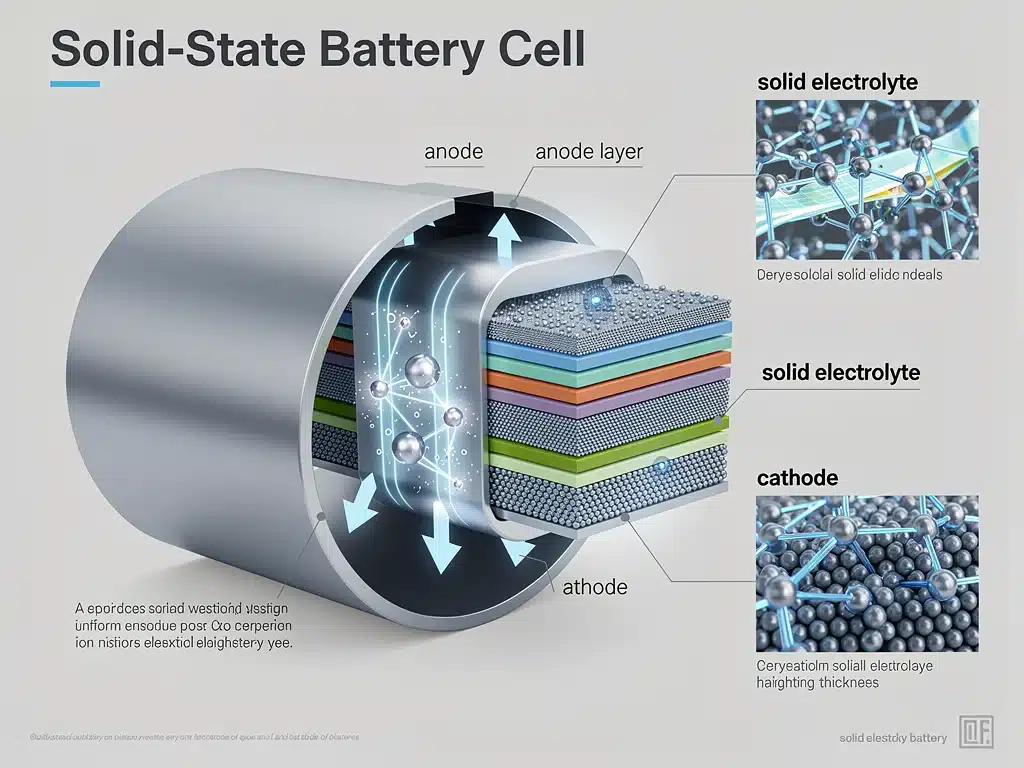
Among the most anticipated breakthroughs in next-gen EV battery technology are solid-state batteries. Unlike traditional lithium-ion batteries that use liquid electrolytes, solid-state batteries employ a solid material, offering several compelling advantages that could revolutionize the EV landscape by 2026.
This fundamental change in electrolyte composition not only promises significant improvements in energy density but also addresses critical concerns around safety and charging speed. The potential for these batteries to deliver on the 25% longer range expectation is high, making them a focal point of current research.
Advantages of Solid-State Technology
The shift from liquid to solid electrolytes brings a host of benefits that directly contribute to the goals of increased range and efficiency. These advantages are what make solid-state batteries so appealing to manufacturers and consumers alike.
- Higher Energy Density: Solid electrolytes allow for more compact battery designs, packing more energy into a smaller, lighter package. This directly translates to longer driving ranges without increasing battery size or weight.
- Enhanced Safety: Liquid electrolytes are often flammable, posing a risk of thermal runaway. Solid electrolytes are non-flammable, significantly reducing the risk of fires and improving overall battery safety.
- Faster Charging: The solid electrolyte can facilitate quicker ion transfer, potentially enabling ultra-fast charging times that rival refueling a gasoline car.
- Longer Lifespan: Solid-state batteries are expected to have a longer cycle life, meaning they can endure more charge and discharge cycles before degrading, leading to a longer overall battery lifespan for the vehicle.
While challenges in manufacturing and cost remain, the rapid pace of development suggests that we could see solid-state batteries begin to appear in niche or premium EV models by 2026, paving the way for broader adoption in the years that follow.
Beyond Lithium-Ion: Exploring New Chemistries
While solid-state technology represents a significant leap, the evolution of next-gen EV battery solutions also involves exploring entirely new battery chemistries that move beyond the conventional lithium-ion framework. Researchers are actively investigating alternatives that could offer similar, if not superior, performance characteristics, often with lower costs or greater sustainability.
These novel chemistries aim to overcome the inherent limitations of current lithium-ion batteries, including their reliance on certain rare earth minerals and their energy density ceilings. By 2026, some of these alternative chemistries might be closer to commercial viability, contributing to the overall goal of extended EV range.
Sodium-Ion and Lithium-Sulfur Batteries
Two prominent contenders in the race for next-generation chemistries are sodium-ion and lithium-sulfur batteries. Each presents a unique set of advantages and challenges, but both hold promise for future EV applications.
- Sodium-Ion Batteries: Sodium is far more abundant and cheaper than lithium, making sodium-ion batteries a potentially more sustainable and cost-effective option. While traditionally having lower energy density than lithium-ion, recent advancements are closing this gap, making them viable for certain EV segments.
- Lithium-Sulfur Batteries: These batteries boast a theoretical energy density significantly higher than current lithium-ion technology, offering the potential for even longer ranges. However, challenges such as short cycle life and volume expansion during cycling are still being addressed through intensive research.
The diversification of battery chemistries ensures a robust future for EV power sources. As breakthroughs continue, the automotive industry will gain more options to tailor battery solutions to specific vehicle types and performance requirements, all contributing to the overarching goal of a 25% longer range by 2026.
Faster Charging Technologies: Reducing Downtime
Increased range is only one part of the equation for widespread EV adoption; faster charging capabilities are equally crucial. By 2026, next-gen EV battery technology isn’t just targeting how far a vehicle can go, but also how quickly it can be ready to go again. Innovations in charging infrastructure and battery cell design are converging to dramatically reduce charging times, making EVs more convenient for daily use and long-distance travel.
The ability to add significant range in a matter of minutes, similar to a traditional fuel stop, would eliminate a major psychological barrier for many consumers. This focus on speed is as important as the focus on range, as both contribute to a seamless user experience.
Innovations in Charging Infrastructure and Battery Management
Achieving ultra-fast charging requires advancements not only in the batteries themselves but also in the charging stations and the sophisticated systems that manage the charging process. These interconnected developments are essential for safe and efficient power delivery.
- Higher Power Delivery: Charging stations are evolving to deliver higher power output (e.g., 350 kW and beyond), which can significantly reduce charging times for compatible vehicles.
- Advanced Battery Management Systems (BMS): Sophisticated BMS are crucial for monitoring cell health, temperature, and charge rates, ensuring that batteries can accept high power inputs without degradation or safety risks.
- Improved Battery Cooling: Effective thermal management systems are vital during fast charging to dissipate heat and prevent damage to battery cells, maintaining optimal performance and longevity.
- Pre-conditioning for Charging: EVs are starting to incorporate features that pre-condition the battery to an optimal temperature before reaching a fast charger, further enhancing charging efficiency.
The synergy between battery design and charging infrastructure will ultimately define the user experience by 2026. As range extends by 25%, the time spent recharging will also shrink, making electric vehicles an increasingly attractive and practical choice for all drivers.
Manufacturing Innovations and Cost Reduction
The advancements in next-gen EV battery technology are not solely confined to chemistry and cell design; significant progress is also being made in manufacturing processes. These innovations are critical for scaling production, improving quality, and ultimately reducing the cost of batteries, which directly impacts the affordability and accessibility of electric vehicles. By 2026, more efficient manufacturing will play a key role in making that 25% longer range more widespread and economical.
Lower production costs mean that advanced battery technology can be integrated into a wider range of EV models, moving beyond premium segments to mainstream vehicles. This democratization of technology is essential for accelerating the transition to electric mobility.

Scaling Production and Supply Chain Optimization
The ability to produce high-performance batteries at scale and at a reasonable cost is a complex challenge that involves every step of the supply chain, from raw material extraction to final assembly.
- Gigafactories and Automation: The proliferation of large-scale battery manufacturing plants (gigafactories) equipped with advanced automation is driving down unit costs and increasing output.
- Vertical Integration: Automakers are increasingly investing in battery production or forming strategic partnerships to secure supply chains and gain greater control over battery development and cost.
- Material Sourcing and Recycling: Efforts to diversify raw material sourcing, develop more efficient extraction methods, and enhance battery recycling programs are crucial for sustainability and cost stability.
- Modular Battery Designs: Standardized, modular battery packs can simplify manufacturing, assembly, and maintenance, leading to further cost efficiencies.
These manufacturing and supply chain optimizations are fundamental to realizing the full potential of next-gen EV battery technology. They ensure that the benefits of longer range and faster charging are not just theoretical but become tangible realities for consumers, pushing EVs into a new era of affordability and performance.
The Environmental and Economic Impact of Advanced Batteries
The evolution of next-gen EV battery technology extends far beyond just vehicle performance; it carries profound environmental and economic implications. By 2026, the anticipated 25% longer range and other advancements will not only enhance the user experience but also contribute significantly to global sustainability goals and create new economic opportunities in the United States and worldwide.
Reduced reliance on fossil fuels, decreased tailpipe emissions, and the potential for a more circular economy around battery materials are all critical outcomes of this technological progression. This shift is not just about cars; it’s about shaping a more sustainable future.
Sustainability and Resource Management
Improving battery technology inherently leads to a more sustainable automotive sector by addressing key environmental concerns associated with both traditional vehicles and early EV batteries.
- Reduced Carbon Footprint: More efficient batteries that enable longer ranges reduce the overall energy consumption per mile, further lowering the carbon footprint associated with EV usage, especially when charged with renewable energy.
- Circular Economy for Materials: Advancements in battery recycling technologies are making it possible to recover valuable materials like lithium, cobalt, and nickel, reducing the need for new mining and minimizing environmental impact.
- Less Material Per Mile: Higher energy density means that less raw material is needed to achieve a given range, improving resource efficiency.
Economically, the growth of the next-gen EV battery industry is fostering job creation in research, manufacturing, and recycling. It’s also positioning countries and companies at the forefront of a rapidly expanding global market, driving innovation and investment. The move towards more powerful, efficient, and sustainable batteries is a win-win for both the planet and the economy.
| Key Aspect | Expected Impact by 2026 |
|---|---|
| Range Increase | Up to 25% longer driving range for many EV models. |
| Battery Type | Solid-state and advanced lithium-ion chemistries gaining traction. |
| Charging Speed | Significantly faster charging times, reducing downtime. |
| Cost & Safety | Lower production costs and enhanced safety features. |
Frequently Asked Questions About Next-Gen EV Batteries
The main objective is to achieve a substantial increase in electric vehicle range, with a widely anticipated target of 25% longer range by 2026, alongside improvements in charging speed and safety. This aims to make EVs more competitive and appealing to a broader market.
Solid-state batteries use a solid electrolyte instead of a liquid one, offering higher energy density, enhanced safety due to non-flammable materials, and the potential for much faster charging times compared to traditional lithium-ion batteries. This is a significant technological leap.
Yes, a 25% increase in range is expected to have a major impact. It directly addresses range anxiety, making EVs more practical for longer trips and daily commuting, thus encouraging more consumers to switch from gasoline-powered vehicles to electric alternatives.
Beyond advanced lithium-ion and solid-state, researchers are actively developing chemistries like sodium-ion and lithium-sulfur batteries. These alternatives aim to offer benefits such as lower cost, greater material abundance, and potentially even higher energy densities in the future.
By 2026, we anticipate advancements in ultra-fast charging stations (e.g., 350 kW+), coupled with sophisticated battery management systems and improved thermal management within the batteries. These innovations will allow EVs to gain significant range in very short charging sessions.
Conclusion
The horizon for electric vehicles is brighter than ever, largely thanks to the relentless innovation in battery technology. By 2026, the promise of a 25% longer range, driven by breakthroughs like solid-state batteries, novel chemistries, and ultra-fast charging, will fundamentally reshape the automotive landscape. These advancements are not just about extending how far an EV can go; they are about making electric mobility more accessible, more convenient, and ultimately, more desirable for millions of drivers in the United States and around the globe. The next few years will undoubtedly be transformative, solidifying the electric vehicle’s position as the future of personal transportation.